Albuquerque Barbosa Fabiane Bianca, Raad Rima de Souza, Santos Ibiapina Hiochelson Najibe, Freire Dos Reis Monique, Neves Juliana Costa Ferreira, Andrade Rosilene Viana, Nascimento Thaís Pinto, Valle Fabio Francesconi, Casewell Nicholas R, Sachett Jacqueline, Sartim Marco Aurélio, Monteiro Wuelton, Costa Allyson Guimarães, Lima Ferreira Luiz Carlos
Programa de Pós-Graduação em Medicina Tropical, Universidade do Estado do Amazonas (UEA), Manaus, Brazil.
Diretoria de Ensino e Pesquisa, Fundação de Medicina Tropical Doutor Heitor Vieira Dourado (FMT-HVD), Manaus, Brazil.
PLoS Negl Trop Dis. 2024 Dec 26;18(12):e0012704. doi: 10.1371/journal.pntd.0012704. eCollection 2024 Dec.
Bothrops venom consists primarily of metalloproteinase and phospholipase A2 toxins, which are responsible for the acute inflammatory, coagulant and hemorrhagic action following snakebite. The local effects of snakebite envenomation by Bothrops species are particularly prevalent yet poorly studied, but include pain, edema, erythema, blistering, bleeding, and ecchymosis.
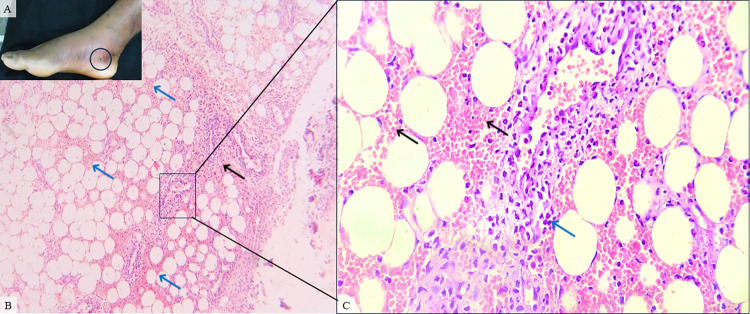
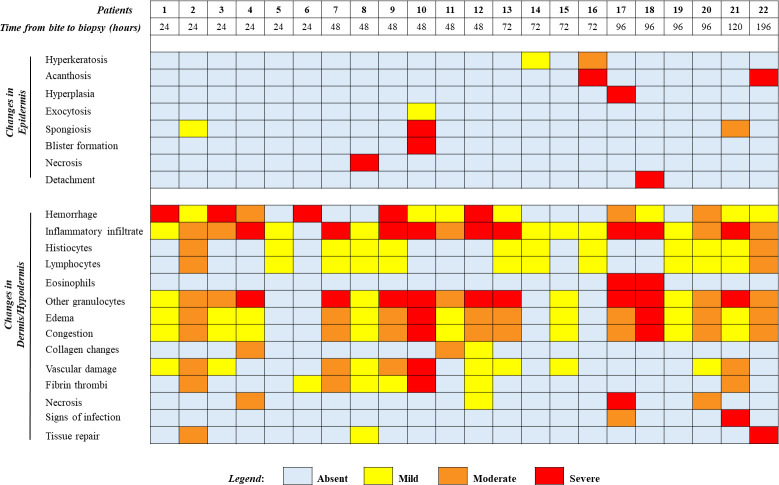
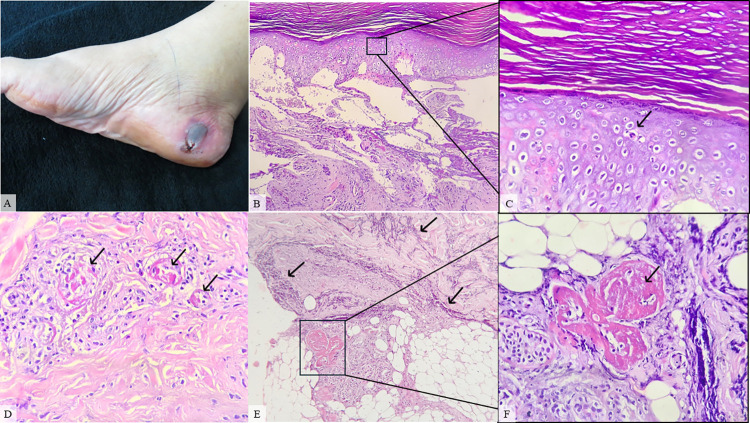
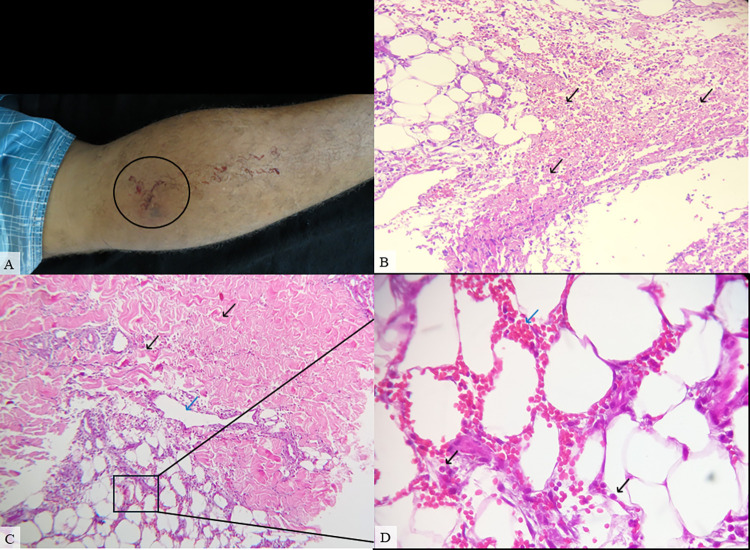
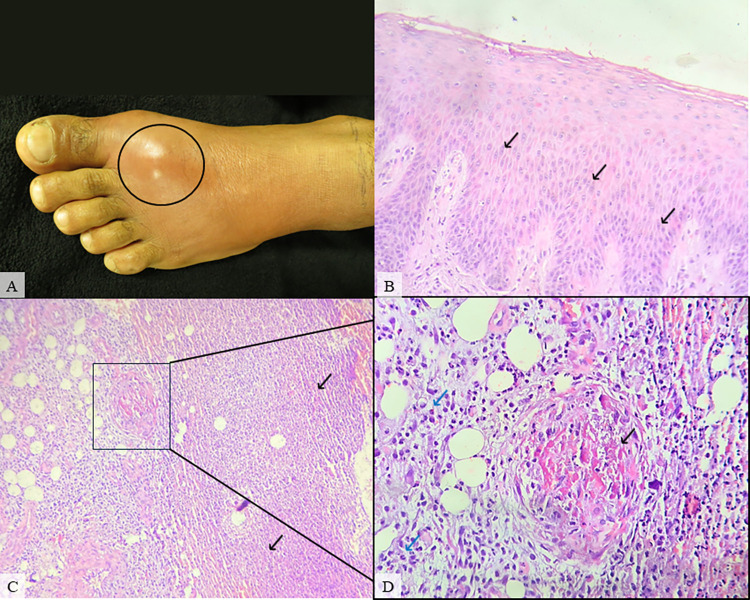
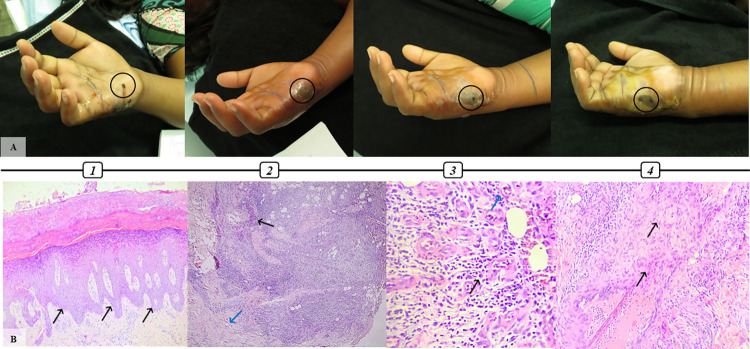
In this study, we describe the dermatopathological findings observed in a series of 22 patients diagnosed with Bothrops envenomation treated in a tertiary hospital of Manaus, in the Brazilian Amazon. Clinically, pain and edema were observed in all patients, followed by fang marks (63.6%), secondary infection (36.3%), ecchymosis (31.8%), erythema (22.7%), blister (13.6%), and necrosis (4.5%). Regarding histopathological findings, epidermal alterations such as spongiosis, acanthosis and hyperkeratosis were the most observed characteristics in our cases series, with isolated cases of hyperplasia, hemorrhagic intraepidermal blister and severe necrosis. Changes in dermis and hypodermis consisted mainly of hemorrhage, inflammatory infiltrate, edema, congestion, and vascular damage, whereas cases of collagen damage, necrosis, abscess, and signs of tissue repair, indicated by the presence of granulation tissue, were also observed, with a persistence of inflammatory and hemostatic alterations even days after antivenom administration. Therefore, the tissue damage resulting from Bothrops envenomation could be related to both direct venom activity as well as inflammatory response or presence of infectious process. The histopathological analysis of human skin injury can enlighten the pathological and endogenous effects of local envenomation and could underpin new strategies, including novel treatments, adjuvants or changes in clinical management, that lead to better outcomes in snakebite patients.
矛头蝮蛇毒主要由金属蛋白酶和磷脂酶A2毒素组成,这些毒素是蛇咬伤后急性炎症、凝血和出血作用的原因。矛头蝮属蛇咬伤中毒的局部影响尤为普遍,但研究较少,包括疼痛、水肿、红斑、水疱、出血和瘀斑。
在本研究中,我们描述了在巴西亚马逊州玛瑙斯的一家三级医院接受治疗的22例被诊断为矛头蝮蛇咬伤中毒患者的皮肤病理学发现。临床上,所有患者均出现疼痛和水肿,其次是牙痕(63.6%)、继发感染(36.3%)、瘀斑(31.8%)、红斑(22.7%)、水疱(13.6%)和坏死(4.5%)。关于组织病理学发现,表皮改变如海绵形成、棘层肥厚和角化过度是我们病例系列中最常见的特征,有个别增生、表皮内出血性水疱和严重坏死的病例。真皮和皮下组织的变化主要包括出血、炎症浸润、水肿、充血和血管损伤,同时也观察到胶原损伤、坏死、脓肿以及由肉芽组织的存在所表明的组织修复迹象,即使在注射抗蛇毒血清数天后,炎症和止血改变仍持续存在。因此,矛头蝮蛇咬伤中毒导致的组织损伤可能与毒液的直接活性以及炎症反应或感染过程的存在有关。对人类皮肤损伤的组织病理学分析可以揭示局部中毒的病理和内源性影响,并可为新的策略提供依据,包括新的治疗方法、佐剂或临床管理的改变,从而使蛇咬伤患者获得更好的治疗效果。