Roach Brooklee, Greene Elizabeth S, Dridi Sami
Har-Ber High School, Springdale, Arkansas, USA.
Department of Poultry Science, University of Arkansas, Fayetteville, Arkansas, USA.
J Neuroendocrinol. 2025 Jun;37(6):e13488. doi: 10.1111/jne.13488. Epub 2024 Dec 26.
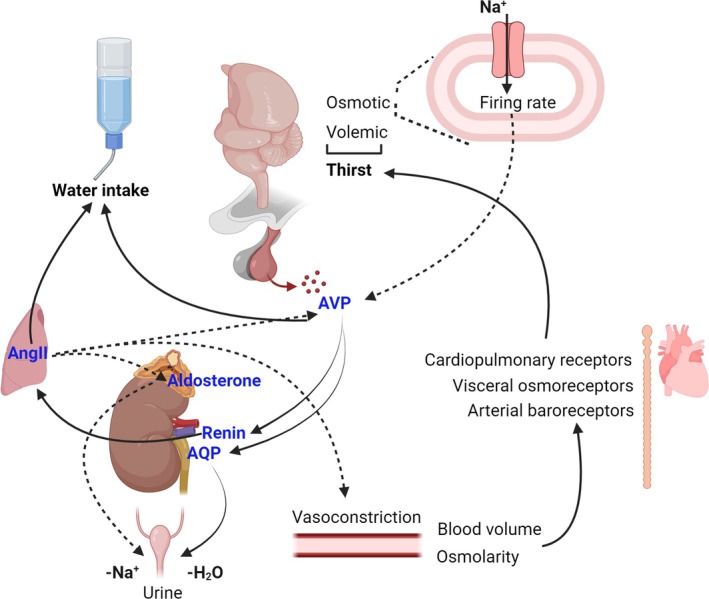
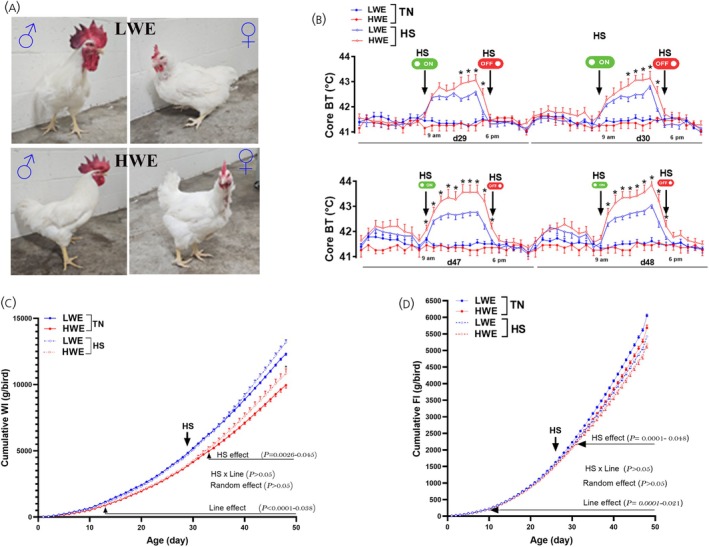
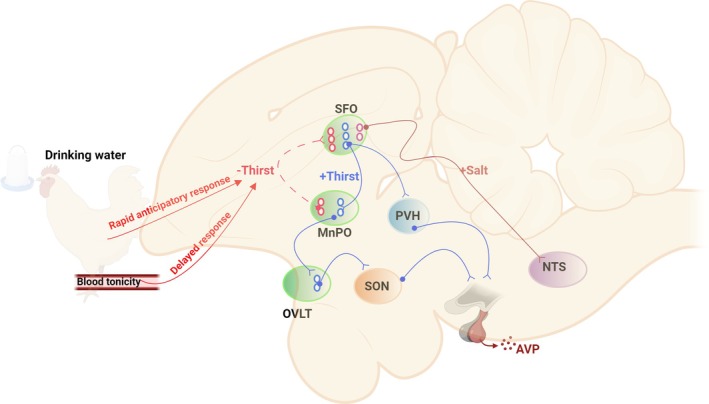
Poultry production is confronting real challenges, including a lofty projected high demand for animal proteins to feed the future, and the need to adapt to planetary boundaries (global warming) with limited natural resources (land, energy, water). Among the most challenging stressors to poultry production sustainability are heat stress (HS) and water uncertainty, that need extensive fundamental and applied research to identify effective strategies. In that regard, our group has recently developed a high-water-efficient broiler (meat-type) chicken line using water conversion ratio (WCR) as a phenotypic trait and defined the hypothalamic molecular mechanisms controlling drinking water under heat stress conditions. In response to the invitation from the Organizing Committee of the 13th International Symposium on Avian Endocrinology (ISAE 2024), the present review summarizes these data and closes the chapter by asking questions for future investigations. Data showed that HS exposure increased core body temperature (CBT) of both lines, with higher degree in HWE than in LWE counterparts. Despite this increase in CBT, HWE line drank less water but had superior performance with better feed conversion ratio (FCR) and WCR than LWE line. Molecular analyses showed that hypothalamic drinking-related neuropeptides (arginine vasopressin system, aquaporin system, renin, and angiotensin system) are affected in line- and/or environmental-dependent manner. Together, our research outcome indicates that the divergent selection for water efficiency could be an effective strategy to preserve water while maintaining optimal growth performance and could be applied to other poultry species and livestock.
家禽生产正面临着实际挑战,包括预计未来对动物蛋白的高需求,以及在自然资源(土地、能源、水)有限的情况下适应地球边界(全球变暖)的需求。对家禽生产可持续性最具挑战性的应激源包括热应激(HS)和水资源不确定性,这需要广泛的基础研究和应用研究来确定有效的策略。在这方面,我们的团队最近开发了一种高水分利用效率的肉鸡(肉用型)品系,以水分转化率(WCR)作为表型性状,并确定了热应激条件下控制饮水的下丘脑分子机制。应第13届国际鸟类内分泌学研讨会(ISAE 2024)组织委员会的邀请,本综述总结了这些数据,并通过提出未来研究问题来结束这一章节。数据显示,热应激暴露使两个品系的核心体温(CBT)均升高,高水分利用效率品系的升高程度高于低水分利用效率品系。尽管核心体温有所升高,但高水分利用效率品系的饮水量较少,但与低水分利用效率品系相比,其具有更好的性能,饲料转化率(FCR)和水分转化率更高。分子分析表明,下丘脑与饮水相关的神经肽(精氨酸加压素系统、水通道蛋白系统、肾素和血管紧张素系统)受到品系和/或环境依赖性方式的影响。总之,我们的研究结果表明,对水分利用效率的差异选择可能是一种在保持最佳生长性能的同时节约用水的有效策略,并且可以应用于其他家禽品种和家畜。