Jayasree Lakshmi, Palatty Princy L, Govindraj Laxmi, Anand Gokul A, Dev Gokul B, Shabu Bharath, S Tinu T, Nair Abhishek A
Pharmacology, Amrita School of Medicine, Amrita Institute of Medical Sciences, Amrita Vishwa Vidyapeetham, Ernakulam, IND.
Pharmacovigilance, Regional Training Center and ADR (Adverse Drug Reaction) Monitoring Center, Amrita Institute of Medical Science, Amrita Vishwa Vidyapeetham, Ernakulam, IND.
Cureus. 2024 Nov 25;16(11):e74454. doi: 10.7759/cureus.74454. eCollection 2024 Nov.
This study aimed to analyze the pattern, severity, and outcomes of adverse drug reactions (ADRs) associated with rituximab use reported to a regional pharmacovigilance center in Kerala, India.
This retrospective study analyzed rituximab-associated ADRs reported from 2017 to 2023. ADRs were assessed using the WHO-UMC criteria for causality and the Modified Hartwig Siegel Scale for severity.
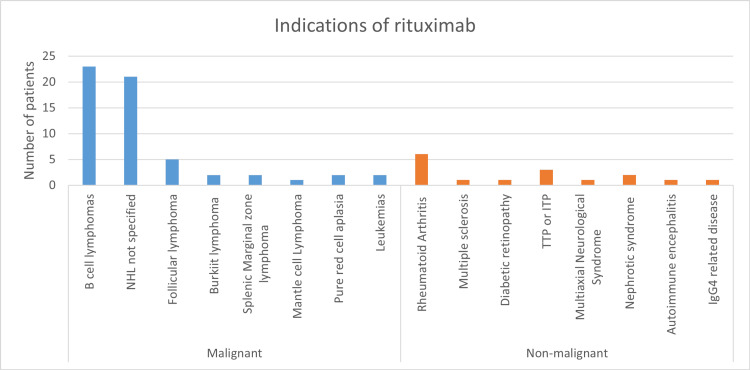
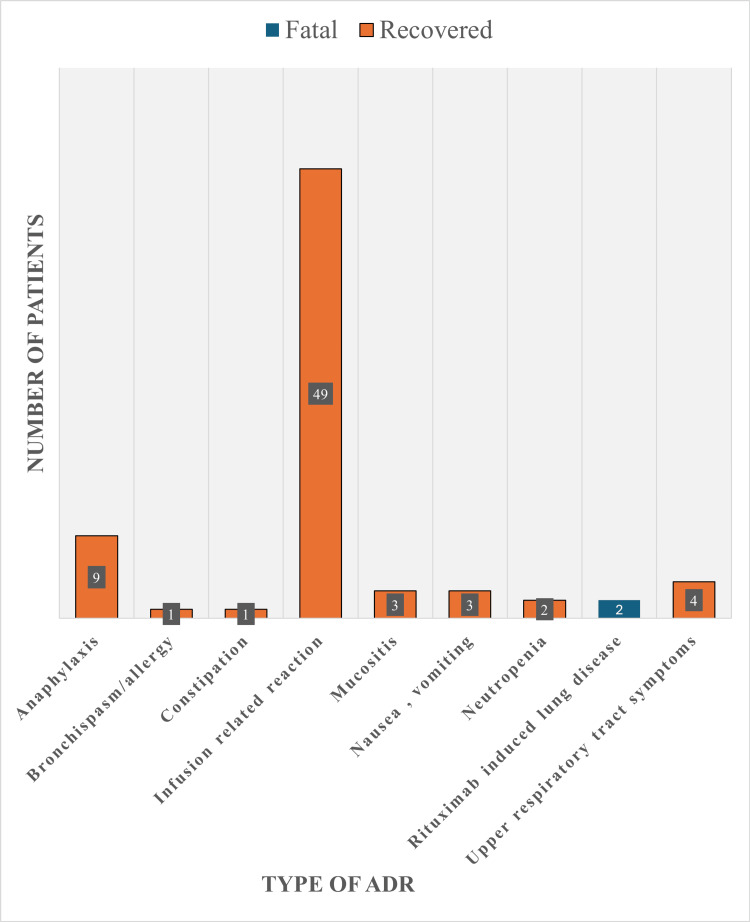
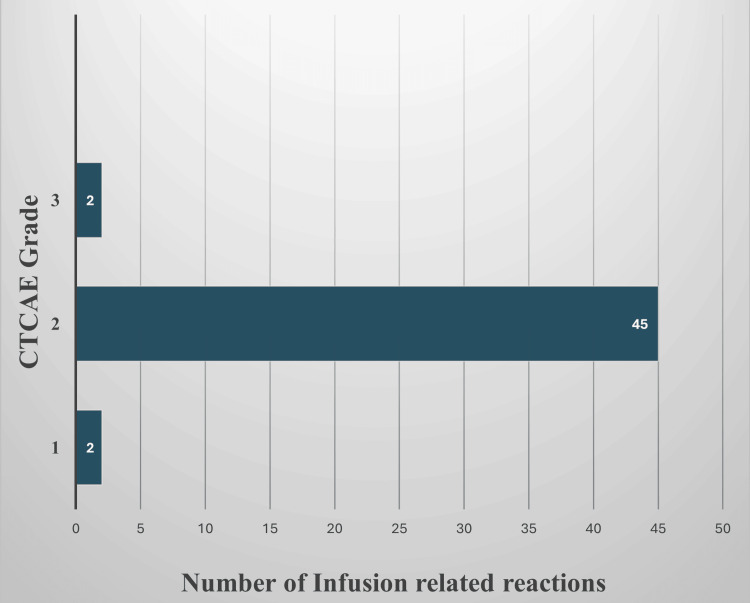
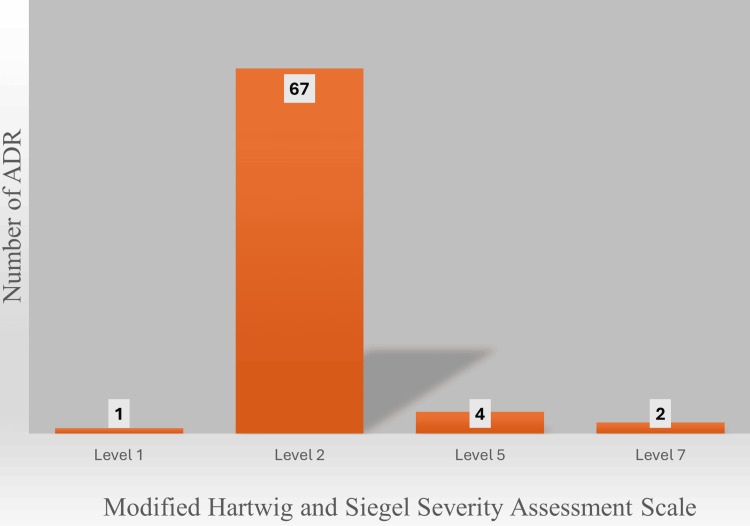
A total of 74 patients reported ADRs, with 49 being female. The majority (27 patients) were in the 51- to 60-year age group. Malignancies accounted for 58 cases of rituximab use. Most ADRs (69 cases) occurred with the first dose, with infusion reactions being the most common. Causality assessment revealed that 48 ADRs were probably related to rituximab. Severity analysis using the Modified Hartwig Siegel Scale showed that 67 ADRs were level two (mild), while two were level seven (severe). The majority of patients (72) recovered. However, rituximab-induced lung disease, observed in two cases, was associated with higher mortality.
Rituximab demonstrated an acceptable safety profile, with most ADRs being non-serious and manageable. The high recovery rate reflects effective ADR management. However, the potential for serious complications, particularly rituximab-induced lung disease, highlights the need for vigilant monitoring, especially during the first infusions. These findings enhance understanding of rituximab's real-world safety profile and underscore the importance of standardized protocols for ADR mitigation.
本研究旨在分析向印度喀拉拉邦一家地区药物警戒中心报告的与利妥昔单抗使用相关的药物不良反应(ADR)的模式、严重程度及转归。
本回顾性研究分析了2017年至2023年报告的与利妥昔单抗相关的ADR。使用世界卫生组织药物不良反应因果关系评价标准(WHO-UMC标准)和改良的哈特维希·西格尔严重程度量表对ADR进行评估。
共有74例患者报告了ADR,其中49例为女性。大多数(27例)患者年龄在51至60岁之间。恶性肿瘤患者使用利妥昔单抗的有58例。大多数ADR(69例)发生在首次用药时,其中输注反应最为常见。因果关系评估显示,48例ADR可能与利妥昔单抗有关。使用改良的哈特维希·西格尔严重程度量表进行的严重程度分析表明,67例ADR为二级(轻度),2例为七级(重度)。大多数患者(72例)康复。然而,在2例患者中观察到的利妥昔单抗诱导的肺部疾病与较高的死亡率相关。
利妥昔单抗显示出可接受的安全性,大多数ADR不严重且易于处理。高康复率反映了有效的ADR管理。然而严重并发症的可能性,特别是利妥昔单抗诱导的肺部疾病,凸显了进行密切监测的必要性,尤其是在首次输注期间。这些发现增进了对利妥昔单抗实际安全性的了解,并强调了减轻ADR的标准化方案的重要性。