Orsini Franca, Pascente Rosaria, Martucci Annacarla, Palacino Sara, Fraser Paul, Arancio Ottavio, Fioriti Luana
Department of Neuroscience, Istituto di Ricerche Farmacologiche Mario Negri IRCCS, Milan, Italy.
Tanz Centre for Research in Neurodegenerative Diseases, University of Toronto, Toronto, ON, Canada.
Front Cell Neurosci. 2024 Dec 12;18:1437995. doi: 10.3389/fncel.2024.1437995. eCollection 2024.
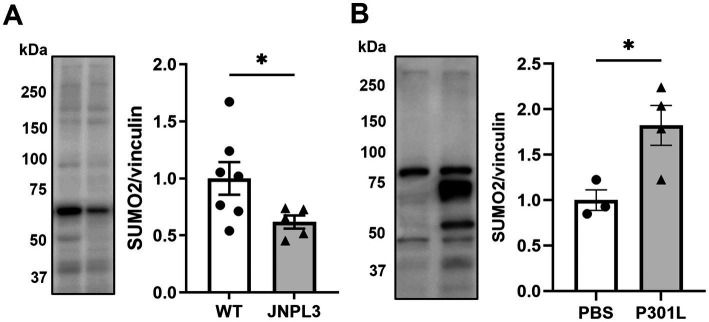
Abnormal intracellular accumulation of Tau aggregates is a hallmark of Alzheimer's disease (AD) and other Tauopathies, such as Frontotemporal dementia (FTD). Tau deposits primarily affect neurons, but evidence indicates that glial cells may also be affected and contribute distinctively to disease progression. Cells can respond to toxic insults by orchestrating global changes in posttranslational modifications of their proteome. Previous studies suggest that SUMOylation, a posttranslational modification consisting of conjugation of SUMO (Small ubiquitin-like modifier) to target proteins, was decreased in the hippocampus of AD patients and in animal model of AD compared with controls. This decrease in SUMOylation was correlated with increased Tau pathology and cognitive decline. Other studies have reported increased levels of SUMO in AD brains. The goal of our study was to evaluate whether SUMO conjugation modifies the neurodegenerative disease pathology associated with the aggregation-prone mutant TauP301L, in neurons and in glial cells.
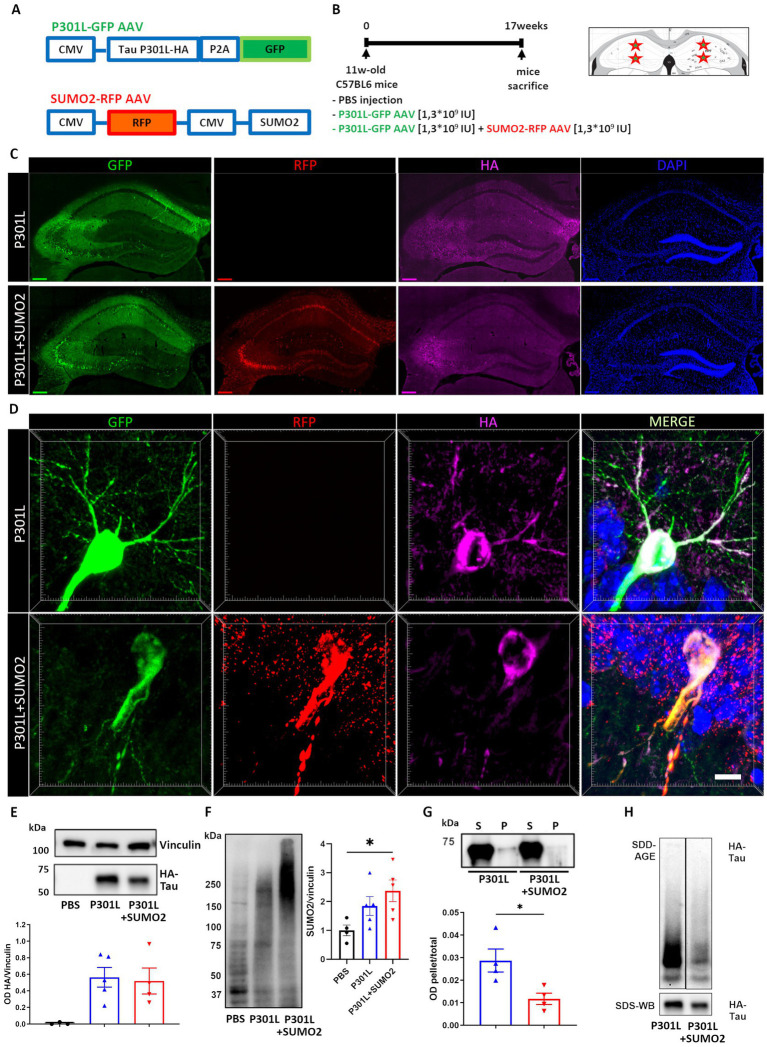
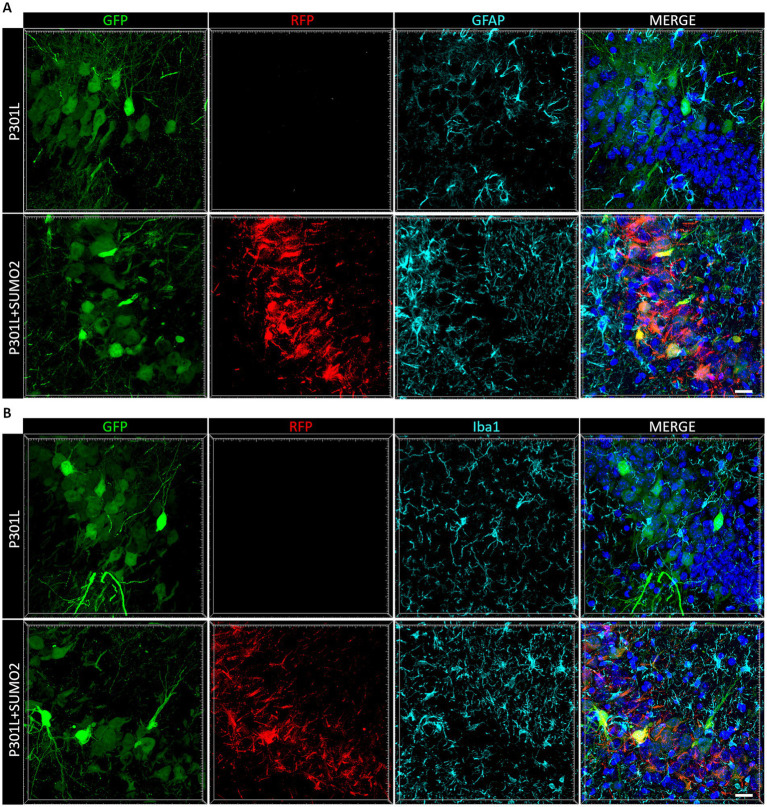
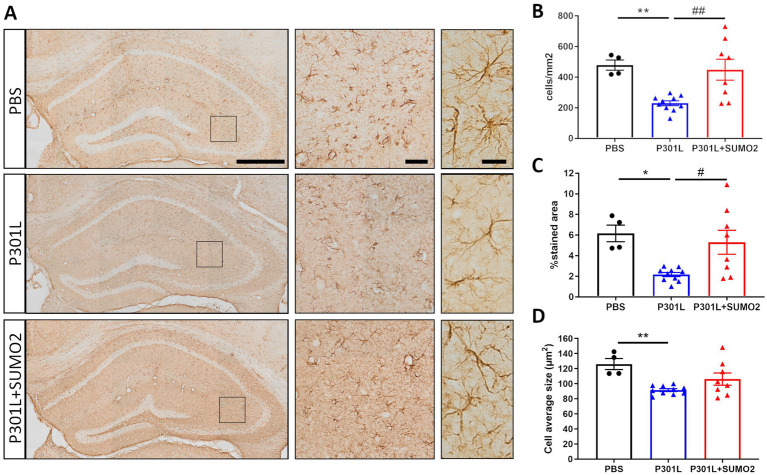
We used viral approaches to express mutant TauP301L and SUMO2 in the hippocampus of wild-type mice. We assessed Tau distribution by immunostaining and Tau aggregation by insolubility assays followed by western blotting. We assessed neuronal toxicity and performed cell count and shape descriptor analyses on astrocytes and microglial cells.
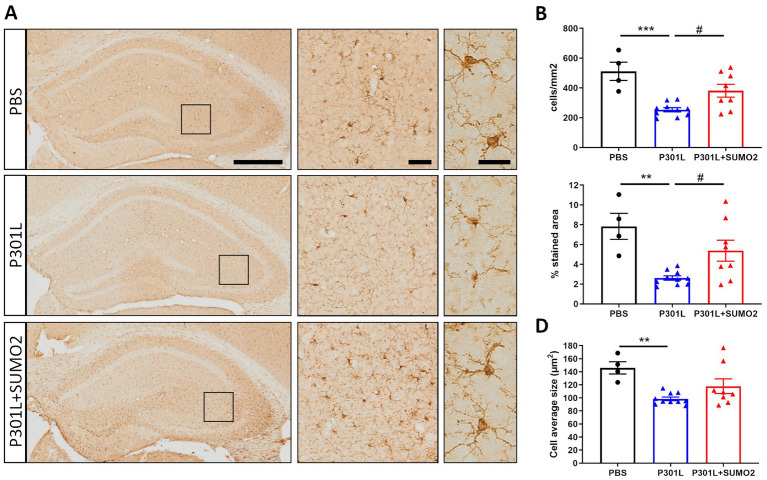
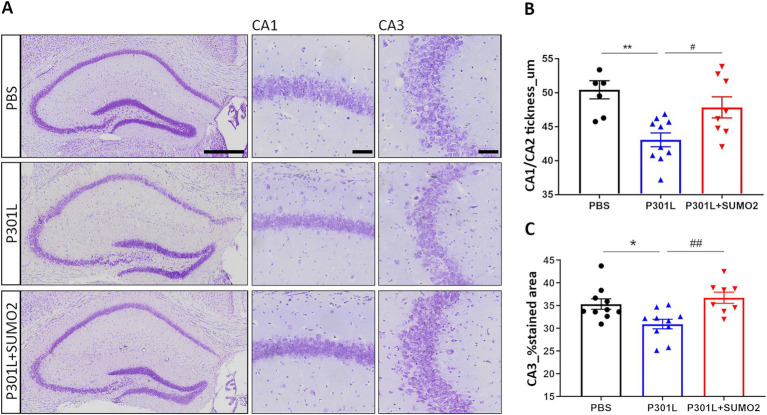
We found that mutant TauP301L, when expressed exclusively in neurons, is toxic not only to neurons but also to glial cells, and that SUMO2 counteracts TauP301L toxicity in neurons as well as in glia.
Our results uncover an endogenous neuroprotective mechanism, whereby SUMO2 conjugation reduces Tau neuropathology and protects against toxic effects of Tau in glial cells.
Tau聚集体在细胞内异常积累是阿尔茨海默病(AD)和其他Tau蛋白病(如额颞叶痴呆,FTD)的一个标志。Tau沉积物主要影响神经元,但有证据表明神经胶质细胞也可能受到影响,并对疾病进展有独特的作用。细胞可以通过协调其蛋白质组翻译后修饰的全局变化来应对毒性损伤。先前的研究表明,与对照组相比,AD患者海马体和AD动物模型中,SUMO化(一种由SUMO(小泛素样修饰物)与靶蛋白结合组成的翻译后修饰)减少。SUMO化的这种减少与Tau病理学增加和认知能力下降相关。其他研究报告称AD大脑中SUMO水平升高。我们研究的目的是评估SUMO结合是否会改变与易聚集突变体TauP301L相关的神经退行性疾病病理学,无论是在神经元还是在神经胶质细胞中。
我们采用病毒方法在野生型小鼠海马体中表达突变体TauP301L和SUMO2。我们通过免疫染色评估Tau分布,通过不溶性分析和蛋白质印迹法评估Tau聚集。我们评估神经元毒性,并对星形胶质细胞和小胶质细胞进行细胞计数和形态描述分析。
我们发现,仅在神经元中表达时,突变体TauP301L不仅对神经元有毒,对神经胶质细胞也有毒,并且SUMO2可抵消TauP301L在神经元和神经胶质细胞中的毒性。
我们的结果揭示了一种内源性神经保护机制,即SUMO2结合可减少Tau神经病理学,并保护神经胶质细胞免受Tau的毒性作用。