Erdenebat Temuulen, Komatsu Yusuke, Uwamori Nozomi, Tanaka Misaki, Hoshika Takashi, Yamasaki Takeshi, Shimakura Ayano, Suzuki Akio, Sato Toyotaka, Horiuchi Motohiro
Laboratory of Veterinary Hygiene, Faculty of Veterinary Medicine, Graduate School of Infectious Diseases, Hokkaido University, Sapporo, Japan.
One Health Research Center, Hokkaido University, Sapporo, Japan.
Front Mol Neurosci. 2024 Dec 12;17:1498142. doi: 10.3389/fnmol.2024.1498142. eCollection 2024.
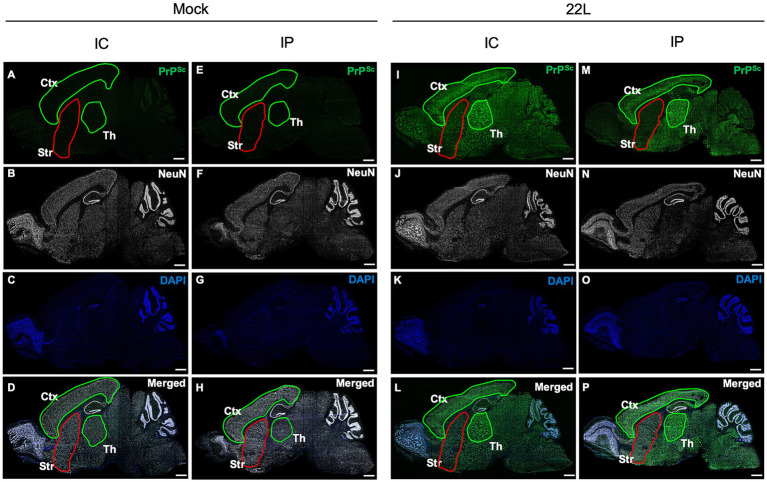
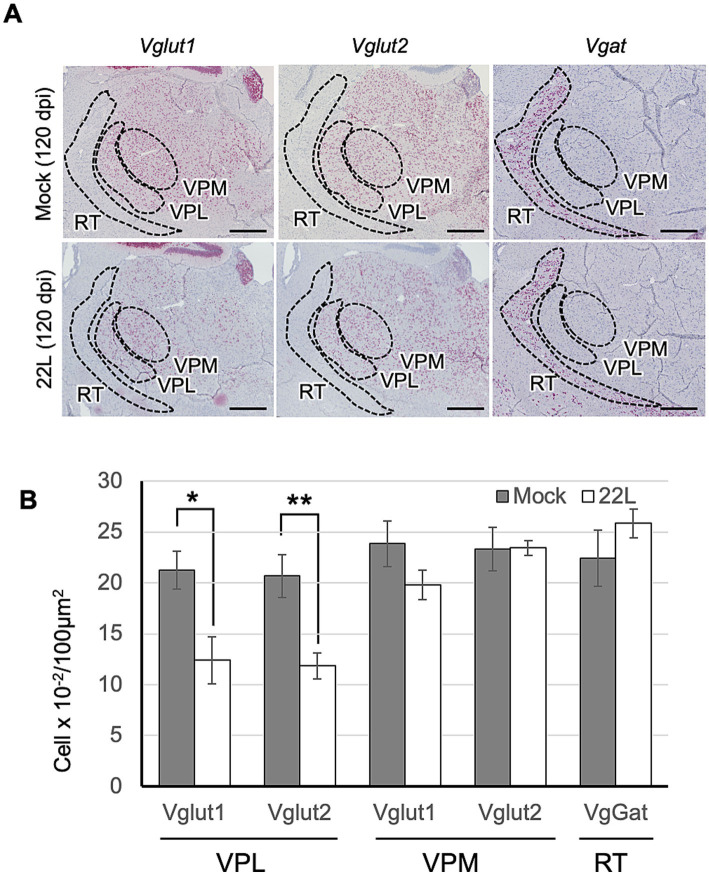
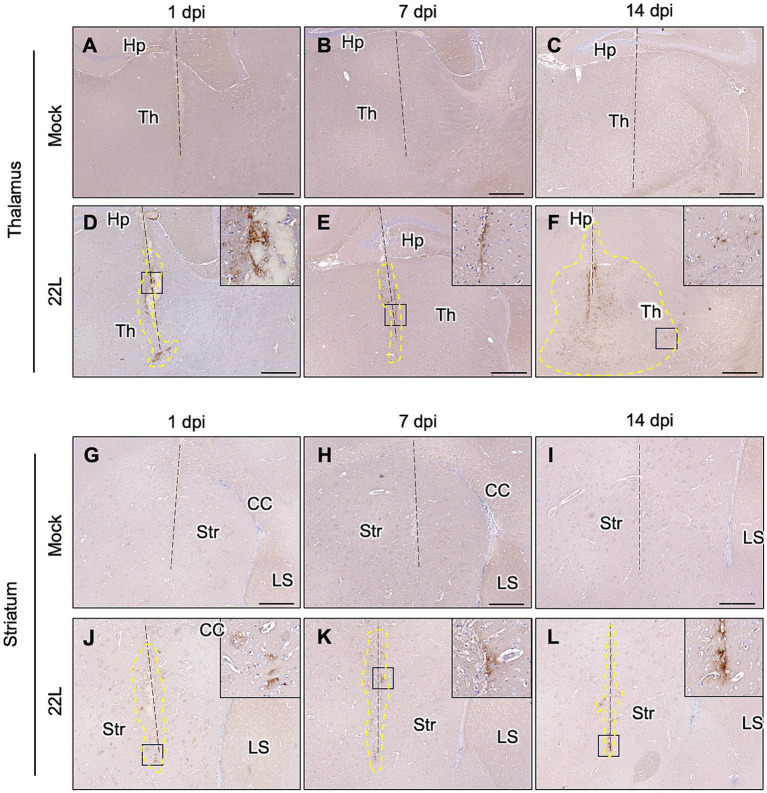
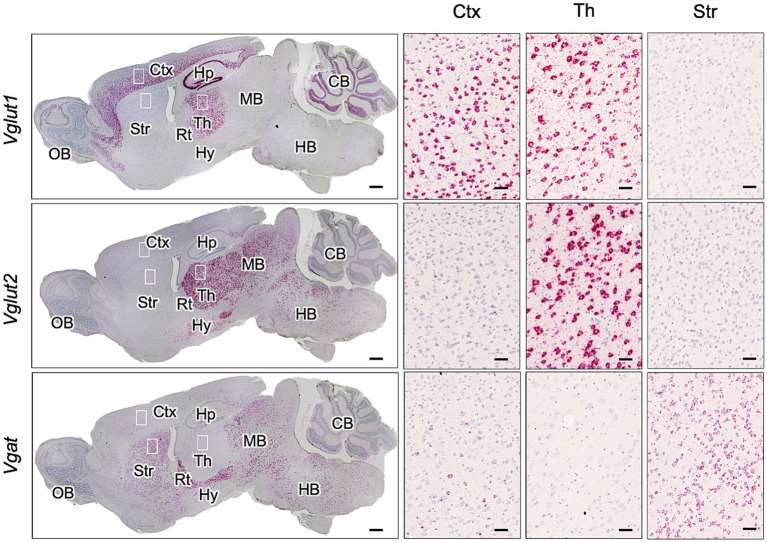
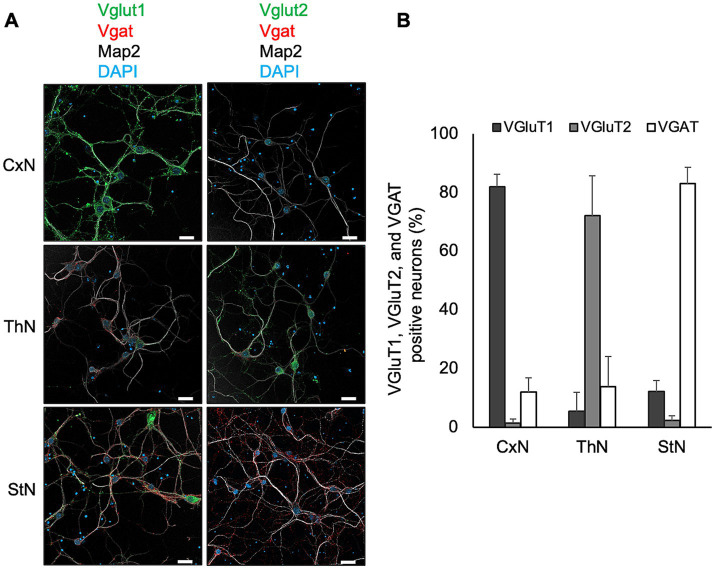
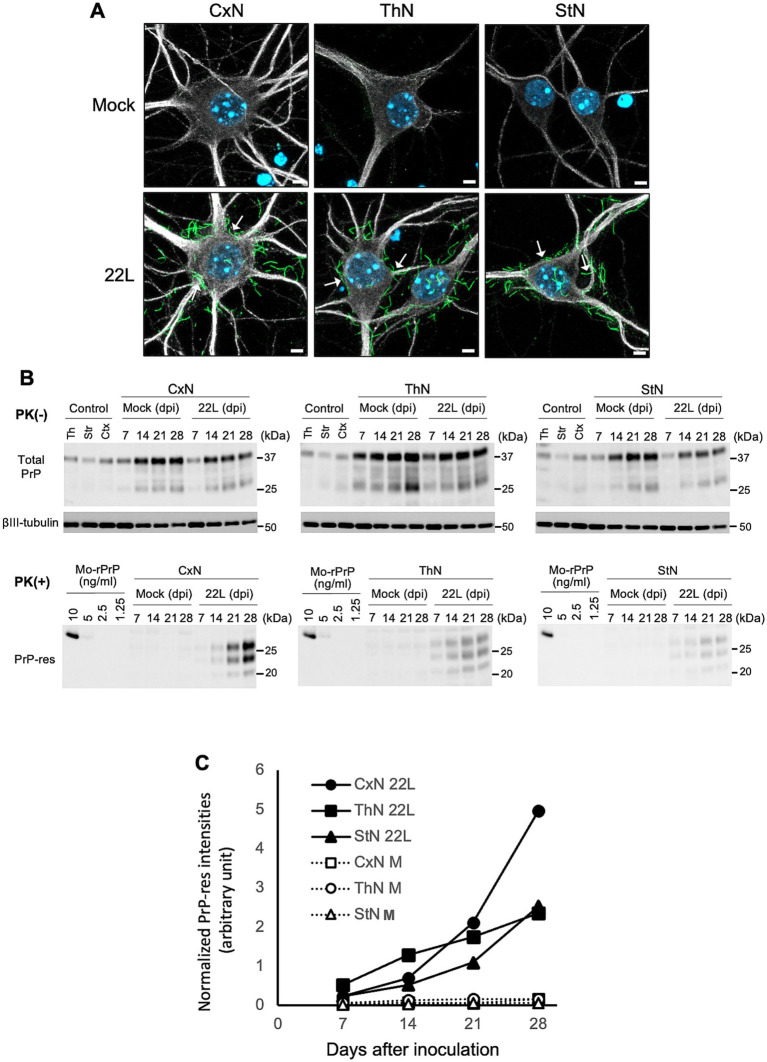
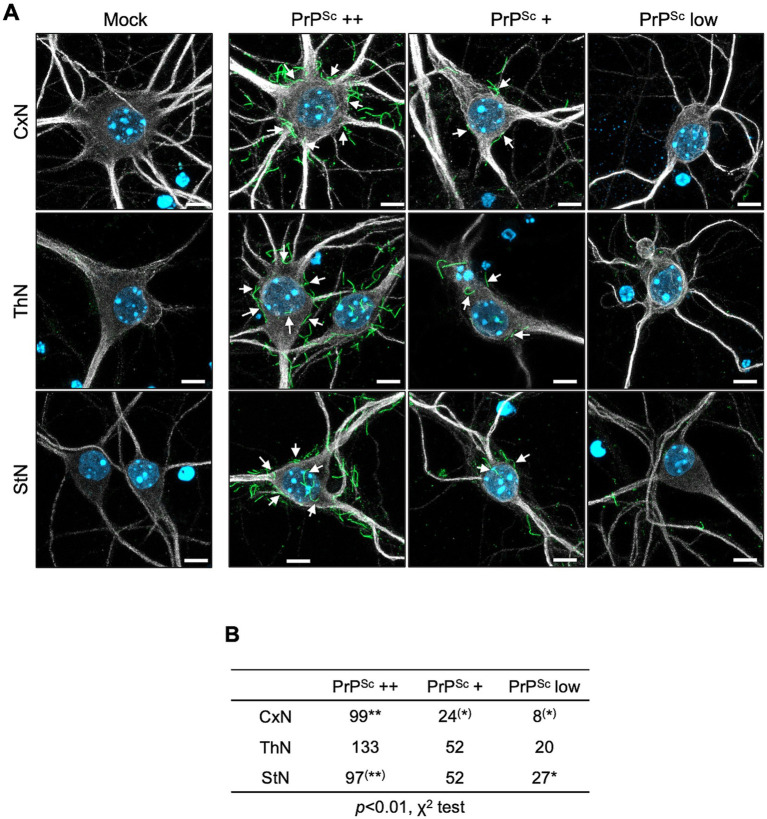
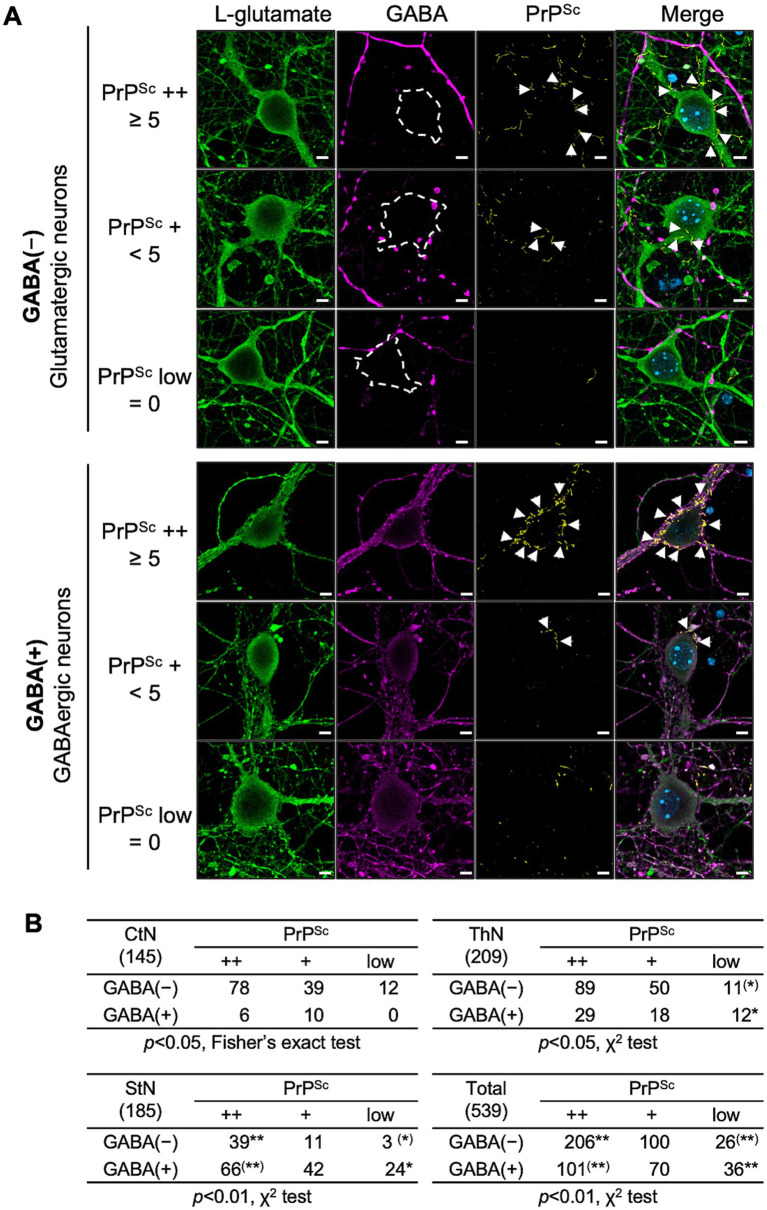
The accumulation of a disease-specific isoform of prion protein (PrP) and histopathological lesions, such as neuronal loss, are unevenly distributed in the brains of humans and animals affected with prion diseases. This distribution varies depending on the diseases and/or the combinations of prion strain and experimental animal. The brain region-dependent distribution of PrP and neuropathological lesions suggests a neuronal cell-type-dependent prion propagation and vulnerability to prion infection. However, the underlying mechanism is largely unknown. In this study, we provided evidence that the prion 22L strain propagates more efficiently in excitatory neurons than inhibitory neurons and that excitatory neurons in the thalamus are vulnerable to prion infection. PrP accumulation was less intense in the striatum, where GABAergic inhibitory neurons predominate, compared to the cerebral cortex and thalamus, where glutamatergic excitatory neurons are predominant, in mice intracerebrally or intraperitoneally inoculated with the 22L strain. PrP stains were observed along the needle track after stereotaxic injection into the striatum, whereas they were also observed away from the needle track in the thalamus. Consistent with inefficient prion propagation in the striatum, the 22L prion propagated more efficiently in glutamatergic neurons than GABAergic neurons in primary neuronal cultures. RNAscope hybridization revealed a decrease in - and -expressing neurons in the ventral posterolateral nuclei of the thalamus in 22L strain-infected mice, whereas no decrease in -expressing neurons was observed in the adjacent reticular nucleus, mainly composed of -expressing interneurons. The excitatory neuron-prone prion propagation and excitatory neuronal loss in 22L strain-infected mice shed light on the neuropathological mechanism of prion diseases.
朊病毒蛋白(PrP)的疾病特异性异构体的积累以及组织病理学损伤,如神经元损失,在受朊病毒疾病影响的人类和动物大脑中分布不均。这种分布因疾病和/或朊病毒株与实验动物的组合而异。PrP和神经病理损伤的脑区依赖性分布表明存在神经元细胞类型依赖性的朊病毒传播以及对朊病毒感染的易感性。然而,其潜在机制在很大程度上尚不清楚。在本研究中,我们提供了证据表明,朊病毒22L株在兴奋性神经元中比在抑制性神经元中传播更有效,并且丘脑中的兴奋性神经元易受朊病毒感染。在脑内或腹腔内接种22L株的小鼠中,与以谷氨酸能兴奋性神经元为主的大脑皮层和丘脑相比,在以GABA能抑制性神经元为主的纹状体中,PrP积累不那么强烈。立体定向注射到纹状体后,沿针道观察到PrP染色,而在丘脑中远离针道处也观察到PrP染色。与朊病毒在纹状体中传播效率低下一致,在原代神经元培养物中,22L朊病毒在谷氨酸能神经元中比在GABA能神经元中传播更有效。RNAscope杂交显示,在感染22L株的小鼠中,丘脑腹后外侧核中表达[具体基因1]和[具体基因2]的神经元减少,而在主要由表达[具体基因3]的中间神经元组成的相邻网状核中,未观察到表达[具体基因4]的神经元减少。22L株感染小鼠中兴奋性神经元倾向的朊病毒传播和兴奋性神经元损失揭示了朊病毒疾病的神经病理机制。