Gonzalez-Hermosillo Leslie Marisol, Cueto-Robledo Guillermo, Navarro-Vergara Dulce Iliana, Torres-Rojas Maria Berenice, García-Cesar Marisol, Pérez-Méndez Oscar, Escobedo Galileo
Laboratory of Immunometabolism, Research Division, General Hospital of Mexico "Dr. Eduardo Liceaga", Mexico City 06720, Mexico.
Cardiorespiratory Emergency Department, Pulmonary Hypertension Clinic, General Hospital of Mexico "Dr. Eduardo Liceaga", Mexico City 06720, Mexico.
Adv Respir Med. 2024 Nov 27;92(6):485-503. doi: 10.3390/arm92060044.
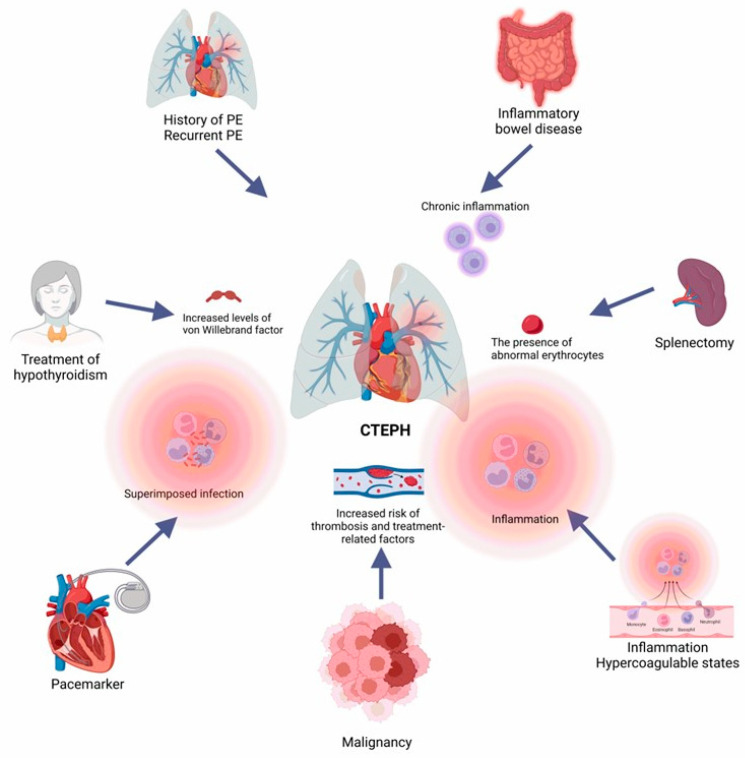
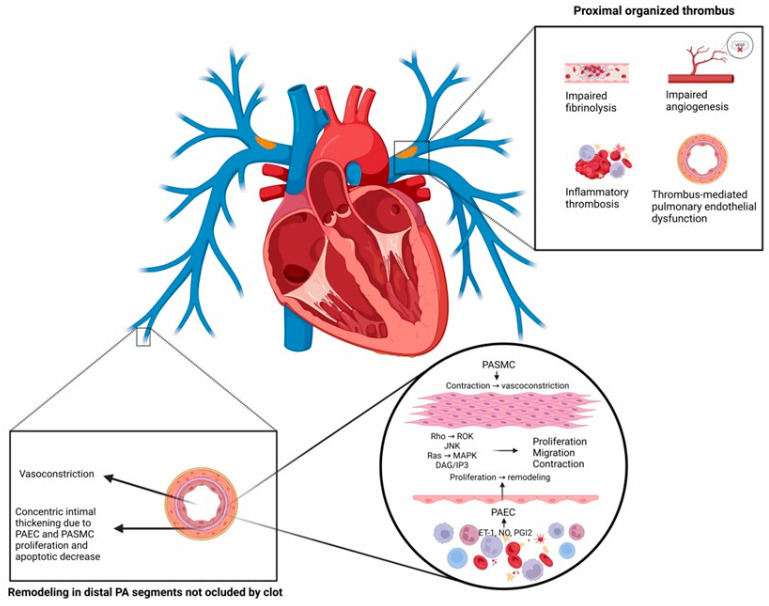
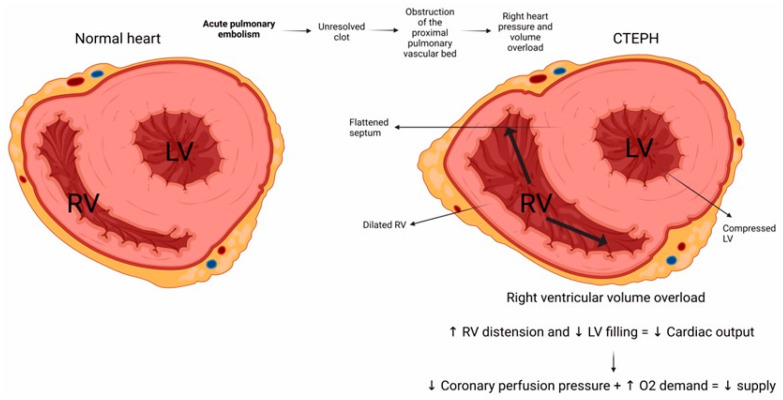
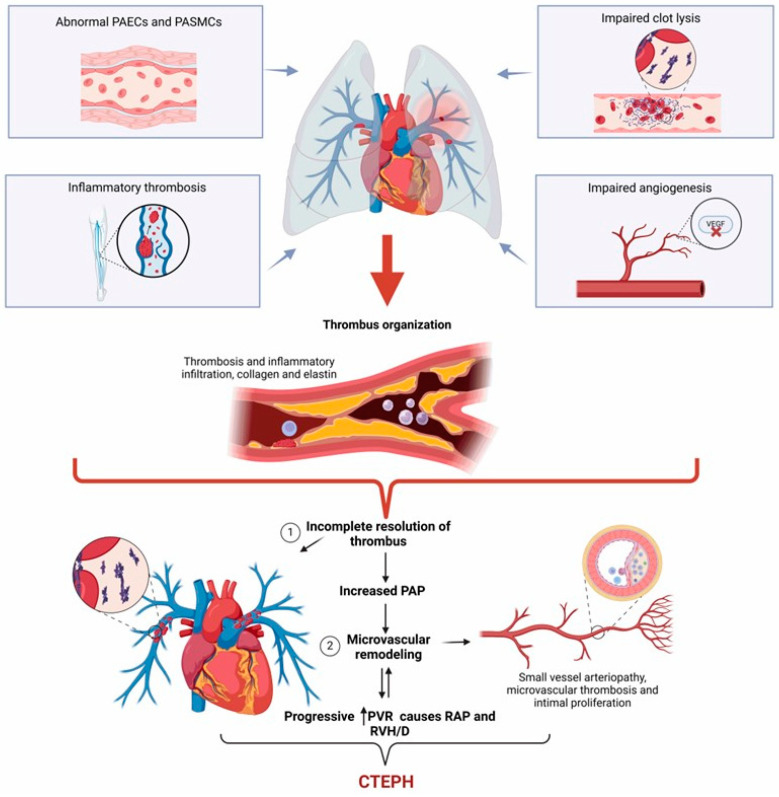
Chronic thromboembolic pulmonary hypertension (CTEPH) is a rare but severe condition characterized by persistent obstruction and vascular remodeling in the pulmonary arteries following an acute pulmonary embolism (APE). Although APE is a significant risk factor, up to 25% of CTEPH cases occur without a history of APE or deep vein thrombosis, complicating the understanding of its pathogenesis. Herein, we carried out a narrative review discussing the mechanisms involved in CTEPH development, including fibrotic thrombus formation, pulmonary vascular remodeling, and abnormal angiogenesis, leading to elevated pulmonary vascular resistance and right heart failure. We also outlined how the disease's pathophysiology reveals both proximal and distal pulmonary artery obstruction, contributing to the development of pulmonary hypertension. We depicted the risk factors predicting CTEPH, including thrombotic history, hemostatic disorders, and certain medical conditions. We finally looked at the molecular mechanisms behind the role of endothelial dysfunction, gene expression alterations, and inflammatory processes in CTEPH progression and detection. Despite these insights, there is still a need for improved diagnostic tools, biomarkers, and therapeutic strategies to enhance early detection and management of CTEPH, ultimately aiming to reduce diagnostic delay and improve patient outcomes.
慢性血栓栓塞性肺动脉高压(CTEPH)是一种罕见但严重的疾病,其特征是急性肺栓塞(APE)后肺动脉持续阻塞和血管重塑。尽管APE是一个重要的危险因素,但高达25%的CTEPH病例发生时并无APE或深静脉血栓形成病史,这使得对其发病机制的理解变得复杂。在此,我们进行了一项叙述性综述,讨论了CTEPH发生发展过程中涉及的机制,包括纤维化血栓形成、肺血管重塑和异常血管生成,这些机制导致肺血管阻力升高和右心衰竭。我们还概述了该疾病的病理生理学如何揭示近端和远端肺动脉阻塞,从而导致肺动脉高压的发展。我们描述了预测CTEPH的危险因素,包括血栓形成病史、止血障碍和某些医疗状况。我们最后探讨了内皮功能障碍、基因表达改变和炎症过程在CTEPH进展和检测中的作用背后的分子机制。尽管有这些见解,但仍需要改进诊断工具、生物标志物和治疗策略,以加强CTEPH的早期检测和管理,最终目标是减少诊断延迟并改善患者预后。