Sawada Hikaru, Kudoh Ryohei, Yokoyama Atsushi, Hagiwara Akihiko, Hiramatsu Kazufumi, Kadota Jun-Ichi, Komiya Kosaku
Respiratory Medicine and Infectious Diseases, Oita University Faculty of Medicine, 1-1 Idaigaoka, Hasama-machi, Yufu, Oita 879-5593, Japan.
Department of Respiratory Medicine, Oita Prefectural Hospital, 2-8-1 Bunyo, Oita 870-8511, Japan.
Diseases. 2024 Dec 10;12(12):323. doi: 10.3390/diseases12120323.
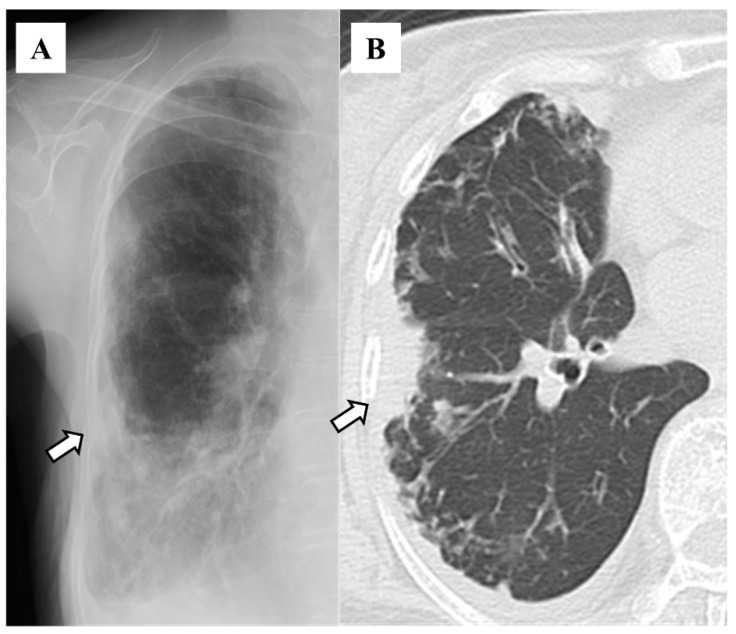
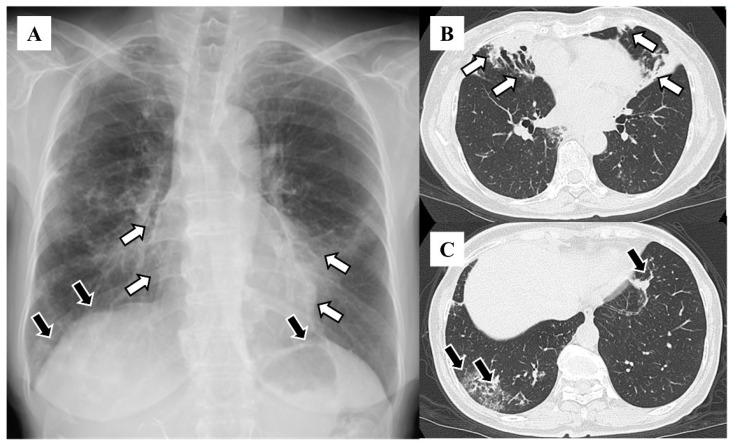
The prevalence of bronchiectasis is increasing globally, and early detection using chest imaging has been encouraged to improve its prognosis. However, the sensitivity of a chest X-ray as a screening tool remains unclear. This study examined the chest X-ray features predictive of bronchiectasis. We retrospectively reviewed the chest X-rays of patients with bronchiectasis diagnosed using high-resolution computed tomography who visited our institute from January 2013 to March 2020. Patients with cardiac pacemakers, lung cancer, and interstitial pneumonia, which might bias the detection of bronchiectasis, were excluded. Two respiratory physicians independently determined the presence or absence of potential features reflecting bronchiectasis, including a vague cardiac silhouette on chest X-rays. The study enrolled 130 patients, including 72 women (55.4%), with a mean age of 72 years. The features observed on chest X-rays included granular shadows (88.5%, n = 115), vague cardiac silhouettes (48.5%, n = 64), nodular shadows (45.4%, n = 59), a tram-track appearance (35.4%, n = 46), pleural thickening (26.9%, n = 35), vague diaphragm silhouettes (25.4%, n = 33), and a ring sign (24.6%, n = 32). The kappa values for these features were 0.271, 0.344, 0.646, 0.256, 0.312, 0.514, and 0.376, respectively. Although traditional chest X-ray features believed to reflect bronchiectasis, such as the tram-track appearance or ring sign, were not frequently seen, vague cardiac silhouettes and granular shadows had high positivity rates, indicating their potential utility for bronchiectasis screening. However, the interobserver concordance rates were unsatisfactory.
支气管扩张的全球患病率正在上升,因此鼓励采用胸部影像学进行早期检测以改善其预后。然而,胸部X光作为筛查工具的敏感性仍不明确。本研究调查了可预测支气管扩张的胸部X光特征。我们回顾性分析了2013年1月至2020年3月期间到我院就诊、经高分辨率计算机断层扫描诊断为支气管扩张患者的胸部X光片。排除了可能影响支气管扩张检测的心脏起搏器植入患者、肺癌患者和间质性肺炎患者。两名呼吸内科医生独立判断胸部X光片上是否存在反映支气管扩张的潜在特征,包括心脏轮廓模糊。该研究共纳入130例患者,其中女性72例(55.4%),平均年龄72岁。胸部X光片上观察到的特征包括颗粒状阴影(88.5%,n = 115)、心脏轮廓模糊(48.5%,n = 64)、结节状阴影(45.4%,n = 59)、轨道征(35.4%,n = 46)、胸膜增厚(26.9%,n = 35)、膈轮廓模糊(25.4%,n = 33)和环形征(24.6%,n = 32)。这些特征的kappa值分别为0.271、0.344、0.646、0.256、0.312、0.514和0.376。尽管传统上认为反映支气管扩张的胸部X光特征,如轨道征或环形征并不常见,但心脏轮廓模糊和颗粒状阴影的阳性率较高,表明它们在支气管扩张筛查中具有潜在用途。然而观察者间的一致性率并不理想。