Eltom Elhassan Hussein, Alali Abdulrahman Omar A, Alanazi Rakan Khalid Marzouq, Alanazi Ali Ahmad M, Albalawi Meshal Ahmed Abdullah, Alanazi Saud Alraydh N, Alanazi Mansour Sarhan G, Badawy Abdelnaser A, Mokhtar Naglaa, Fawzy Manal S
Department of Pharmacology, Faculty of Medicine, Northern Border University, Arar 91431, Saudi Arabia.
Faculty of Medicine, Northern Border University, Arar 91431, Saudi Arabia.
Clin Pract. 2024 Dec 12;14(6):2681-2692. doi: 10.3390/clinpract14060211.
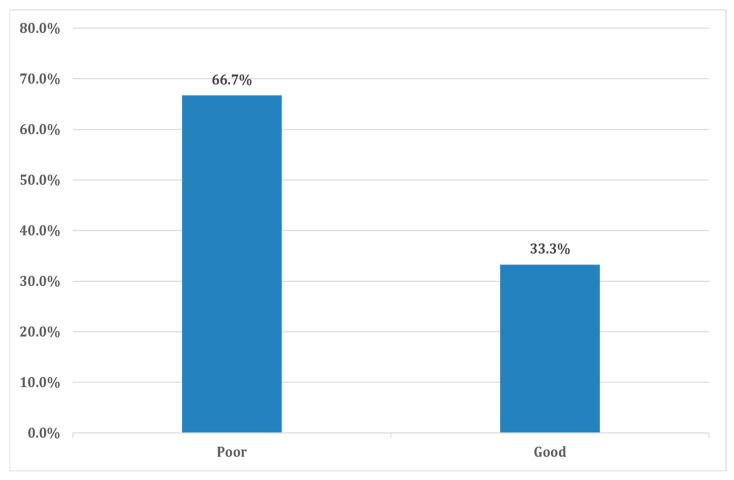
: Diabetic ketoacidosis (DKA) is a critical complication of diabetes mellitus, posing significant health. While global studies have indicated a concerning lack of awareness regarding DKA among patients with diabetes, research specific to the northern area of Saudi Arabia remains limited. This study aims to explore the level of knowledge and awareness of DKA among patients with diabetes residing in the local region. : A cross-sectional analysis was conducted utilizing a non-probability convenient sampling technique, with 339 participants recruited from March to August 2024. Data were gathered through a self-administered pre-validated questionnaire distributed via different social media platforms to assess demographic characteristics and awareness levels relating to DKA, including knowledge of its symptoms, causes, and treatment options. : Although there was moderate awareness of DKA, with 68.4% having heard of the condition, two-thirds of the participants exhibited significant gaps in overall knowledge. Among those aware, 76.3% recognized DKA as an emergency requiring immediate medical intervention. At the same time, 64.6% understood the causes of DKA, and only 25.6% identified insulin deficiency as a major contributing factor. Although 62.5% felt knowledgeable about treatment, 66.0% incorrectly identified oral sugar as a DKA treatment. Notably, 30.1% cited social media as their main information source. Age emerged as an essential factor impacting knowledge, with younger participants (ages 18-30) demonstrating higher awareness than older individuals. Additionally, single participants displayed a higher percentage of good knowledge than married participants ( = 0.000). Non-working individuals showed better overall knowledge about DKA ( = 0.002). The duration of diabetes did not show a significant association with knowledge levels about DKA across the various duration categories. : The present findings underscore a substantial knowledge gap concerning DKA among the local community, highlighting a critical need for targeted public health educational interventions.
糖尿病酮症酸中毒(DKA)是糖尿病的一种严重并发症,对健康构成重大威胁。虽然全球研究表明糖尿病患者对DKA的认识令人担忧地缺乏,但沙特阿拉伯北部地区的具体研究仍然有限。本研究旨在探讨当地糖尿病患者对DKA的知识和认识水平。:采用非概率便利抽样技术进行横断面分析,于2024年3月至8月招募了339名参与者。通过在不同社交媒体平台上分发的预先验证的自填问卷收集数据,以评估与DKA相关的人口统计学特征和认识水平,包括对其症状、病因和治疗选择的了解。:虽然对DKA有一定程度的认识,68.4%的人听说过这种疾病,但三分之二的参与者在整体知识上存在显著差距。在知晓者中,76.3%认识到DKA是需要立即医疗干预的紧急情况。同时,64.6%的人了解DKA的病因,只有25.6%的人认为胰岛素缺乏是主要促成因素。虽然62.5%的人觉得自己对治疗有了解,但66.0%的人错误地将口服糖认定为DKA的治疗方法。值得注意的是,30.1%的人将社交媒体作为他们的主要信息来源。年龄是影响知识的一个重要因素,年轻参与者(18 - 30岁)的认识高于年长者。此外,单身参与者的良好知识比例高于已婚参与者(=0.000)。无工作的人对DKA的整体了解更好(=0.002)。糖尿病病程在不同病程类别中与DKA知识水平没有显著关联。:目前的研究结果强调了当地社区在DKA方面存在巨大的知识差距,突出了针对性公共卫生教育干预的迫切需求。