Zakynthinos George E, Gialamas Ioannis, Tsolaki Vasiliki, Pantelidis Panteleimon, Goliopoulou Athina, Gounaridi Maria Ioanna, Tzima Ioanna, Xanthopoulos Andrew, Kalogeras Konstantinos, Siasos Gerasimos, Oikonomou Evangelos
3rd Department of Cardiology, "Sotiria" Chest Diseases Hospital, Medical School, National and Kapodistrian University of Athens, 11527 Athens, Greece.
Critical Care Department, University Hospital of Larissa, Faculty of Medicine, University of Thessaly, 41335 Larissa, Greece.
J Cardiovasc Dev Dis. 2024 Dec 11;11(12):401. doi: 10.3390/jcdd11120401.
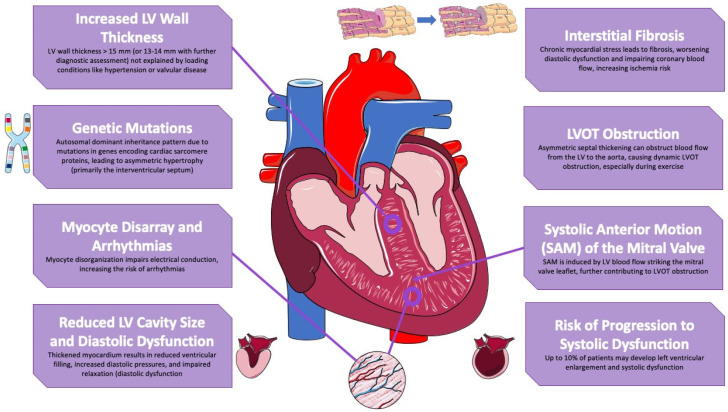
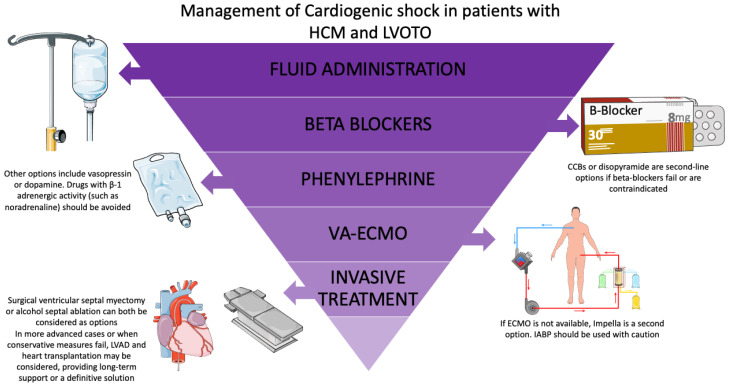
Hypertrophic cardiomyopathy (HCM) is a complex and heterogeneous cardiac disorder, often complicated by cardiogenic shock, a life-threatening condition marked by severe cardiac output failure. Managing cardiogenic shock in HCM patients presents unique challenges due to the distinct pathophysiology of the disease, which includes dynamic left ventricular outflow tract obstruction, diastolic dysfunction, and myocardial ischemia. This review discusses current and emerging therapeutic strategies tailored to address the complexities of HCM-associated cardiogenic shock and other diseases with similar pathophysiology that provoke left ventricular outflow tract obstruction. We explore the role of pharmacological interventions, including the use of vasopressors and inotropes, which are crucial in stabilizing hemodynamics but require careful selection to avoid exacerbating the outflow obstruction. Additionally, the review highlights advancements in mechanical circulatory support devices such as extracorporeal membrane oxygenation (ECMO) and left ventricular assist devices (LVADs), which have become vital in the acute management of cardiogenic shock. These devices provide temporary support and bridge patients to recovery, definitive therapy, or heart transplantation, which remains a critical option for those with end-stage disease. Furthermore, the review delves into the latest research and clinical trials that are refining these therapeutic approaches, ensuring they are optimized for HCM patients. The impact of these treatments on patient outcomes, including survival rates and quality of life, is also critically assessed. In conclusion, this review underscores the importance of a tailored therapeutic approach in managing cardiogenic shock in HCM patients, integrating pharmacological and mechanical support strategies to improve outcomes in this high-risk population.
肥厚型心肌病(HCM)是一种复杂且异质性的心脏疾病,常并发心源性休克,这是一种以严重心输出量衰竭为特征的危及生命的病症。由于该疾病独特的病理生理学,包括动态左心室流出道梗阻、舒张功能障碍和心肌缺血,管理HCM患者的心源性休克面临着独特的挑战。本综述讨论了针对HCM相关心源性休克以及其他具有类似病理生理学且引发左心室流出道梗阻的疾病的复杂性而制定的当前和新兴治疗策略。我们探讨了药物干预的作用,包括血管加压药和正性肌力药的使用,这些药物在稳定血流动力学方面至关重要,但需要谨慎选择以避免加重流出道梗阻。此外,该综述强调了机械循环支持设备的进展,如体外膜肺氧合(ECMO)和左心室辅助设备(LVAD),这些设备在急性心源性休克管理中已变得至关重要。这些设备提供临时支持,并帮助患者过渡到康复、确定性治疗或心脏移植,心脏移植对于终末期疾病患者仍然是一个关键选择。此外,该综述深入探讨了正在完善这些治疗方法的最新研究和临床试验,以确保它们针对HCM患者进行了优化。还对这些治疗对患者预后的影响,包括生存率和生活质量进行了严格评估。总之,本综述强调了采用量身定制的治疗方法来管理HCM患者心源性休克的重要性,整合药物和机械支持策略以改善这一高危人群的预后。