Pu Decheng, Wang Zhengxi, Zheng Jishu, Li Peiyuan, Wei Xiuli, Li Dongsheng, Gao Lihong, Zhou Lin, Wang Yu
Key Laboratory of Smart Agricultural Technology in the Southwest Mountains, Ministry of Agriculture and Rural Affairs (Co-Construction by Ministry and Province), Chongqing Academy of Agricultural Sciences, Chongqing 400715, China.
College of Fisheries, Southwest University, Chongqing 400715, China.
Metabolites. 2024 Nov 21;14(12):649. doi: 10.3390/metabo14120649.
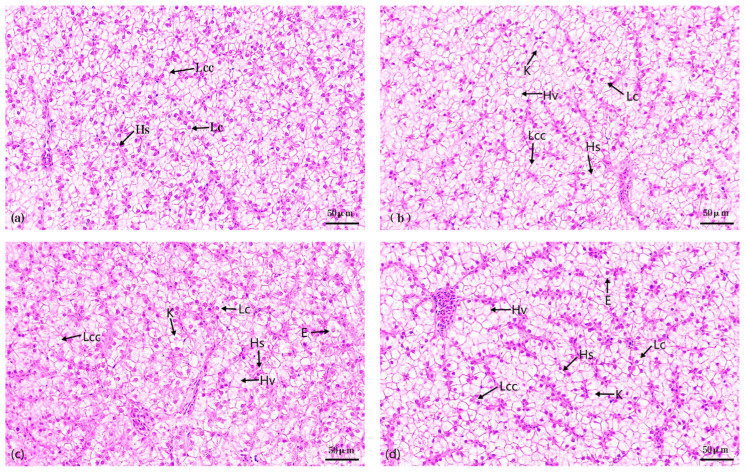
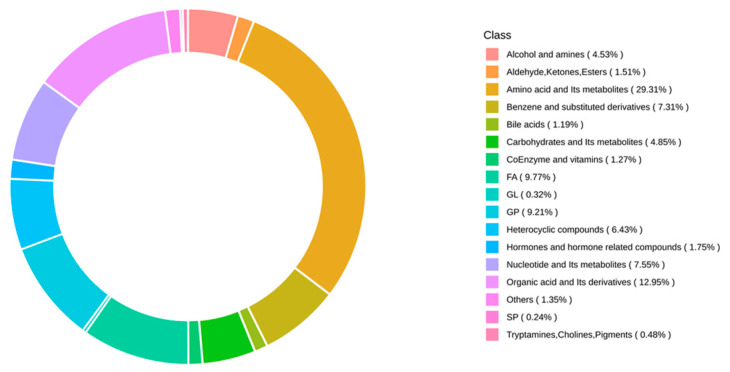
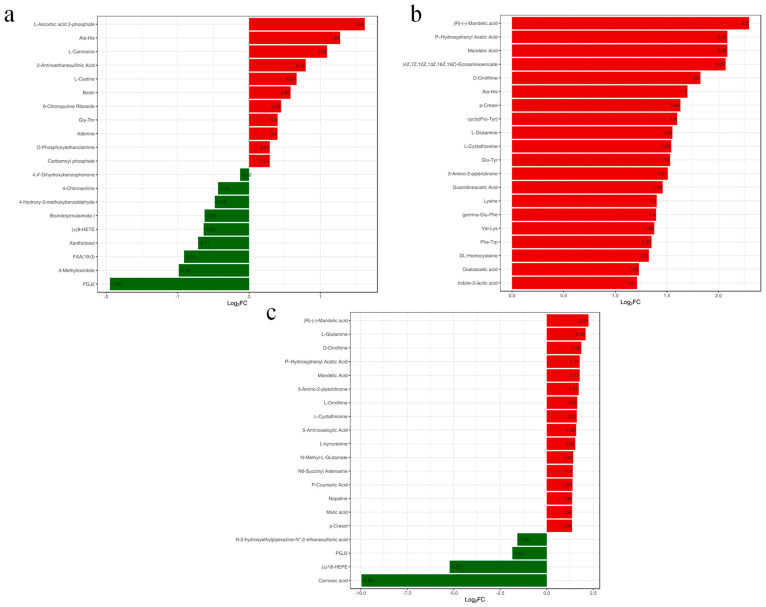
Ammonia, a ubiquitous contaminant in aquatic ecosystems, poses multifaceted threats to fish species at elevated concentrations. In order to investigate the toxic effects of chronic ammonia stress on the liver of juvenile , the present experiment was conducted to investigate the differences in changes in liver tissue structure, enzyme activities, and metabolomes after 28 days of ammonia exposure (0, 4, 8, and 16 mg/L). The findings revealed that ammonia exposure induced significant oxidative stress in the liver, manifesting in decreased activities of antioxidant enzymes SOD and GSH-Px, elevated levels of GSH, GST, and MDA, and heightened activities of immune enzymes LZM, ALP, and ACP. An increase in ammonia concentration exacerbated liver tissue damage. Metabolome analysis further unveiled perturbations in liver metabolites of exposed to ammonia, with Ala-His emerging as a potentially pivotal functional substance under chronic stress. Specifically, the 4 mg/L group responded to ammonia toxicity by augmenting GSH and L-Carnosine levels, the 8 mg/L group detoxified via upregulation of L-Glutamine, and the 16 mg/L group mitigated toxicity through the urea synthesis pathway. This research offers preliminary insights into the toxicological responses of under chronic ammonia stress. It is suggested that the duration of ammonia concentration exceeding 4 mg/L in high-density aquaculture should not exceed 7 days.
氨是水生生态系统中普遍存在的污染物,在浓度升高时会对鱼类造成多方面的威胁。为了研究慢性氨胁迫对幼鱼肝脏的毒性作用,本实验旨在探究氨暴露28天(0、4、8和16毫克/升)后肝脏组织结构、酶活性和代谢组的变化差异。研究结果表明,氨暴露会诱导肝脏产生显著的氧化应激,表现为抗氧化酶超氧化物歧化酶(SOD)和谷胱甘肽过氧化物酶(GSH-Px)活性降低,谷胱甘肽(GSH)、谷胱甘肽S-转移酶(GST)和丙二醛(MDA)水平升高,以及免疫酶溶菌酶(LZM)、碱性磷酸酶(ALP)和酸性磷酸酶(ACP)活性增强。氨浓度的增加加剧了肝脏组织损伤。代谢组分析进一步揭示了氨暴露后幼鱼肝脏代谢物的紊乱情况,丙氨酸-组氨酸在慢性应激下可能是一种潜在的关键功能物质。具体而言,4毫克/升组通过增加GSH和L-肌肽水平来应对氨毒性,8毫克/升组通过上调L-谷氨酰胺进行解毒,16毫克/升组则通过尿素合成途径减轻毒性。本研究为幼鱼在慢性氨胁迫下的毒理学反应提供了初步见解。建议高密度养殖中氨浓度超过4毫克/升的持续时间不应超过7天。