Yunis Bushra, Echevarría-Pérez Paloma, Morante Juan Jose Hernandez, Morales-Moreno Isabel
North District Meuhedet HMO, Tel-Aviv University, Tel-Aviv 6997801, Israel.
Faculty of Nursing, Universidad Católica de Murcia, Campus de Guadalupe, 30107 Murcia, Spain.
Nurs Rep. 2024 Dec 5;14(4):3830-3846. doi: 10.3390/nursrep14040280.
BACKGROUND/OBJECTIVES: Previous studies have shown that primary care (PC) professionals have a low knowledge about the management of patients with type 2 diabetes, despite being one of the most common chronic diseases. The objective of this study is to analyze the impact of an educational program for health professionals on the metabolic control of their patients diagnosed with type 2 diabetes.
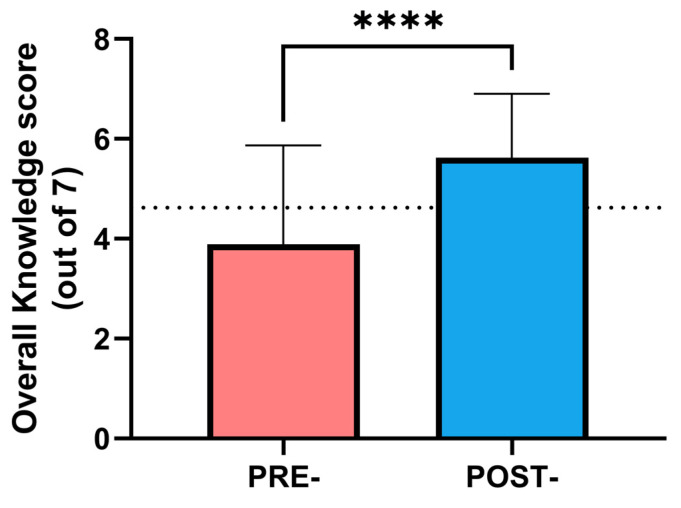
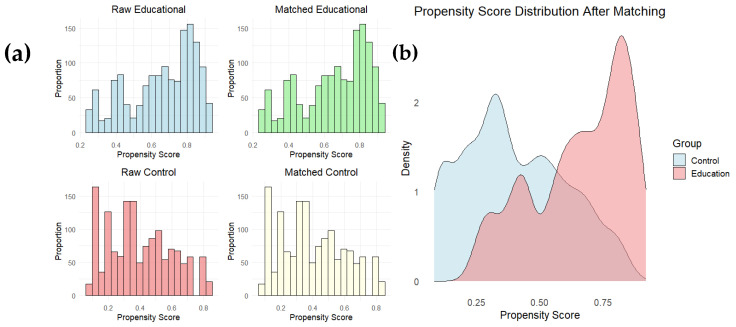
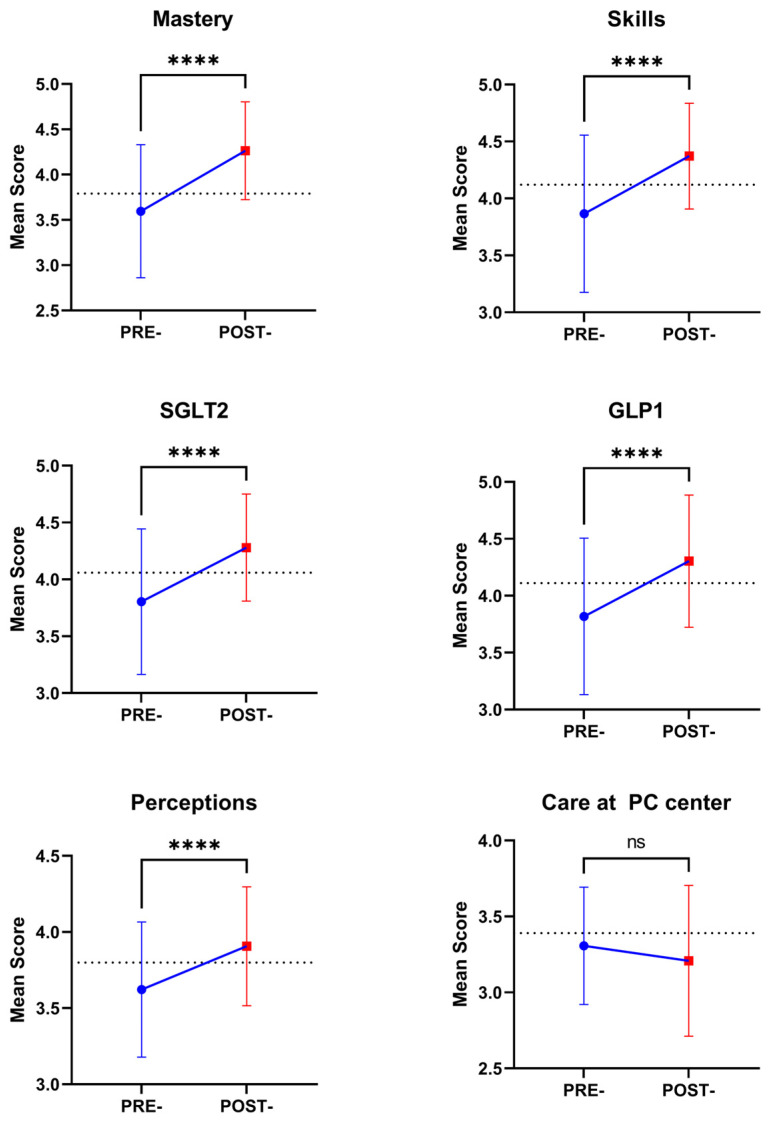
This work follows a quasi-experimental longitudinal design following a double perspective. First, an educational intervention was conducted on primary care health professionals. Previous diabetes knowledge was evaluated on 157 PC health professionals. Those with lower knowledge scores (<3.5 out of 7) were allocated to the intervention group. An 8-week advanced education program was conducted on 77 PC health professionals. Self-efficacy and quality of care were evaluated. Second, a prospective cohort study was conducted to evaluate changes in metabolic parameters in their patients with type 2 diabetes. A total of 4099 patients with type 2 diabetes attending PC services were divided depending on the formation of health professionals. Biochemical and other clinical parameters were determined at baseline and after 12 months; the study was allocated in the Primary Health Centers of Meuhedet North District (Israel), from January 2022 to June 2023. Changes from the baseline were compared using ANOVA. Additionally, a mixed-effect model was conducted to capture variability within primary care staff and between groups of patients.
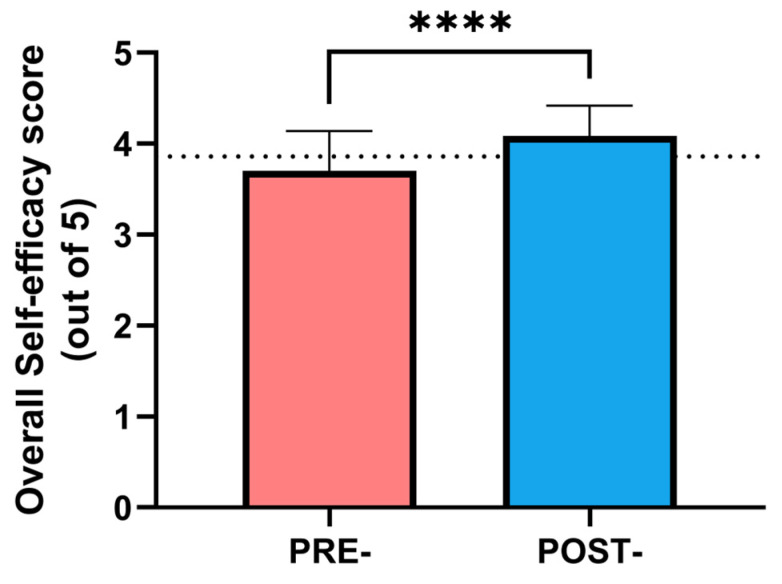
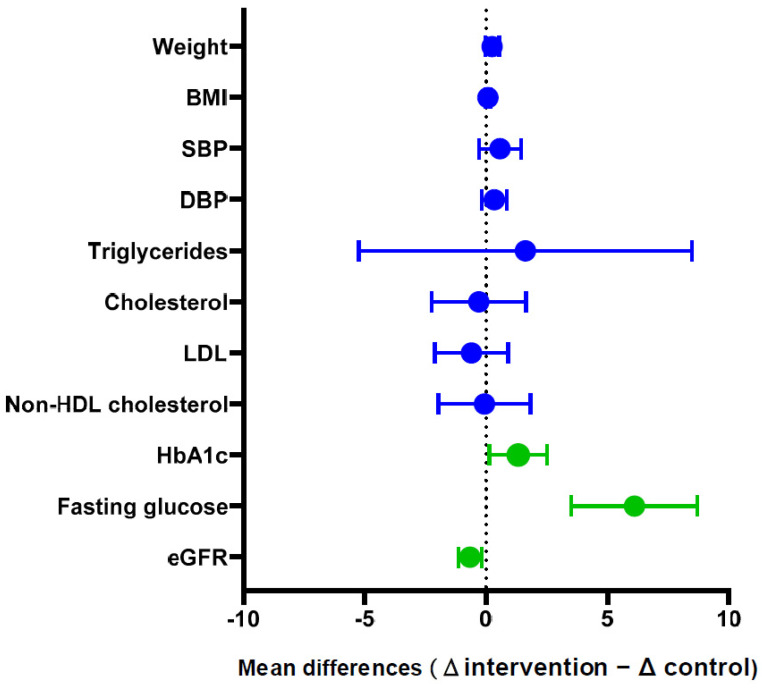
The education program significantly improved health staff knowledge ( < 0.001) and all dimensions of self-efficacy ( < 0.001 in all cases). These improvements were mirrored in patients' outcomes, since those managed by health professionals attending the advanced practice education showed, after 6 months, better glucose ( < 0.001), HbA1c ( < 0.001), and eGFR ( = 0.006) levels.
The advanced practice education program oriented to PC professionals was able to significantly improve their self-efficacy and perceived quality of care, which induced a significant effect on metabolic markers of patients with type 2 diabetes. Overall, the data reinforce the usefulness of advanced education programs, especially in chronic complex diseases like type 2 diabetes.
背景/目的:先前的研究表明,尽管2型糖尿病是最常见的慢性病之一,但基层医疗(PC)专业人员对2型糖尿病患者的管理知识水平较低。本研究的目的是分析一项针对卫生专业人员的教育计划对其2型糖尿病患者代谢控制的影响。
本研究采用双视角的准实验纵向设计。首先,对基层医疗卫生专业人员进行教育干预。对157名基层医疗卫生专业人员的糖尿病相关知识进行了评估。知识得分较低(7分制中低于3.5分)的人员被分配到干预组。对77名基层医疗卫生专业人员开展了为期8周的进阶教育计划。评估了自我效能感和医疗质量。其次,进行了一项前瞻性队列研究,以评估其2型糖尿病患者代谢参数的变化。共有4099名到基层医疗服务机构就诊的2型糖尿病患者根据卫生专业人员的培训情况进行分组。在基线和12个月后测定生化及其他临床参数;该研究于2022年1月至2023年6月在以色列梅乌赫德北区的初级卫生保健中心进行。使用方差分析比较与基线相比的变化。此外,还进行了混合效应模型分析,以了解基层医疗人员内部和患者组之间的差异。
该教育计划显著提高了卫生人员的知识水平(<0.001)和自我效能感的各个维度(所有情况下均<0.001)。这些改善反映在患者的治疗结果上,因为由参加进阶实践教育的卫生专业人员管理的患者在6个月后血糖(<0.001)、糖化血红蛋白(HbA1c,<0.001)和估算肾小球滤过率(eGFR,=0.006)水平更好。
面向基层医疗专业人员的进阶实践教育计划能够显著提高他们的自我效能感和感知医疗质量,这对2型糖尿病患者的代谢指标产生了显著影响。总体而言,这些数据强化了进阶教育计划的实用性,尤其是在2型糖尿病等慢性复杂疾病方面。