Jiang Xiaoyan, Sun Kuanxiang, Fan Yudi, Xiang Qianchun, Zou Rong, Yang Yeming, Zhu Xianjun, Liu Wenjing
The Sichuan Provincial Key Laboratory for Human Disease Gene Study and Center for Medical Genetics, Sichuan Provincial People's Hospital, University of Electronic Science and Technology of China, Chengdu, China.
Henan Branch of National Clinical Research Center for Ocular Diseases, Henan Eye Hospital, People's Hospital of Zhengzhou University, Henan Provincial People's Hospital, Zhengzhou, China.
Invest Ophthalmol Vis Sci. 2024 Dec 2;65(14):40. doi: 10.1167/iovs.65.14.40.
N6-methyladenosine (m6A) modification, one of the most common epigenetic modifications in eukaryotic mRNA, has been shown to play a role in the development and function of the mammalian nervous system by regulating the biological fate of mRNA. METTL3, the catalytically active component of the m6A methyltransferase complex, has been shown to be essential in development of in the retina. However, its role in the mature retina remains elusive. In this study we aim to investigate the in vivo function of Mettl3 in the photoreceptor cells using a conditional knockout allele of Mettl3.
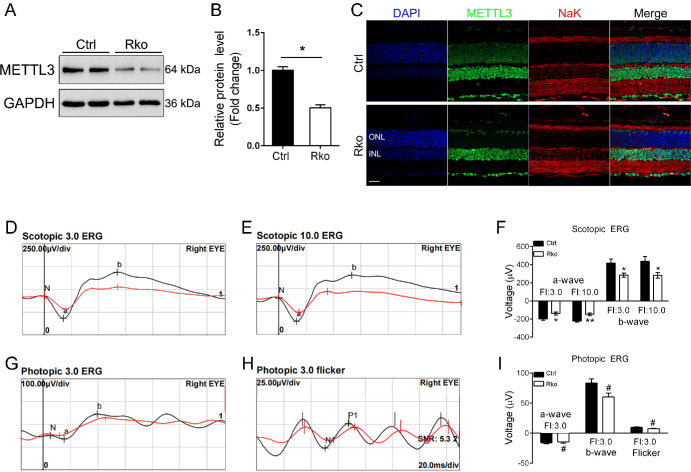
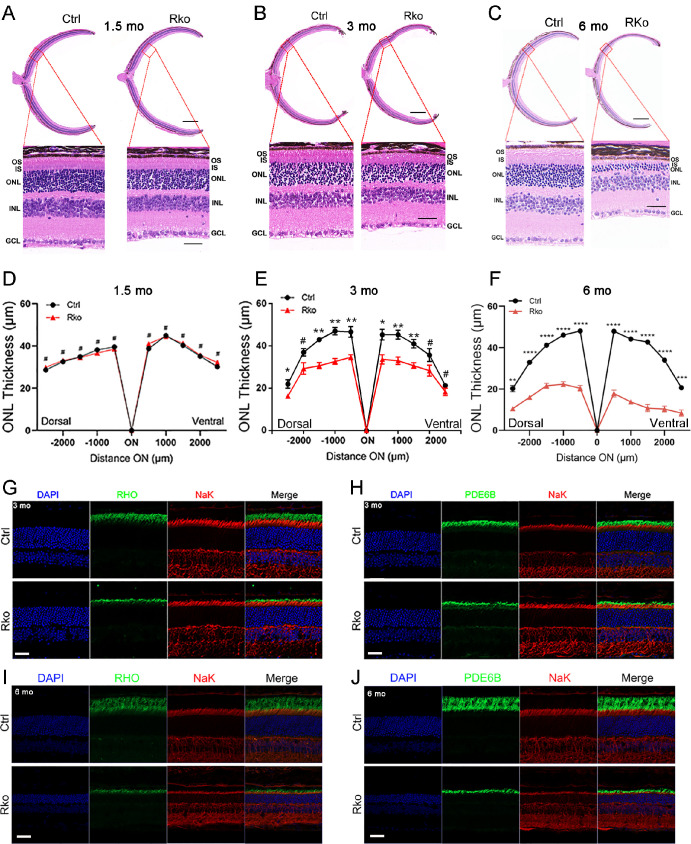
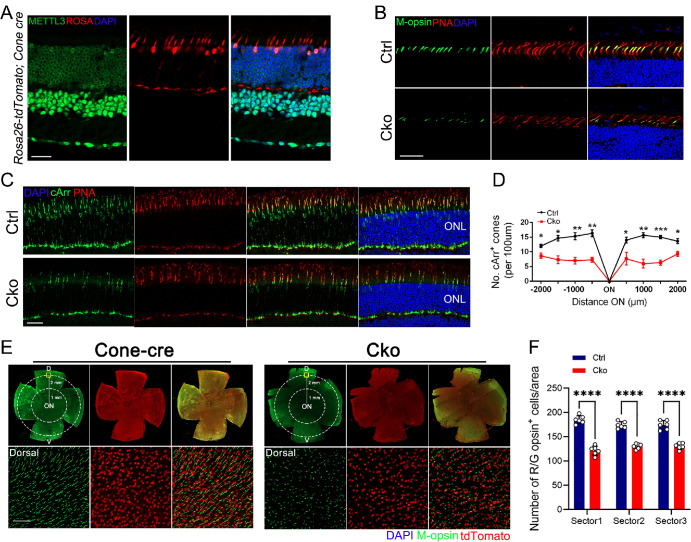
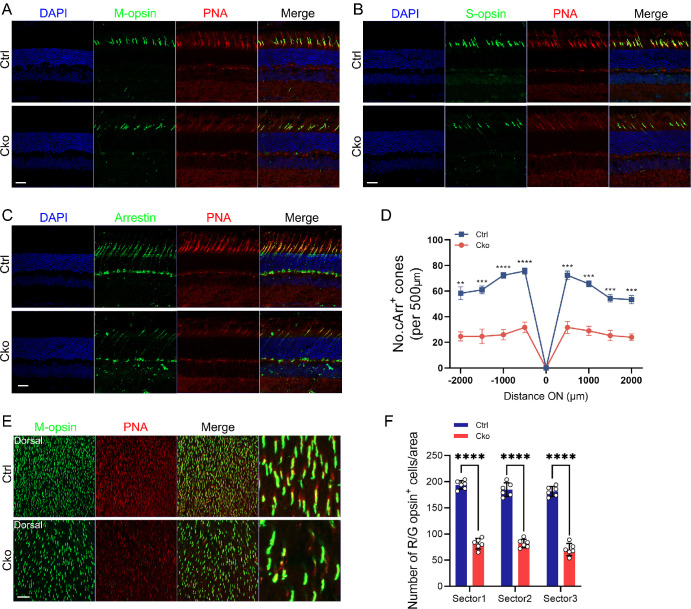
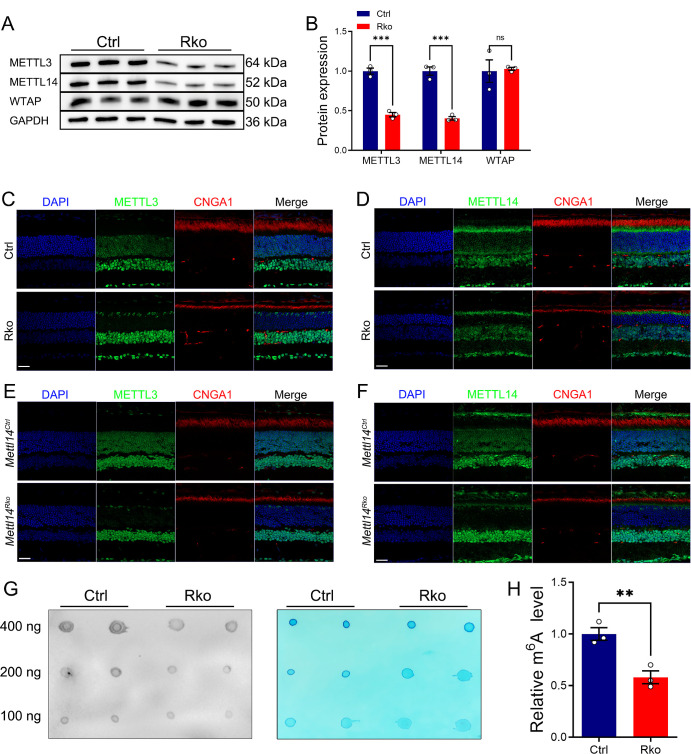
Deletion of Mettl3 in rod cells led to progressive retinal degeneration, including progressive retinal thinning, impaired visual function, shortened photoreceptor outer segments (OS), and reduced expression of disk membrane proteins. Similarly, Mettl3 deficiency in cone cells led to the gradual degeneration of cone opsins. Additionally, Mettl3 knockout significantly decreased the expression of the METTL14 subunit and overall m6A methylation levels in the retina.
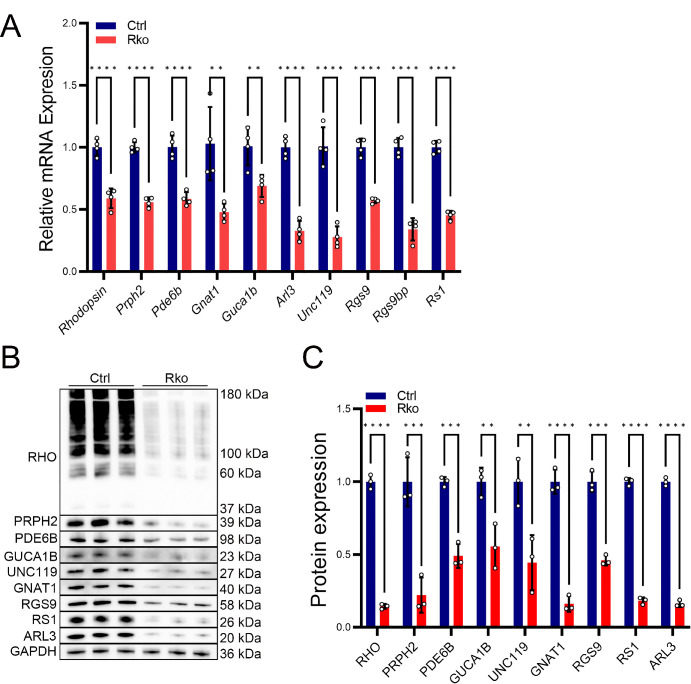
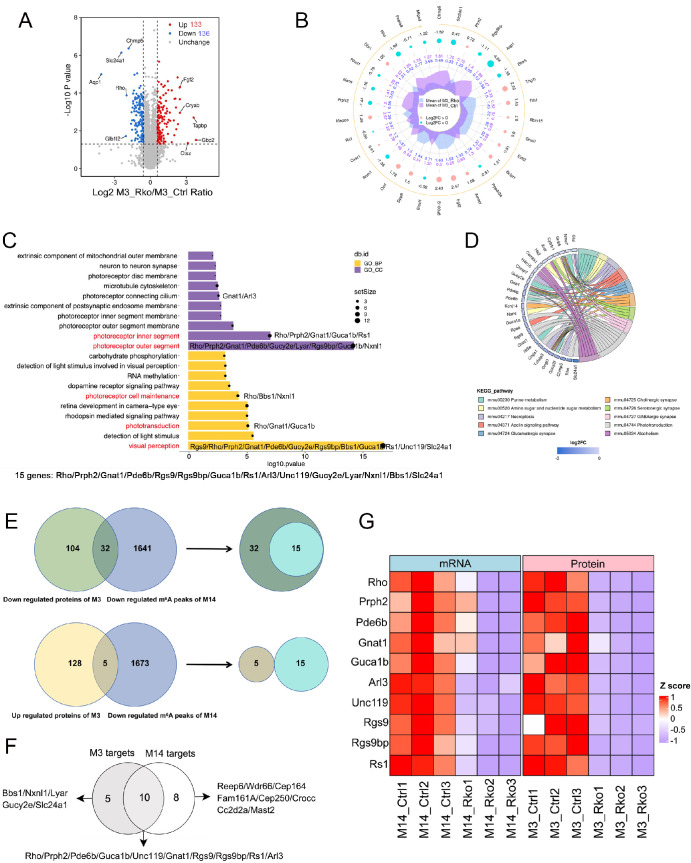
Multi-omics analyses revealed that Mettl3 deletion led to the downregulation of mRNA and protein levels of 10 key target genes in rod cells, ultimately resulting in the progressive death of photoreceptors. Mettl3 controls expression of its target genes by regulating their m6A modification, ultimately leading to rod cell death.
These findings highlight critical roles of METTL3 in maintaining retinal photoreceptor function and further elucidate the mechanisms of m6A modification in photoreceptors.
N6-甲基腺苷(m6A)修饰是真核生物mRNA中最常见的表观遗传修饰之一,已被证明通过调节mRNA的生物学命运在哺乳动物神经系统的发育和功能中发挥作用。METTL3是m6A甲基转移酶复合物的催化活性成分,已被证明在视网膜发育中至关重要。然而,其在成熟视网膜中的作用仍不清楚。在本研究中,我们旨在使用Mettl3的条件性敲除等位基因来研究Mettl3在光感受器细胞中的体内功能。
杆状细胞中Mettl3的缺失导致进行性视网膜变性,包括进行性视网膜变薄、视觉功能受损、光感受器外段(OS)缩短以及盘膜蛋白表达降低。同样,锥体细胞中Mettl3的缺乏导致视锥视蛋白逐渐退化。此外,Mettl3敲除显著降低了视网膜中METTL14亚基的表达和整体m6A甲基化水平。
多组学分析表明,Mettl3缺失导致杆状细胞中10个关键靶基因的mRNA和蛋白质水平下调,最终导致光感受器进行性死亡。Mettl3通过调节其靶基因的m6A修饰来控制其表达,最终导致杆状细胞死亡。
这些发现突出了METTL3在维持视网膜光感受器功能中的关键作用,并进一步阐明了光感受器中m6A修饰的机制。