Department of Hematology, the First Affiliated Hospital of Medical School of Zhejiang University, No. 79 Qingchun Road, Hangzhou, 310003, Zhejiang, China.
J Hematol Oncol. 2020 Apr 10;13(1):35. doi: 10.1186/s13045-020-00872-8.
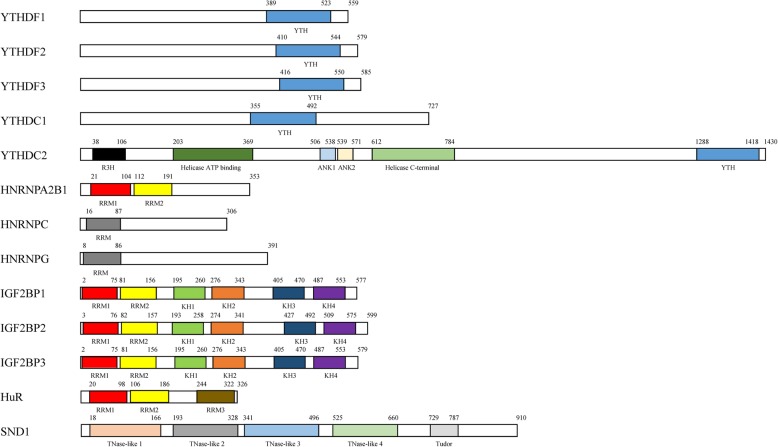
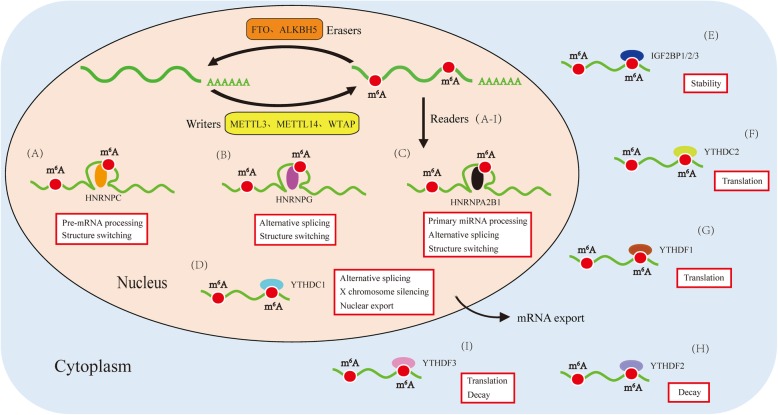
N-methyladenosine (mA) is a well-known post-transcriptional modification that is the most common type of methylation in eukaryotic mRNAs. The regulation of mA is dynamic and reversible, which is erected by mA methyltransferases ("writers") and removed by mA demethylases ("erasers"). Notably, the effects on targeted mRNAs resulted by mA predominantly depend on the functions of different mA-binding proteins ("readers") including YT521-B homology (YTH) domain family, heterogeneous nuclear ribonucleoproteins (HNRNPs), and insulin-like growth factor 2 mRNA-binding proteins (IGF2BPs). Indeed, mA readers not only participate in multiple procedures of RNA metabolism, but also are involved in a variety of biological processes. In this review, we summarized the specific functions and underlying mechanisms of mA-binding proteins in tumorigenesis, hematopoiesis, virus replication, immune response, and adipogenesis.
N6-甲基腺苷(m6A)是一种常见的转录后修饰,是真核 mRNA 中最普遍的甲基化类型。m6A 的调控具有动态性和可逆性,由 m6A 甲基转移酶(“写入器”)建立,并由 m6A 去甲基化酶(“橡皮擦”)去除。值得注意的是,m6A 对靶 mRNA 的影响主要取决于不同的 m6A 结合蛋白(“读取器”)的功能,包括 YT521-B 同源(YTH)结构域家族、异质核核糖核蛋白(HNRNPs)和胰岛素样生长因子 2 mRNA 结合蛋白(IGF2BPs)。事实上,m6A 读取器不仅参与 RNA 代谢的多个过程,而且还参与多种生物学过程。在这篇综述中,我们总结了 m6A 结合蛋白在肿瘤发生、造血、病毒复制、免疫反应和脂肪生成中的特定功能和潜在机制。