Zhu Xiwang, Fan Chengyue, Fang Yichen, Yu Wenqing, Xie Yawei, Liu Hongyuan
College of Civil Engineering, Zhejiang University of Technology, Hangzhou 310023, China.
Zhejiang Supcon Information Co., Ltd., Hangzhou 310056, China.
Membranes (Basel). 2024 Nov 26;14(12):251. doi: 10.3390/membranes14120251.
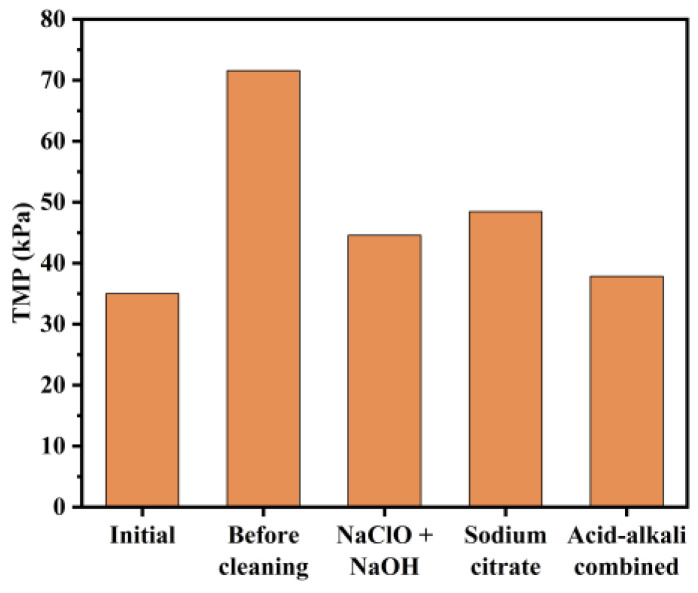
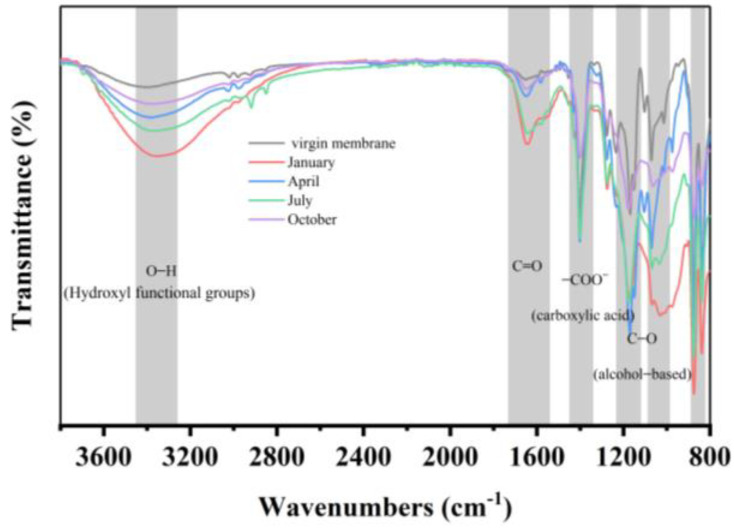
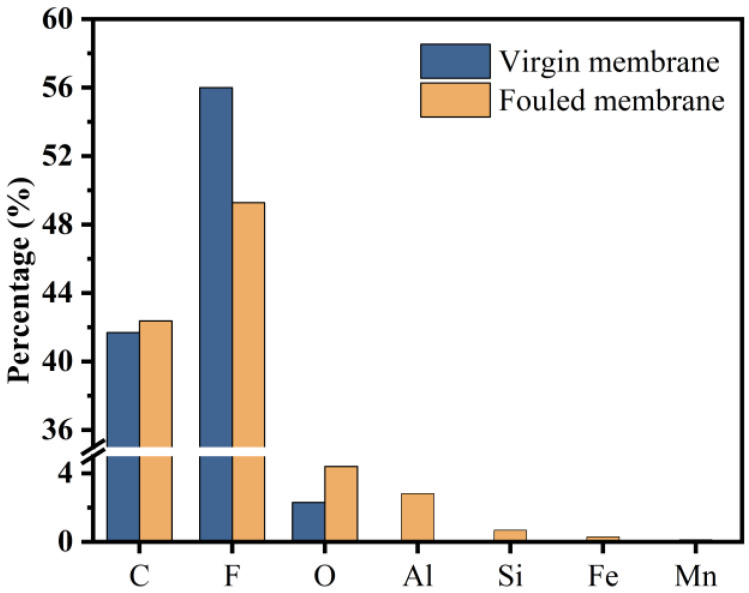
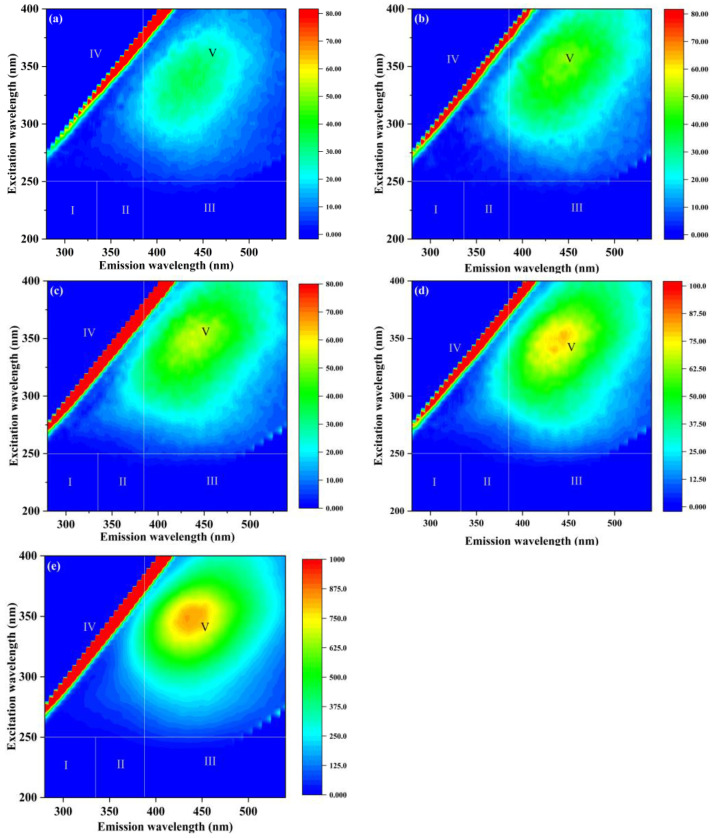
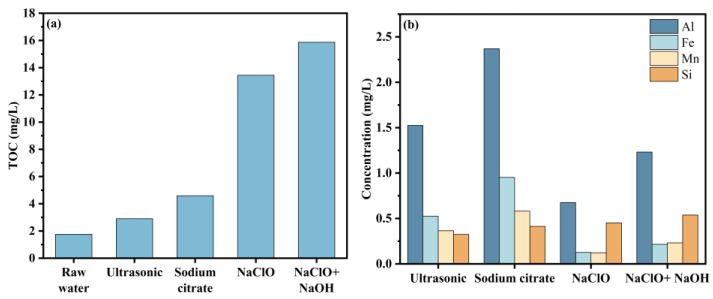
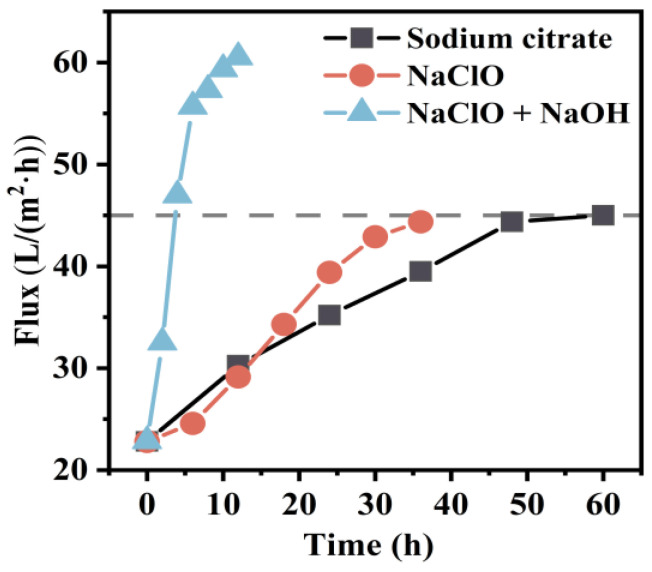
This study investigated membrane fouling issues associated with the operation of a submerged ultrafiltration membrane in a drinking water treatment plant (DWTP) and optimized the associated chemical cleaning strategies. By analyzing the surface components of the membrane foulant and the compositions of the membrane cleaning solution, the primary causes of membrane fouling were identified. Membrane fouling control strategies suitable for the DWTP were evaluated through chemical cleaning tests conducted for bench-scale, full-scale, and engineering cases. The results show that the membrane foulants were primarily composed of a mixture of inorganics and organics; the inorganics were mainly composed of Al and Si, while the organics were primarily humic acid (HA). Sodium citrate proved to be the most effective cleaning agent for inorganic fouling, which was mainly composed of Al, whereas sodium hypochlorite (NaClO) combined with sodium hydroxide (NaOH) showed the best removal efficiency for organic fouling, which predominantly consisted of HA and Si. However, sodium hypochlorite (NaClO) combined with sodium hydroxide (NaOH) showed the best removal efficiency for organic fouling and Si; organic fouling predominantly consisted of HA. Based on the bench-scale test results, flux recovery was verified in the full-scale system. Under a constant pressure of 30 kPa, the combined acid-alkali cleaning achieved the best flux recovery, restoring the flux from 22.8 L/(m·h) to 66.75 L/(m·h). In the engineering tests, combined acid-alkali cleaning yielded results consistent with those of the full-scale tests. In the practical engineering cleaning process, adopting a cleaning strategy of alkaline (NaClO + NaOH) cleaning followed by acidic (sodium citrate) cleaning can effectively solve the membrane fouling problem.
本研究调查了饮用水处理厂(DWTP)中浸没式超滤膜运行过程中的膜污染问题,并优化了相关的化学清洗策略。通过分析膜污染物的表面成分和膜清洗溶液的组成,确定了膜污染的主要原因。通过对实验室规模、全规模和工程案例进行化学清洗试验,评估了适用于该饮用水处理厂的膜污染控制策略。结果表明,膜污染物主要由无机物和有机物的混合物组成;无机物主要由铝和硅组成,而有机物主要是腐殖酸(HA)。柠檬酸钠被证明是去除主要由铝组成的无机污垢最有效的清洗剂,而次氯酸钠(NaClO)与氢氧化钠(NaOH)组合对主要由HA和硅组成的有机污垢显示出最佳的去除效率。然而,次氯酸钠(NaClO)与氢氧化钠(NaOH)组合对有机污垢和硅显示出最佳的去除效率;有机污垢主要由HA组成。基于实验室规模的试验结果,在全规模系统中验证了通量恢复情况。在30 kPa的恒定压力下,酸碱联合清洗实现了最佳的通量恢复,通量从22.8 L/(m·h)恢复到66.75 L/(m·h)。在工程试验中,酸碱联合清洗的结果与全规模试验的结果一致。在实际工程清洗过程中,采用先碱性(NaClO + NaOH)清洗后酸性(柠檬酸钠)清洗的策略可以有效解决膜污染问题。