Hung Cheng-Hsien, Lu Li-Yu
Department of Pharmacy, Chang Bing Show Chwan Memorial Hospital, Changhua 50544, Taiwan.
Institute of Medicine, Chung Shan Medical University, Taichung 40201, Taiwan.
Neurol Int. 2024 Dec 5;16(6):1717-1730. doi: 10.3390/neurolint16060124.
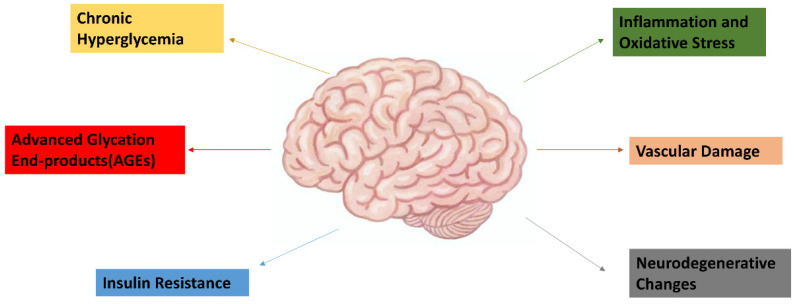
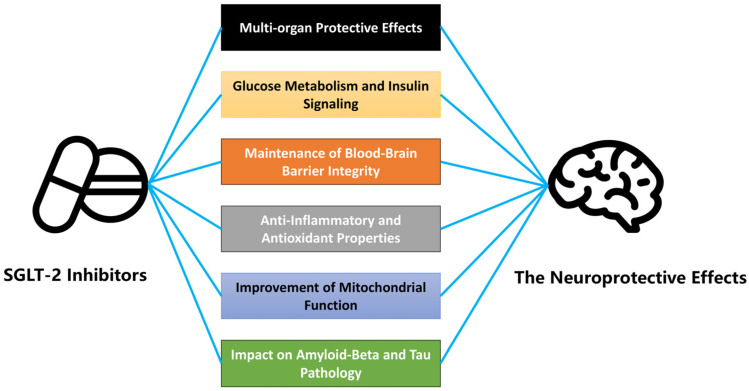
Diabetes mellitus (DM) is a chronic disease associated with numerous complications, including cardiovascular diseases, nephropathy, and neuropathy. Sodium-glucose cotransporter 2 (SGLT-2) inhibitors, a class of novel antidiabetic agents, have demonstrated promising therapeutic effects beyond glycemic control, with potential benefits extending to the cardiovascular and renal systems. Recently, research has increasingly focused on exploring the potential role of SGLT-2 inhibitors in preventing dementia. The aim of this review is to summarize the current research suggesting that SGLT-2 inhibitors, such as empagliflozin and dapagliflozin, may have neuroprotective effects that reduce dementia risk and improve cognitive function in type 2 diabetes patients. These benefits are likely due to better glycemic control, reduced oxidative stress, and less advanced glycation end-product (AGE) formation, all linked to neurodegeneration. Despite these promising findings, existing studies are limited by small sample sizes and short follow-up durations, which may not adequately capture long-term outcomes. To establish more robust evidence, larger-scale, long-term randomized controlled trials (RCTs) involving diverse populations are needed. These studies should involve diverse populations and focus on understanding the mechanisms behind the neuroprotective effects. Addressing these limitations will provide clearer guidelines for using SGLT-2 inhibitors in dementia prevention and management. This will help improve therapeutic strategies for cognitive health in diabetic patients.
糖尿病(DM)是一种与多种并发症相关的慢性疾病,包括心血管疾病、肾病和神经病变。钠-葡萄糖协同转运蛋白2(SGLT-2)抑制剂是一类新型抗糖尿病药物,已显示出除血糖控制外的有前景的治疗效果,其潜在益处扩展到心血管和肾脏系统。最近,研究越来越多地集中在探索SGLT-2抑制剂在预防痴呆症方面的潜在作用。本综述的目的是总结当前的研究,这些研究表明,恩格列净和达格列净等SGLT-2抑制剂可能具有神经保护作用,可降低2型糖尿病患者的痴呆风险并改善认知功能。这些益处可能归因于更好的血糖控制、氧化应激的降低以及晚期糖基化终末产物(AGE)形成的减少,所有这些都与神经退行性变有关。尽管有这些有前景的发现,但现有研究受到样本量小和随访时间短的限制,这可能无法充分捕捉长期结果。为了建立更有力的证据,需要开展涉及不同人群的大规模、长期随机对照试验(RCT)。这些研究应涉及不同人群,并专注于了解神经保护作用背后的机制。解决这些限制将为在痴呆症预防和管理中使用SGLT-2抑制剂提供更明确的指导方针。这将有助于改善糖尿病患者认知健康的治疗策略。