Biessy Laura, Puddick Jonathan, Wood Susanna A, Selwood Andrew I, Carbines Megan, Smith Kirsty F
Cawthron Institute, Molecular Algal Ecology, Nelson 7010, New Zealand.
Faculty of Environment, Lincoln University, Lincoln 7647, New Zealand.
Toxins (Basel). 2024 Dec 3;16(12):522. doi: 10.3390/toxins16120522.
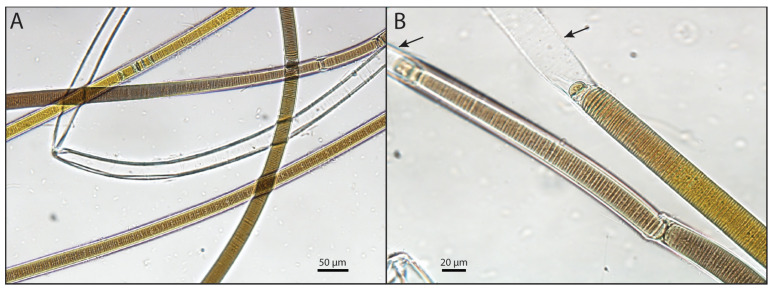
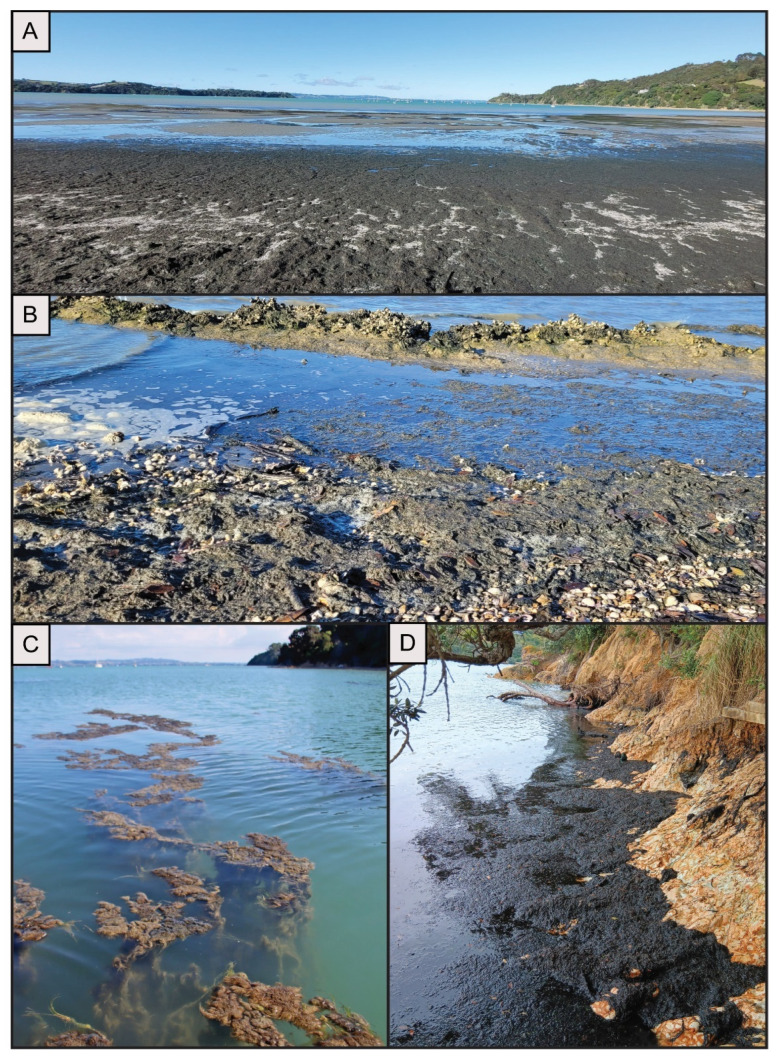
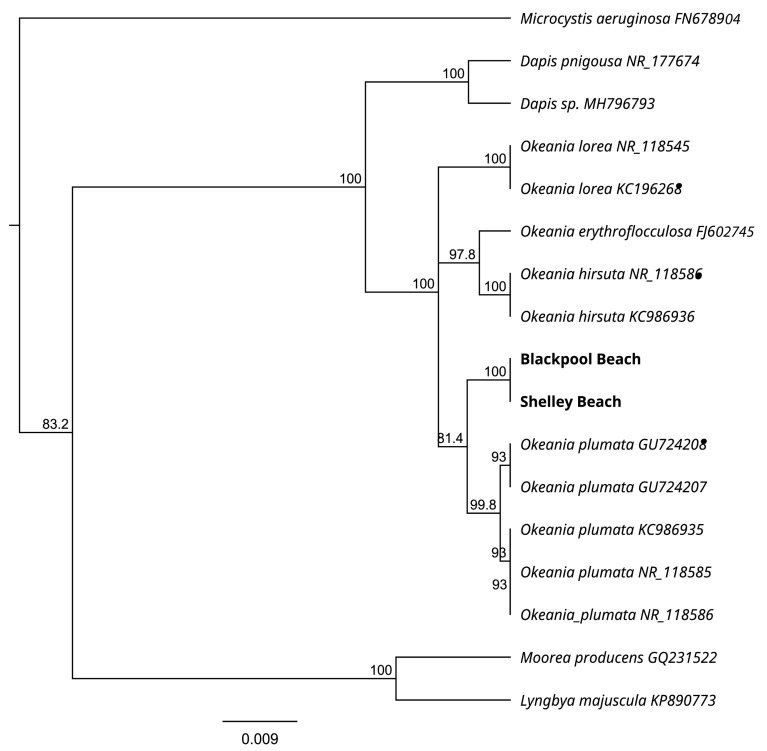
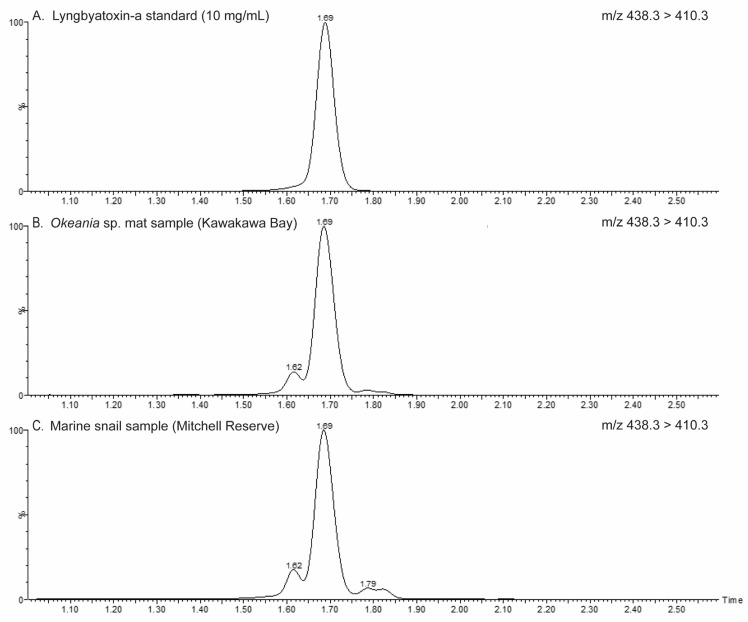
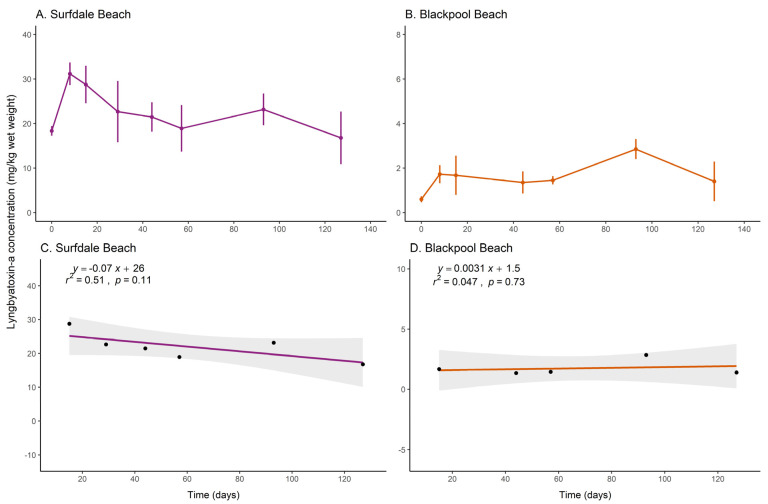
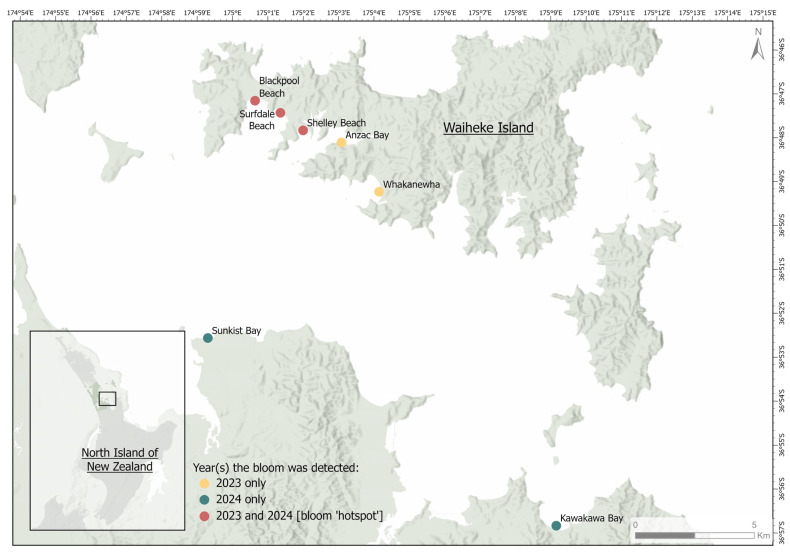
This study reports the first documented accumulation of lyngbyatoxin-a (LTA), a cyanotoxin produced by marine benthic cyanobacteria, in edible shellfish in Aotearoa New Zealand. The study investigates two bloom events in 2022 and 2023 on Waiheke Island, where hundreds of tonnes of marine benthic cyanobacterial mats (mBCMs) washed ashore each summer. Genetic analysis identified the cyanobacterium responsible for the blooms as sp., a genus typically found in tropical marine ecosystems. Analysis by liquid chromatography-tandem mass spectrometry indicated that the cyanobacteria produced a potent dermatoxin, lyngbyatoxin-a (LTA), and that LTA had accumulated in marine snails, rock oysters and cockles collected near the mats. Snails contained the highest levels of LTA (up to 10,500 µg kg). The study also demonstrated that the LTA concentration was stable in composted mats for several months. The presence of LTA in edible species and its stability over time raise concerns about the potential health risks to humans consuming LTA-contaminated seafood. This underlines the need for further studies assessing the risks of human exposure to LTA through seafood consumption, particularly as climate change and eutrophication are expected to increase the frequency of mBCM blooms. The study highlights the need to develop public health risk management strategies for mBCMs.
本研究报告了新西兰奥特亚罗瓦可食用贝类中首次有记录的林加毒素-a(LTA)积累情况,LTA是一种由海洋底栖蓝细菌产生的蓝藻毒素。该研究调查了2022年和2023年怀赫科岛的两次藻华事件,每年夏天都有数百吨海洋底栖蓝细菌垫(mBCM)被冲上岸。基因分析确定导致藻华的蓝细菌为 属,该属通常见于热带海洋生态系统。液相色谱-串联质谱分析表明,这种蓝细菌产生了一种强效皮肤毒素——林加毒素-a(LTA),且LTA已在靠近蓝细菌垫采集的海蜗牛、石牡蛎和鸟蛤中积累。蜗牛体内的LTA含量最高(高达10500微克/千克)。该研究还表明,LTA浓度在堆肥蓝细菌垫中几个月内保持稳定。可食用物种中存在LTA及其随时间的稳定性引发了人们对食用受LTA污染海鲜的人类潜在健康风险的担忧。这凸显了进一步开展研究以评估人类通过食用海鲜接触LTA风险的必要性,特别是考虑到气候变化和富营养化预计会增加mBCM藻华的频率。该研究强调了为mBCM制定公共卫生风险管理策略的必要性。