Marine Wildlife Veterinary Care and Research Center, California Department of Fish and Game, Office of Spill Prevention and Response, Santa Cruz, California, United States of America.
PLoS One. 2010 Sep 10;5(9):e12576. doi: 10.1371/journal.pone.0012576.
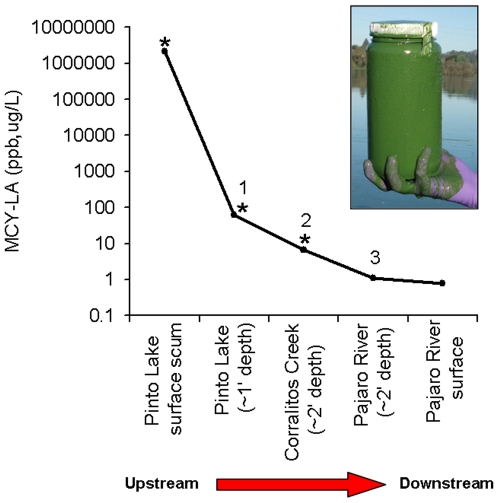
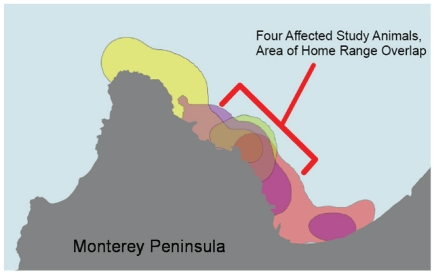
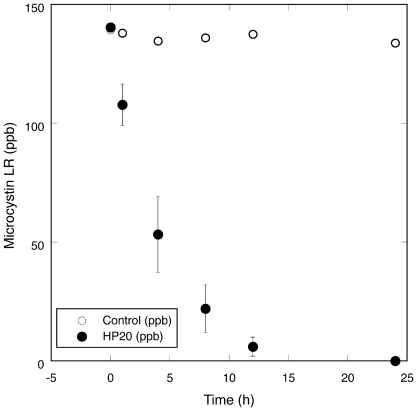
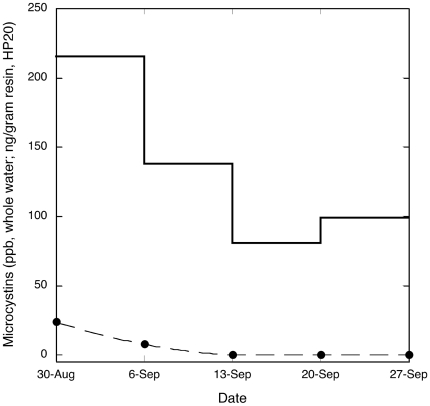
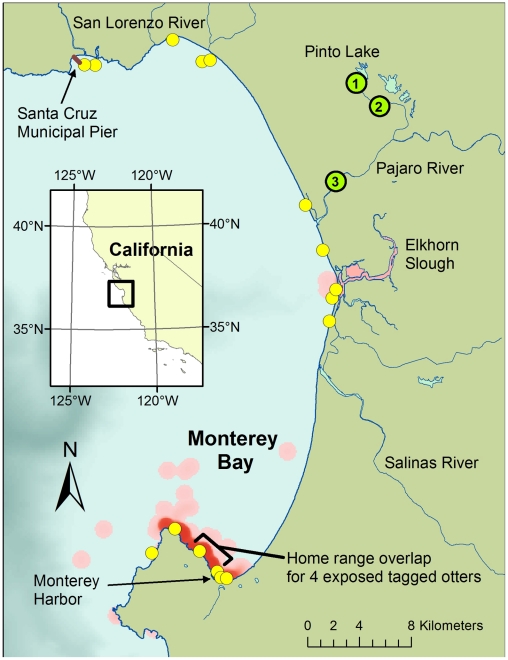
"Super-blooms" of cyanobacteria that produce potent and environmentally persistent biotoxins (microcystins) are an emerging global health issue in freshwater habitats. Monitoring of the marine environment for secondary impacts has been minimal, although microcystin-contaminated freshwater is known to be entering marine ecosystems. Here we confirm deaths of marine mammals from microcystin intoxication and provide evidence implicating land-sea flow with trophic transfer through marine invertebrates as the most likely route of exposure. This hypothesis was evaluated through environmental detection of potential freshwater and marine microcystin sources, sea otter necropsy with biochemical analysis of tissues and evaluation of bioaccumulation of freshwater microcystins by marine invertebrates. Ocean discharge of freshwater microcystins was confirmed for three nutrient-impaired rivers flowing into the Monterey Bay National Marine Sanctuary, and microcystin concentrations up to 2,900 ppm (2.9 million ppb) were detected in a freshwater lake and downstream tributaries to within 1 km of the ocean. Deaths of 21 southern sea otters, a federally listed threatened species, were linked to microcystin intoxication. Finally, farmed and free-living marine clams, mussels and oysters of species that are often consumed by sea otters and humans exhibited significant biomagnification (to 107 times ambient water levels) and slow depuration of freshwater cyanotoxins, suggesting a potentially serious environmental and public health threat that extends from the lowest trophic levels of nutrient-impaired freshwater habitat to apex marine predators. Microcystin-poisoned sea otters were commonly recovered near river mouths and harbors and contaminated marine bivalves were implicated as the most likely source of this potent hepatotoxin for wild otters. This is the first report of deaths of marine mammals due to cyanotoxins and confirms the existence of a novel class of marine "harmful algal bloom" in the Pacific coastal environment; that of hepatotoxic shellfish poisoning (HSP), suggesting that animals and humans are at risk from microcystin poisoning when consuming shellfish harvested at the land-sea interface.
"蓝藻的超级繁殖"会产生强效且在环境中持久存在的生物毒素(微囊藻毒素),这是淡水生境中一个新出现的全球健康问题。尽管已知受微囊藻毒素污染的淡水正进入海洋生态系统,但对海洋环境的次生影响的监测却很少。在这里,我们确认了海洋哺乳动物因微囊藻毒素中毒而死亡,并提供了证据表明,陆地-海洋的水流以及通过海洋无脊椎动物的营养转移是最有可能的暴露途径。通过对潜在的淡水和海洋微囊藻毒素来源进行环境检测、对海洋哺乳动物尸体进行生物化学分析以及评估海洋无脊椎动物对淡水微囊藻毒素的生物累积,对这一假设进行了评估。海洋排放的淡水微囊藻毒素已被证实来自流入蒙特雷湾国家海洋保护区的三条营养受损的河流,在一个淡水湖中以及在离海洋不到 1 公里的下游支流中,检测到的微囊藻毒素浓度高达 2900 ppm(290 万 ppb)。21 只南部海獭死亡,这是一种受到联邦威胁的物种,与微囊藻毒素中毒有关。最后,养殖和自由生活的海洋蛤、贻贝和牡蛎是海獭和人类经常食用的物种,它们表现出显著的生物放大作用(达到环境水平的 107 倍)和缓慢的淡水藻类毒素净化,这表明一种潜在的严重环境和公共卫生威胁,从营养受损的淡水栖息地的最低营养层延伸到顶级海洋捕食者。受微囊藻毒素污染的海獭通常在河口和港口附近被发现,受污染的海洋双壳类动物被认为是野生海獭这种强效肝毒素的最可能来源。这是首次报道海洋哺乳动物因蓝藻毒素而死亡的报告,并证实了在太平洋沿海环境中存在一种新型的海洋"有害藻类水华";即贝类中毒(HSP),这表明当食用在陆海交界处收获的贝类时,动物和人类都有微囊藻毒素中毒的风险。