Al Haffar Molham, Fajloun Ziad, Azar Sami, Sabatier Jean-Marc, Abi Khattar Ziad
Faculty of Medicine and Medical Sciences, University of Balamand, Kalhat, Tripoli P.O. Box 100, Lebanon.
Department of Biology, Faculty of Sciences 3, Lebanese University, Campus Michel Slayman Ras Maska, Tripoli 1352, Lebanon.
Toxins (Basel). 2024 Dec 19;16(12):551. doi: 10.3390/toxins16120551.
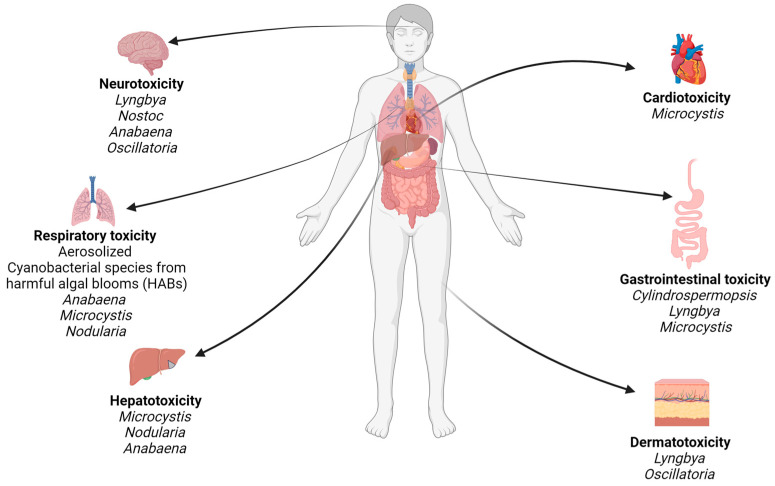
Cyanobacteria, also known as blue-green algae, are a diverse phylum of photosynthetic, Gram-negative bacteria and one of the largest microbial taxa. These organisms produce cyanotoxins, which are secondary metabolites that can have significant impacts on both human health and the environment. While toxins like Microcystins and Cylindrospermopsins are well-documented and have been extensively studied, other cyanotoxins, including those produced by and , remain underexplored. These lesser-known toxins can cause various health issues in humans, including neurotoxicity, hepatotoxicity, and dermatotoxicity, each through distinct mechanisms. Moreover, recent studies have shown that cyanobacteria can be aerosolized and transmitted through the air over long distances, providing an additional route for human exposure to their harmful effects. However, it remains an area that requires much more investigation to accurately assess the health risks and develop appropriate public health guidelines. In addition to direct exposure to toxins, cyanobacteria can lead to harmful algal blooms, which pose further risks to human and wildlife health, and are a global concern. There is limited knowledge about these lesser-known cyanotoxins, highlighting the need for further research to understand their clinical manifestations and improve society's preparedness for the associated health risks. This work aims to review the existing literature on these underexplored cyanotoxins, which are associated with human intoxication, elucidate their clinical relevance, address significant challenges in cyanobacterial research, and provide guidance on mitigating their adverse effects.
蓝藻细菌,也被称为蓝绿藻,是一类多样的光合革兰氏阴性细菌,也是最大的微生物分类群之一。这些生物体产生蓝藻毒素,这是一类次生代谢产物,对人类健康和环境都可能产生重大影响。虽然微囊藻毒素和柱孢藻毒素等毒素已有充分记录且得到了广泛研究,但其他蓝藻毒素,包括由[此处原文缺失相关信息1]和[此处原文缺失相关信息2]产生的毒素,仍未得到充分探索。这些鲜为人知的毒素可通过不同机制在人类身上引发各种健康问题,包括神经毒性、肝毒性和皮肤毒性。此外,最近的研究表明,蓝藻细菌可被雾化并通过空气远距离传播,为人类接触其有害影响提供了另一条途径。然而,这仍是一个需要更多研究的领域,以便准确评估健康风险并制定适当的公共卫生指南。除了直接接触毒素外,蓝藻细菌还可导致有害藻华,这对人类和野生动物健康构成了进一步风险,是一个全球关注的问题。关于这些鲜为人知的蓝藻毒素的知识有限,这凸显了进一步研究以了解其临床表现并提高社会对相关健康风险的防范能力的必要性。这项工作旨在综述关于这些未充分探索的、与人类中毒相关的蓝藻毒素的现有文献,阐明其临床相关性,解决蓝藻细菌研究中的重大挑战,并就减轻其不利影响提供指导。