Murgia Claudio, Cubeddu Tiziana, Burrai Giovanni P, Alberti Alberto, Bertolotti Luigi, Colitti Barbara, Prearo Marino, Pastorino Paolo, Esposito Giuseppe, Mandrioli Luciana, Barbera Gaspare, Sanna Marina Antonella, Polinas Marta, Soto Esteban, Antuofermo Elisabetta
Department of Veterinary Medicine, University of Sassari, 07100 Sassari, Italy.
Mediterranean Center for Disease Control, 07100 Sassari, Italy.
Vet Sci. 2024 Nov 26;11(12):597. doi: 10.3390/vetsci11120597.
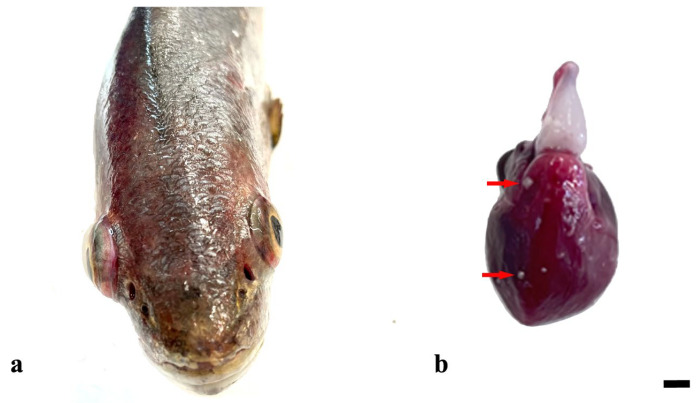
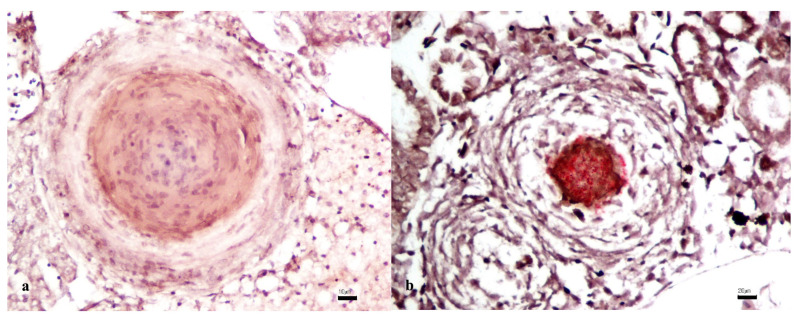
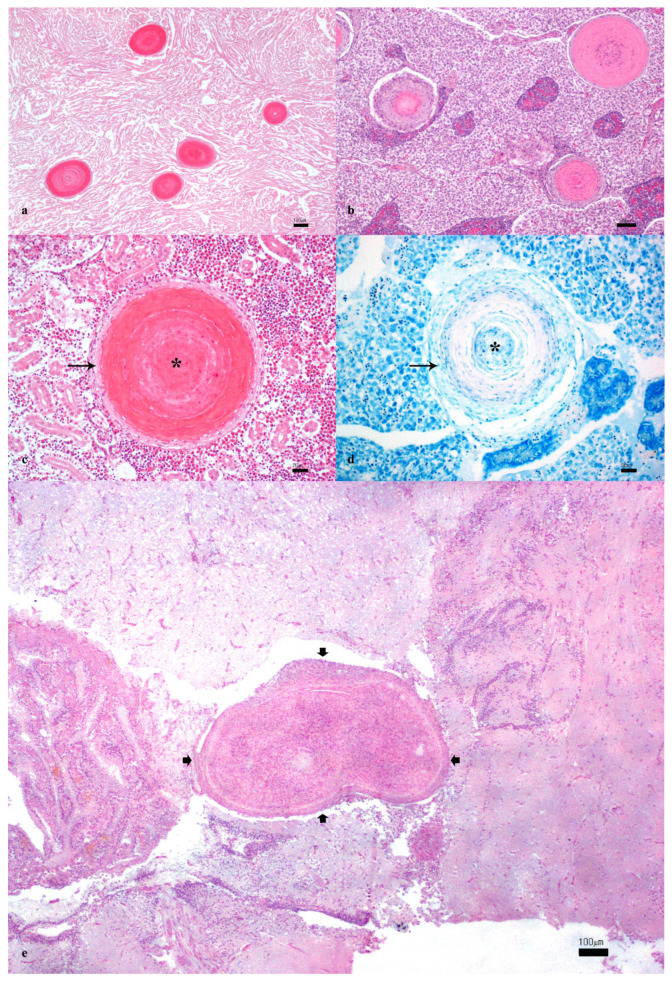
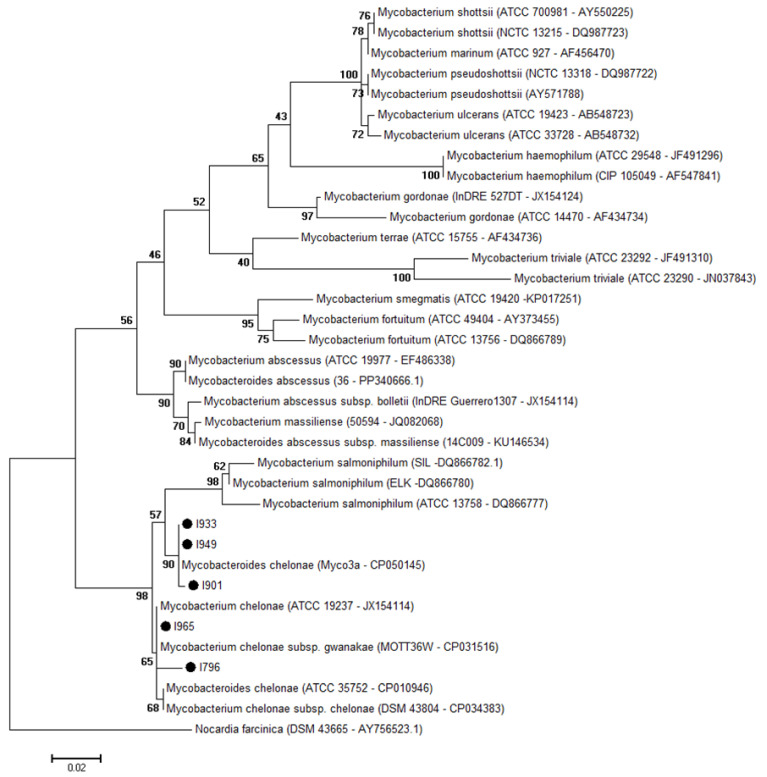
Meagre () is one of the fast-growing species considered for sustainable aquaculture development along the Mediterranean and Eastern Atlantic coasts. The emergence of Systemic Granulomatosis (SG), a disease marked by multiple granulomas in various tissues, poses a significant challenge in meagre aquaculture. In the current study, we investigate the association of spp. and SG in offshore aquaculture facilities in Sardinia, Italy. A total of 34 adult seemingly healthy meagre were arbitrarily collected and analyzed, combining histological, microbiological, molecular, metagenomics, and in situ techniques to investigate the presence of pathogens. Ziehl-Neelsen (ZN), periodic acid-schiff (PAS), and Giemsa stains were performed for the detection of acid-fast bacteria, common parasites, and fungi within granulomas, respectively. Granulomas were detected in 91% (31/34) of fish. The affected organs were kidney (88%), liver (47%), heart (41%), intestine (17.6%), and brain (5%). Acid-fast staining, along with spp. specific quantitative PCR (qPCR), in situ hybridization (ISH) assay, and microbiological analyses showed negative results for the detection of spp. and other bacteria implicated in granuloma formation. However, PCR amplification and sequencing of the 65-kDa heat shock protein gene revealed the presence of in 13% of both formalin-fixed and frozen liver tissues. Bacterial isolation failed to detect nontuberculous mycobacteria (NTM) and other bacteria typically associated with granulomas. Consistently, the use of an -specific probe in ISH failed to identify this bacterial species in granulomas. Collectively, results do not support the role of in the development of granulomas and suggest rejecting the hypothesis of a potential link between NTM and SG.
条纹鲈是在地中海和东大西洋沿岸被考虑用于可持续水产养殖发展的快速生长物种之一。系统性肉芽肿病(SG)的出现,这种以各种组织中出现多个肉芽肿为特征的疾病,给条纹鲈养殖带来了重大挑战。在当前的研究中,我们调查了意大利撒丁岛近海养殖设施中条纹鲈与SG的关联。总共随机收集并分析了34条看似健康的成年条纹鲈,结合组织学、微生物学、分子生物学、宏基因组学和原位技术来调查病原体的存在。分别进行齐尔-尼尔森(ZN)染色、过碘酸-希夫(PAS)染色和吉姆萨染色,以检测肉芽肿内的抗酸菌、常见寄生虫和真菌。在91%(31/34)的鱼中检测到肉芽肿。受影响的器官有肾脏(88%)、肝脏(47%)、心脏(41%)、肠道(17.6%)和大脑(5%)。抗酸染色以及特定物种的定量PCR(qPCR)、原位杂交(ISH)分析和微生物学分析,在检测与肉芽肿形成有关的特定物种和其他细菌方面均显示阴性结果。然而,对65 kDa热休克蛋白基因的PCR扩增和测序显示,在13%的福尔马林固定和冷冻肝脏组织中存在该物种。细菌分离未能检测到非结核分枝杆菌(NTM)和其他通常与肉芽肿相关的细菌。同样,在ISH中使用特定的探针未能在肉芽肿中鉴定出这种细菌物种。总体而言,结果不支持该物种在肉芽肿形成中的作用,并表明拒绝接受NTM与SG之间潜在联系的假设。