Teng Fwu Shing, de Faria Lainetti Patricia, Simão Franzoni Mayara, Fernando Leis Filho Antonio, de Oliveira Massoco Salles Gomes Cristina, Laufer-Amorim Renée, Martins Amorim Rogério, Fonseca-Alves Carlos Eduardo
Department of Veterinary Surgery and Animal Reproduction, School of Veterinary Medicine and Animal Science, São Paulo State University (UNESP), Botucatu 18618-681, Brazil.
Department of Veterinary Pathology, School of Veterinary Medicine and Animal Science, University of São Paulo (USP), Sao Paulo 05508-270, Brazil.
Vet Sci. 2024 Dec 9;11(12):636. doi: 10.3390/vetsci11120636.
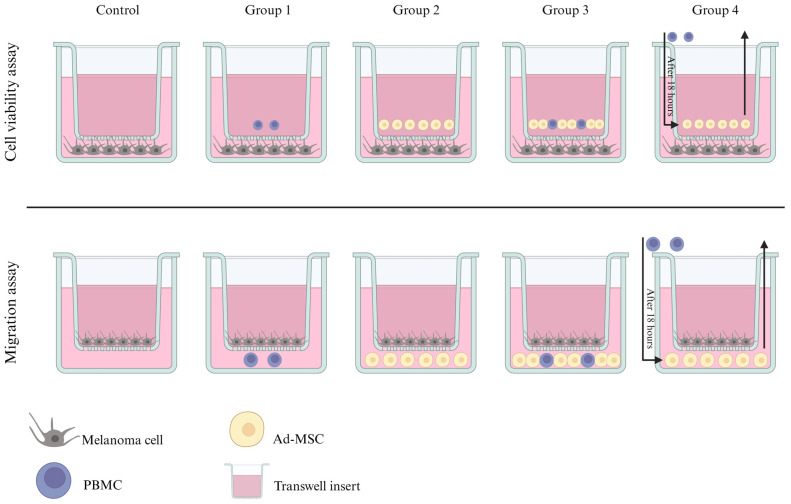
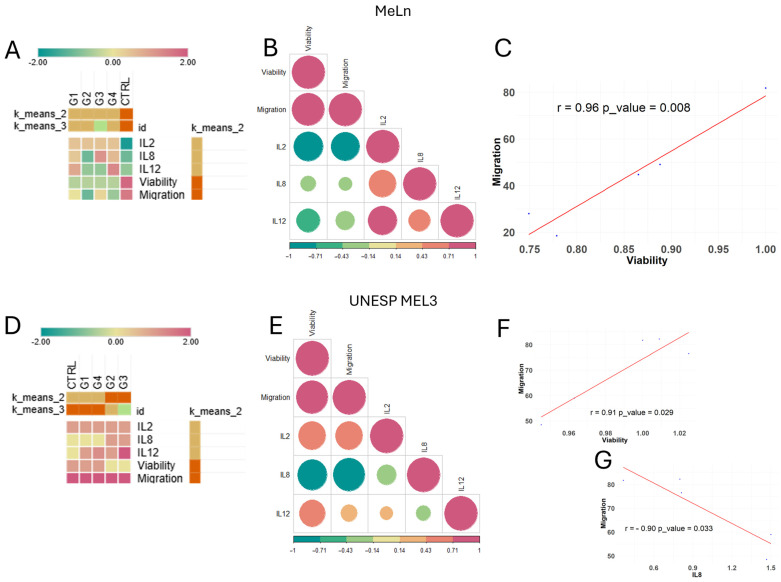
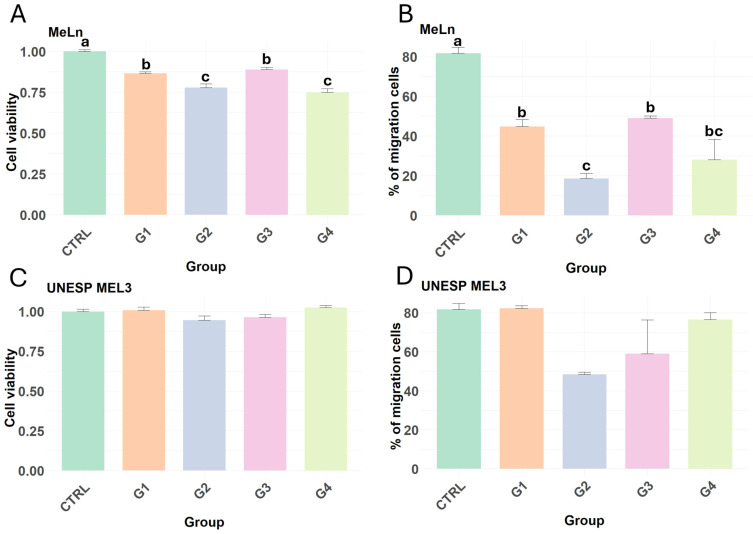
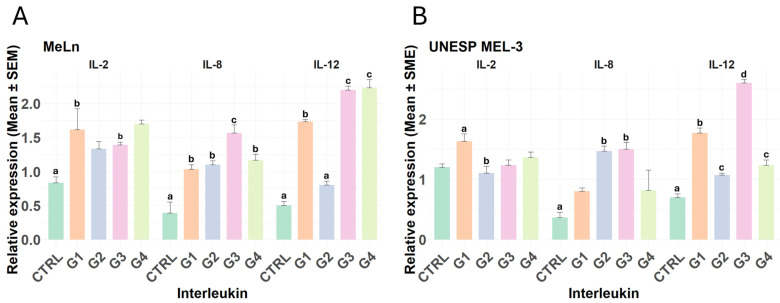
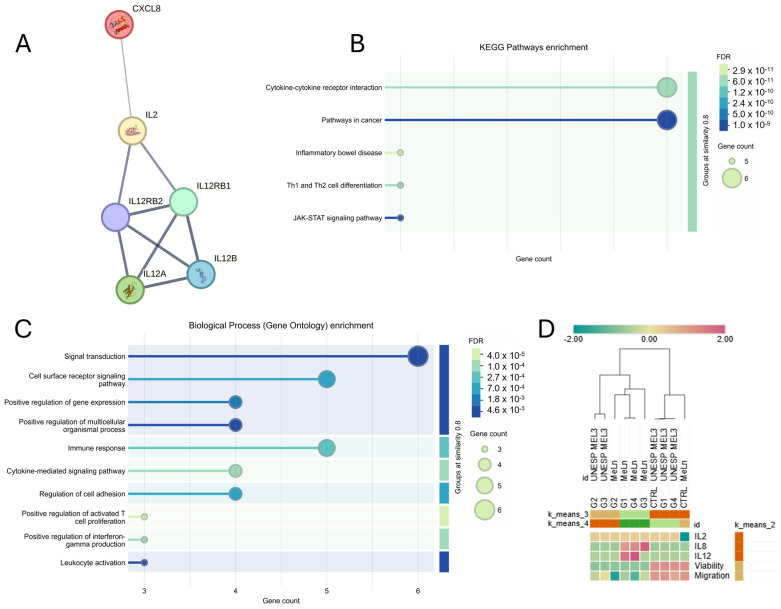
Canine oral melanoma (COM) is a promising target for immunomodulatory therapies aimed at enhancing the immune system's antitumor response. Given that adipose-derived mesenchymal stem cells (Ad-MSCs) possess immunomodulatory properties through cytokine release, we hypothesized that co-culturing Ad-MSCs and canine peripheral blood mononuclear cells (PBMCs) could stimulate interleukin (IL) production against melanoma cell lines (MCCLs) and help identify therapeutic targets. This study evaluated IL-2, IL-8, and IL-12 expressions in co-culture with MCCL, Ad-MSCs, and PBMCs and assessed the relationship between gene expression, cell viability, and migration. Using four experimental groups in a Transwell insert system to separate cell types, we found that Ad-MSCs can reduce MCCL migration and viability, though the effect may vary depending on each cell line's susceptibility. Furthermore, Ad-MSCs modified IL expression profiles in co-cultured cells. Our findings suggest that Ad-MSCs could have therapeutic potential for COM by inhibiting cell migration and reducing viability. However, deeper insights into Ad-MSC interactions with the tumor microenvironment and melanoma-specific factors will be essential to optimize therapeutic efficacy.
犬口腔黑色素瘤(COM)是旨在增强免疫系统抗肿瘤反应的免疫调节疗法的一个有前景的靶点。鉴于脂肪来源的间充质干细胞(Ad-MSCs)通过细胞因子释放具有免疫调节特性,我们推测共培养Ad-MSCs和犬外周血单个核细胞(PBMCs)可刺激针对黑色素瘤细胞系(MCCLs)的白细胞介素(IL)产生,并有助于确定治疗靶点。本研究评估了与MCCL、Ad-MSCs和PBMCs共培养时IL-2、IL-8和IL-12的表达,并评估了基因表达、细胞活力和迁移之间的关系。在Transwell插入系统中使用四个实验组来分离细胞类型,我们发现Ad-MSCs可减少MCCL的迁移和活力,尽管效果可能因每个细胞系的敏感性而异。此外,Ad-MSCs改变了共培养细胞中的IL表达谱。我们的研究结果表明,Ad-MSCs通过抑制细胞迁移和降低活力可能对COM具有治疗潜力。然而,深入了解Ad-MSCs与肿瘤微环境和黑色素瘤特异性因子的相互作用对于优化治疗效果至关重要。