Porcellato Ilaria, Sforna Monica, Lo Giudice Adriana, Bossi Ilaria, Musi Alice, Tognoloni Alessia, Chiaradia Elisabetta, Mechelli Luca, Brachelente Chiara
Department of Veterinary Medicine, University of Perugia, Perugia, Italy.
Faculty of Veterinary Medicine, University of Teramo, Teramo, Italy.
Front Vet Sci. 2022 Jul 22;9:878949. doi: 10.3389/fvets.2022.878949. eCollection 2022.
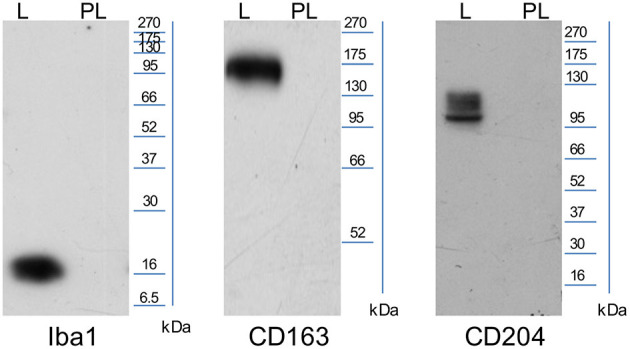
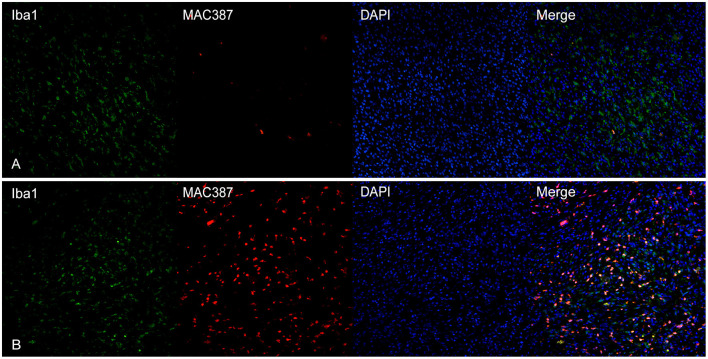
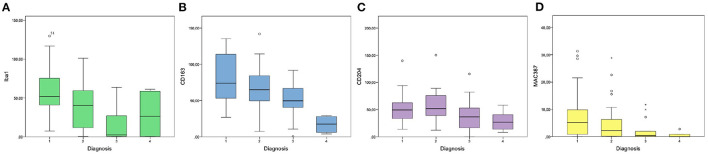
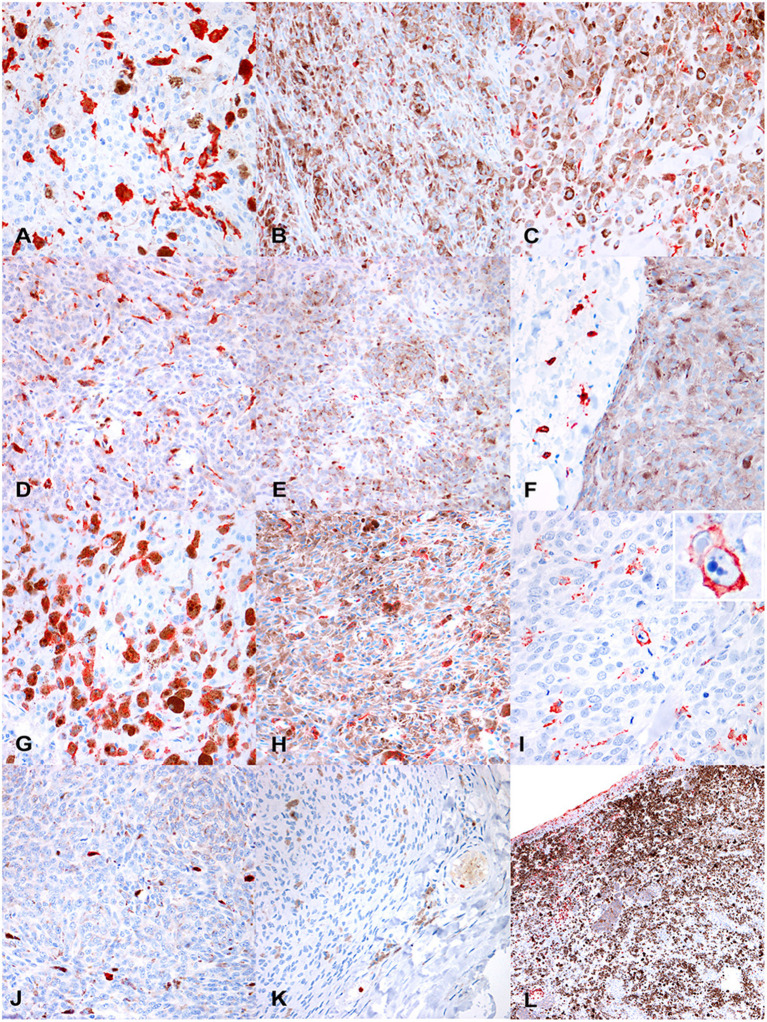
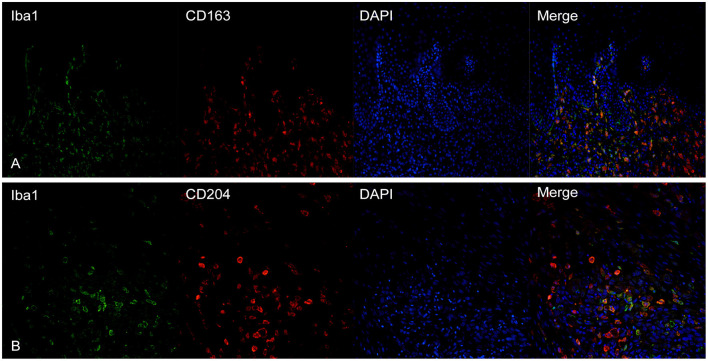
The tumor microenvironment is a complex system, where neoplastic cells interact with immune and stromal cells. Tumor-associated macrophages (TAMs) are considered among the most numerically and biologically noteworthy cellular components in tumors and the attention on this cellular population has been growing during the last decade, both for its prognostic role and as a potential future therapeutic target. Melanoma, particularly the oral form, despite being one of the most immunogenic tumors, bears a poor prognosis in dogs and humans, due to its highly aggressive biological behavior and limited therapeutic options. The aims of this study are to characterize and quantify TAMs (using CD163, CD204, Iba1, and MAC387) in canine melanocytic tumors and to evaluate the association of these markers with diagnosis, histologic prognostic features, presence of metastases, and outcome, and to provide preliminary data for possible future therapies targeting TAMs. Seventy-two melanocytic tumors (27 oral melanomas, 25 cutaneous melanomas, 14 cutaneous melanocytomas, and 6 oral melanocytomas) were retrospectively selected and submitted to immunohistochemistry and double immunofluorescence. Double immunolabeling revealed that most CD163 and CD204cells co-expressed Iba1, which labeled also dendritic cells. Iba1 was instead rarely co-expressed with MAC387. Nevertheless, the expression of macrophagic markers showed a mild to moderate association among the four markers, except for CD204 and MAC387. The number of CD163, CD204, and MAC387 cells was significantly higher in oral melanomas compared to oral melanocytomas ( < 0.001; < 0.05 and < 0.01, respectively), whereas Iba1 was differentially expressed in cutaneous melanomas and melanocytomas ( < 0.05). Moreover, CD163, IBA1 and MAC387 expression was associated with nuclear atypia and mitotic count. The number of CD163cells was associated with the presence of metastases and tumor-related death in oral melanocytic tumors ( < 0.05 and = 0.001, respectively).
肿瘤微环境是一个复杂的系统,肿瘤细胞在其中与免疫细胞和基质细胞相互作用。肿瘤相关巨噬细胞(TAM)被认为是肿瘤中数量和生物学意义上最值得关注的细胞成分之一,在过去十年中,对这一细胞群体的关注不断增加,这既是因为其预后作用,也是作为未来潜在的治疗靶点。黑色素瘤,尤其是口腔型黑色素瘤,尽管是免疫原性最强的肿瘤之一,但由于其高度侵袭性的生物学行为和有限的治疗选择,在犬类和人类中预后都很差。本研究的目的是对犬黑色素细胞瘤中的TAM进行特征描述和定量分析(使用CD163、CD204、Iba1和MAC387),评估这些标志物与诊断、组织学预后特征、转移情况和预后的相关性,并为未来可能针对TAM的治疗提供初步数据。回顾性选取了72例黑色素细胞瘤(27例口腔黑色素瘤、25例皮肤黑色素瘤、14例皮肤黑色素细胞痣和6例口腔黑色素细胞痣),并进行免疫组织化学和双重免疫荧光检测。双重免疫标记显示,大多数CD163和CD204细胞共表达Iba1,Iba1也标记树突状细胞。相反,Iba1很少与MAC387共表达。然而,除了CD204和MAC387外,巨噬细胞标志物的表达在这四种标志物之间显示出轻度至中度的相关性。与口腔黑色素细胞痣相比,口腔黑色素瘤中CD163、CD204和MAC387细胞的数量显著更高(分别为<0.001、<0.05和<0.01),而Iba1在皮肤黑色素瘤和黑色素细胞痣中的表达存在差异(<0.05)。此外,CD163、IBA1和MAC387的表达与核异型性和有丝分裂计数相关。在口腔黑色素细胞瘤中,CD163细胞的数量与转移的存在和肿瘤相关死亡相关(分别为<0.05和=0.001)。