Schuijt Eva, Scherr Daniel, Plank Gernot, Schotten Ulrich, Heijman Jordi
Department of Physiology, CARIM School for Cardiovascular Diseases, Maastricht University, Maastricht, The Netherlands.
Department of Cardiology, Medical University of Graz, Graz, Austria.
Europace. 2024 Dec 26;27(1). doi: 10.1093/europace/euae304.
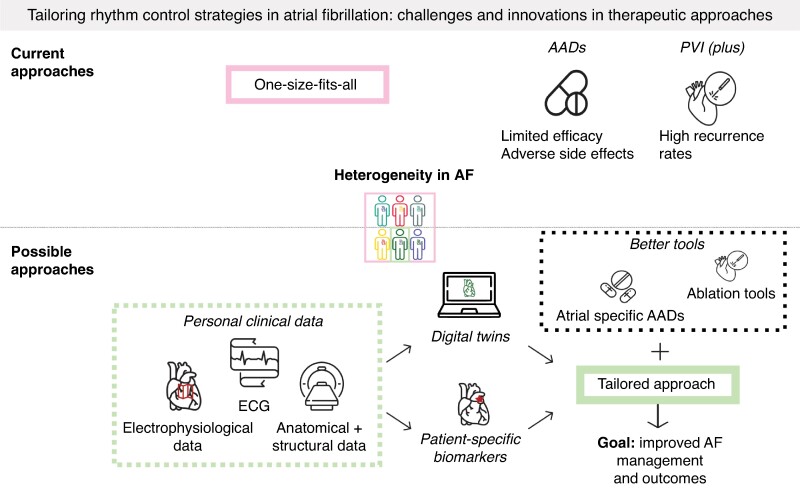
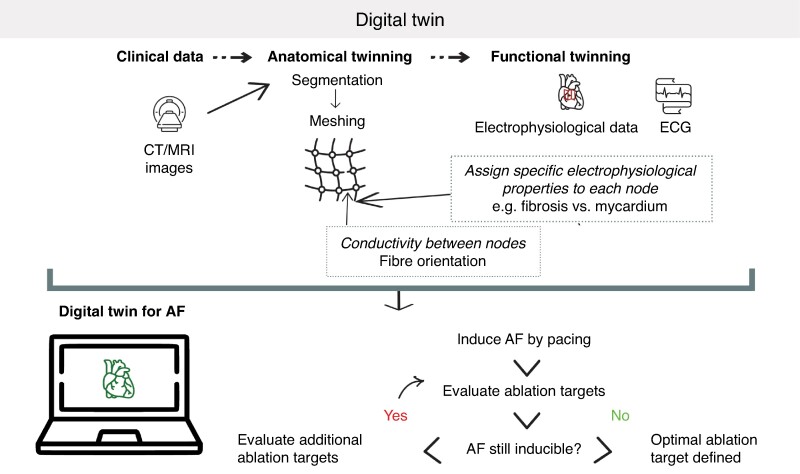
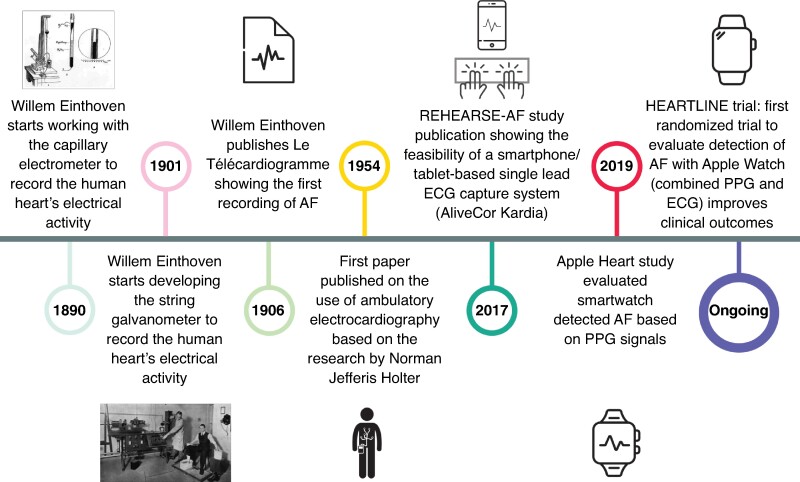
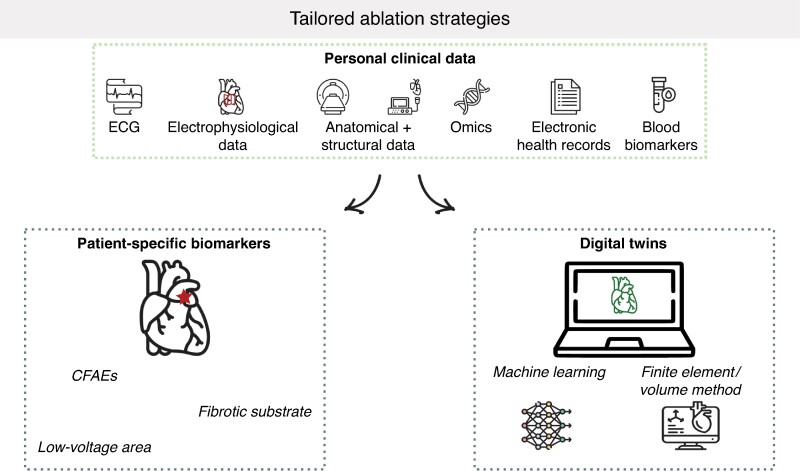
In 1924, the Dutch physiologist Willem Einthoven received the Nobel Prize in Physiology or Medicine for his discovery of the mechanism of the electrocardiogram (ECG). Anno 2024, the ECG is commonly used as a diagnostic tool in cardiology. In the paper 'Le Télécardiogramme', Einthoven described the first recording of the now most common cardiac arrhythmia: atrial fibrillation (AF). The treatment of AF includes rhythm control, aiming to alleviate symptoms and improve quality of life. Recent studies found that early rhythm control might additionally improve clinical outcomes. However, current therapeutic options have suboptimal efficacy and safety, highlighting a need for better rhythm-control strategies. In this review, we address the challenges related to antiarrhythmic drugs (AADs) and catheter ablation for rhythm control of AF, including significant recurrence rates and adverse side effects such as pro-arrhythmia. Furthermore, we discuss potential solutions to these challenges including novel tools, such as atrial-specific AADs and digital-twin-guided AF ablation. In particular, digital twins are a promising method to integrate a wide range of clinical data to address the heterogeneity in AF mechanisms. This may enable a more mechanism-based tailored approach that may overcome the limitations of previous precision medicine approaches based on individual biomarkers. However, several translational challenges need to be addressed before digital twins can be routinely applied in clinical practice, which we discuss at the end of this narrative review. Ultimately, the significant advances in the detection, understanding, and treatment of AF since its first ECG documentation are expected to help reduce the burden of this troublesome condition.
1924年,荷兰生理学家威廉·艾因托芬因发现心电图(ECG)机制而获得诺贝尔生理学或医学奖。到了2024年,心电图已成为心脏病学中常用的诊断工具。在论文《远程心电图》中,艾因托芬描述了现在最常见的心律失常:心房颤动(AF)的首次记录。心房颤动的治疗包括节律控制,旨在缓解症状并提高生活质量。最近的研究发现,早期节律控制可能还会改善临床结局。然而,目前的治疗选择在疗效和安全性方面并不理想,这凸显了对更好的节律控制策略的需求。在本综述中,我们探讨了与抗心律失常药物(AADs)和导管消融用于心房颤动节律控制相关的挑战,包括显著的复发率和诸如促心律失常等不良副作用。此外,我们讨论了应对这些挑战的潜在解决方案,包括新型工具,如心房特异性抗心律失常药物和数字孪生引导的房颤消融。特别是,数字孪生是一种很有前景的方法,可以整合广泛的临床数据以应对房颤机制的异质性。这可能会实现一种更基于机制的个性化方法,该方法可能克服以往基于个体生物标志物的精准医学方法的局限性。然而,在数字孪生能够常规应用于临床实践之前,需要解决几个转化方面的挑战,我们将在本叙述性综述的结尾进行讨论。最终,自首次记录心电图以来,心房颤动在检测、理解和治疗方面的重大进展有望帮助减轻这种棘手病症的负担。