Reyes Cesar A, Karr Alexander, Ramsperger Chloe A, K A Talim G, Lee Hye Joon, Picazo Elias
Department of Chemistry, Loker Hydrocarbon Research Institute, University of Southern California, Los Angeles, California 90089, United States.
J Am Chem Soc. 2025 Jan 8;147(1):10-26. doi: 10.1021/jacs.4c14198. Epub 2024 Dec 27.
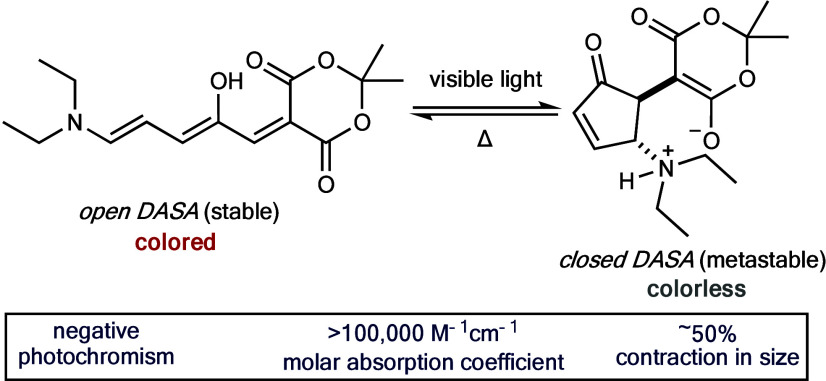
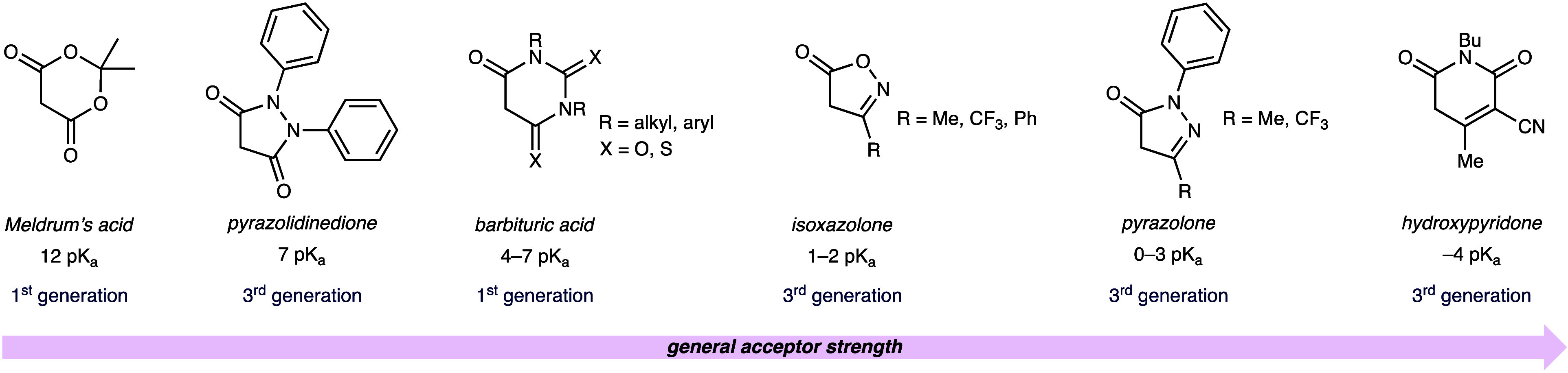
The development of photoswitches that absorb low energy light is of notable interest due to the growing demand for smart materials and therapeutics necessitating benign stimuli. Donor-acceptor Stenhouse adducts (DASAs) are molecular photoswitches that respond to light in the visible to near-infrared spectrum. As a result of their modular assembly, DASAs can be modified at the donor, acceptor, triene, and backbone heteroatom molecular compartments for the tuning of optical and photoswitching properties. This Perspective focuses on the electronic and steric contributions at each compartment and how they influence photophysical properties through the adjustment of the isomerization energetic landscape. An emphasis on current synthetic strategies and their limitations highlights opportunities for DASA architecture, and thus photophysical property expansion.
由于对需要良性刺激的智能材料和治疗方法的需求不断增长,开发能吸收低能量光的光开关备受关注。供体-受体斯滕豪斯加合物(DASAs)是对可见光到近红外光谱中的光有响应的分子光开关。由于其模块化组装,DASAs可以在供体、受体、三烯和主链杂原子分子区域进行修饰,以调节光学和光开关特性。本观点聚焦于每个区域的电子和空间贡献,以及它们如何通过调整异构化能量格局来影响光物理性质。对当前合成策略及其局限性的强调突出了DASA结构的机会,从而也为光物理性质的扩展提供了机会。