Li Junyang, Mei Bingjie, Zhu Yi, Huang Jianmei, Li Meiying, Wang Dengfeng, Huang Jianming, Zhang Guonan
Department Gynecological Oncology, Sichuan Clinical Research Center for Cancer, Sichuan Cancer Hospital & Institute, Sichuan Cancer Center, Affiliated Cancer Hospital of University of Electronic Science and Technology of China, No. 55, Section 4, South People's Road, Chengdu, 610041, China.
Department of Ultrasound, Sichuan Clinical Research Center for Cancer, Sichuan Cancer Hospital & Institute, Sichuan Cancer Center, Affiliated Cancer Hospital of University of Electronic Science and Technology of China, Chengdu, 610041, China.
Sci Rep. 2024 Dec 28;14(1):30945. doi: 10.1038/s41598-024-81975-x.
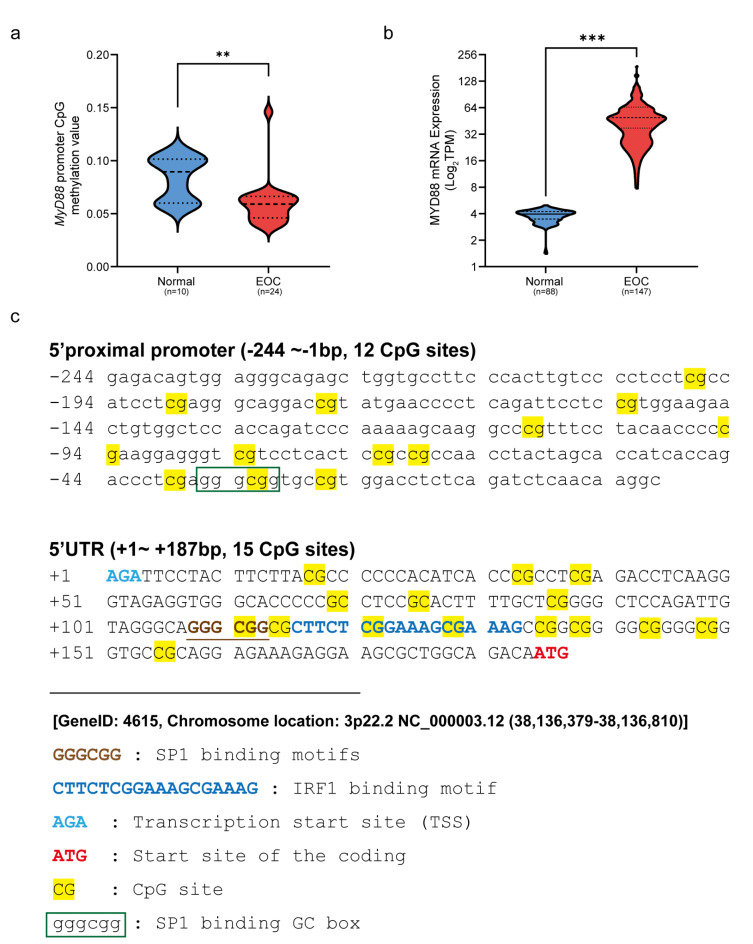
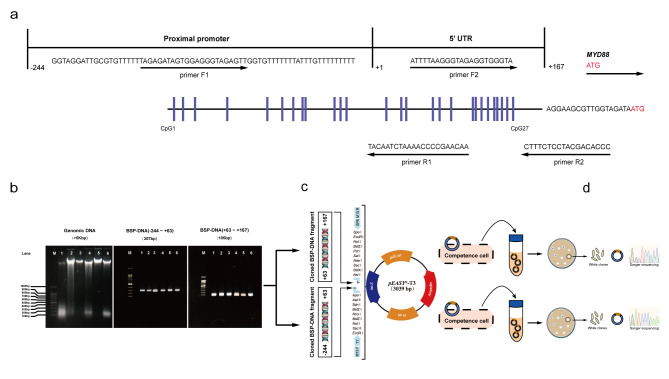
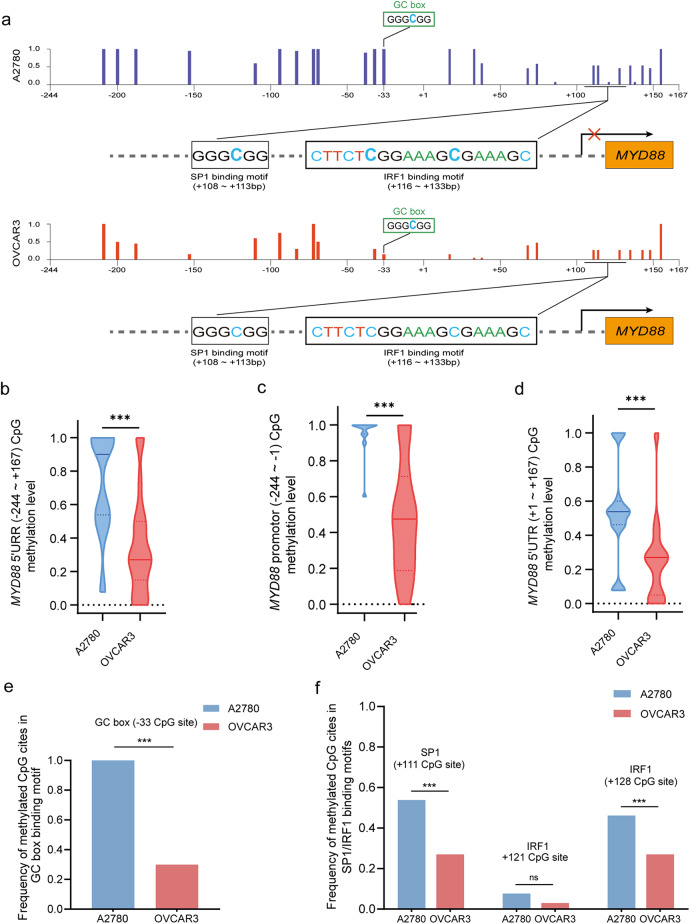
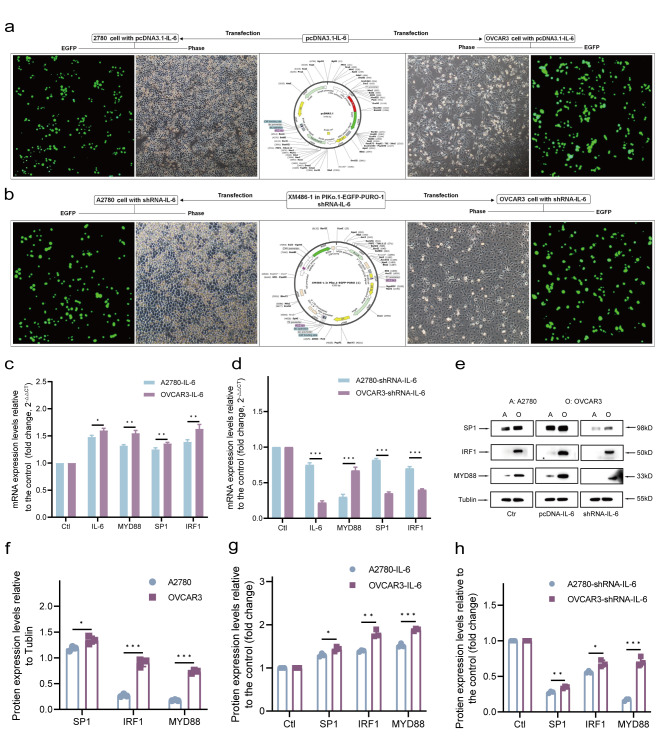
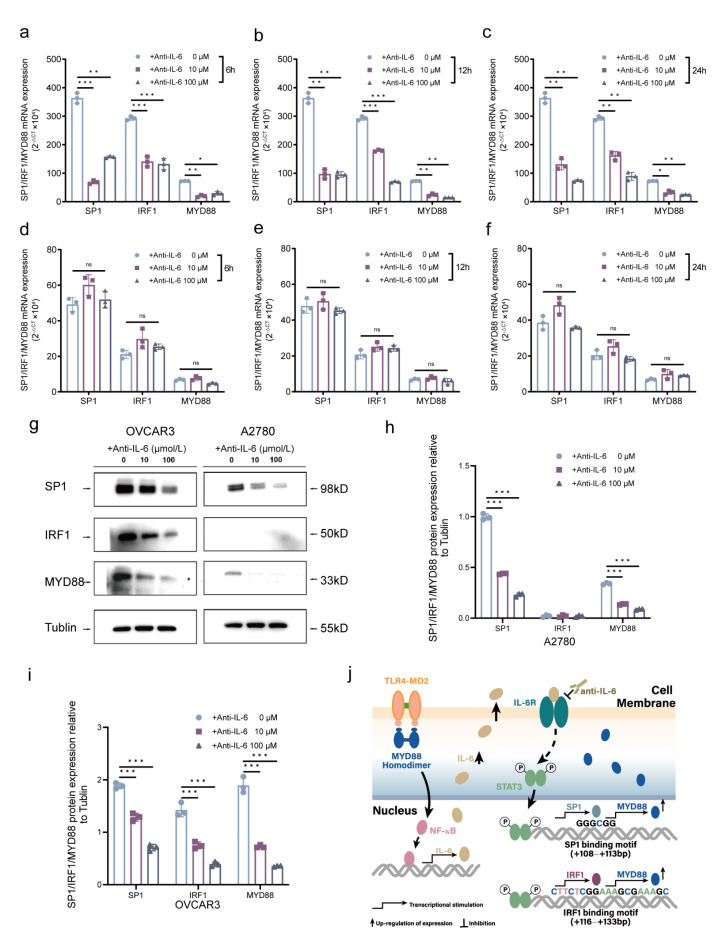
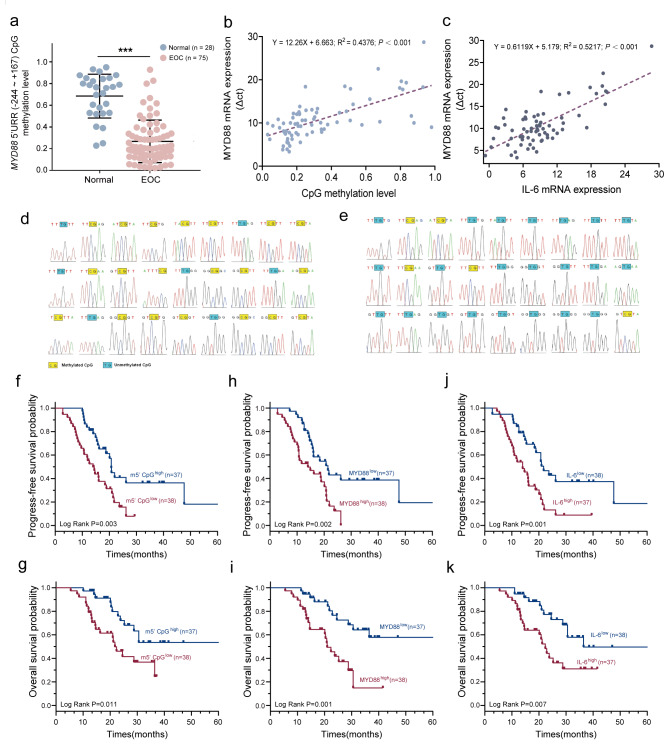
MYD88 is an IL-6 primary response gene and, its upregulation of expression has been shown to be a poor prognostic factor in epithelial ovarian cancer (EOC). We investigated the effects of CpG methylation at the proximal promoter/5'UTR and IL-6/SP1/IRF1 signaling on upregulation of MYD88 and prognosis in EOC. We assessed CpG methylation at the proximal promoter/5'UTR of MYD88 using bisulfite sequencing/PCR in 103 EOC patients, 28 normal ovarian tissues and two EOC cell lines with differential expression of MYD88 and identified the impact of the level of CpG methylation on MYD88 upregulation by SP1/IRF1 with knockdown or blockade of IL-6. The proximal promoter/5'UTR of MYD88 was significantly hypomethylated in 75 EOC tissues compared to 28 normal ovarian tissues (P < 0.001). CpG hypomethylation was relevant to MYD88 upregulation in 75 EOC cases (R = 0.4376; P < 0.001). Of them, 38 cases with m5CpG/MYD88/IL-6 were associated with reduced progression-free/overall survival compared to 37 cases with m5CpG/MYD88/IL-6 (P < 0.01). Knockdown of IL-6 or blockade with IL-6 receptor McAb attenuated MYD88 upregulation by SP1/IRF1 signaling in EOC cells with MYD88 (P < 0.001). In conclusion, CpG hypomethylation at the proximal promoter/5'UTR contributes to MYD88 upregulation in EOC via IL-6/SP1/IRF1 pathway.
MYD88是一种白细胞介素-6(IL-6)的初级反应基因,其表达上调已被证明是上皮性卵巢癌(EOC)的不良预后因素。我们研究了近端启动子/5'非翻译区(UTR)的CpG甲基化以及IL-6/信号转导及转录激活蛋白1(SP1)/干扰素调节因子1(IRF1)信号传导对EOC中MYD88上调及预后的影响。我们使用亚硫酸氢盐测序/聚合酶链反应(PCR)评估了103例EOC患者、28例正常卵巢组织以及两个MYD88表达存在差异的EOC细胞系中MYD88近端启动子/5'UTR的CpG甲基化情况,并通过敲低或阻断IL-6来确定CpG甲基化水平对SP1/IRF1介导的MYD88上调的影响。与28例正常卵巢组织相比,75例EOC组织中MYD88的近端启动子/5'UTR显著低甲基化(P<0.001)。在75例EOC病例中,CpG低甲基化与MYD88上调相关(R = 0.4376;P<0.001)。其中,与37例具有甲基化5-胞嘧啶(m5CpG)/MYD88/IL-6的病例相比,38例具有m5CpG/MYD88/IL-6的病例的无进展生存期/总生存期缩短(P<0.01)。在具有MYD88的EOC细胞中,敲低IL-6或用IL-6受体单克隆抗体(McAb)阻断可减弱SP1/IRF1信号传导介导的MYD88上调(P<0.001)。总之,近端启动子/5'UTR的CpG低甲基化通过IL-6/SP1/IRF1途径促进EOC中MYD88的上调。