Universidad de Santander, School of Medical and Health Sciences, Masira Research Institute, Bucaramanga, Colombia.
Cancer Epigenetics Laboratory, INGEMM, La Paz University Hospital, Paseo de la Castellana 261, 28046, Madrid, Spain.
Clin Epigenetics. 2021 Aug 28;13(1):167. doi: 10.1186/s13148-021-01149-8.
In an effort to contribute to overcoming the platinum resistance exhibited by most solid tumors, we performed an array of epigenetic approaches, integrating next-generation methodologies and public clinical data to identify new potential epi-biomarkers in ovarian cancer, which is considered the most devastating of gynecological malignancies.
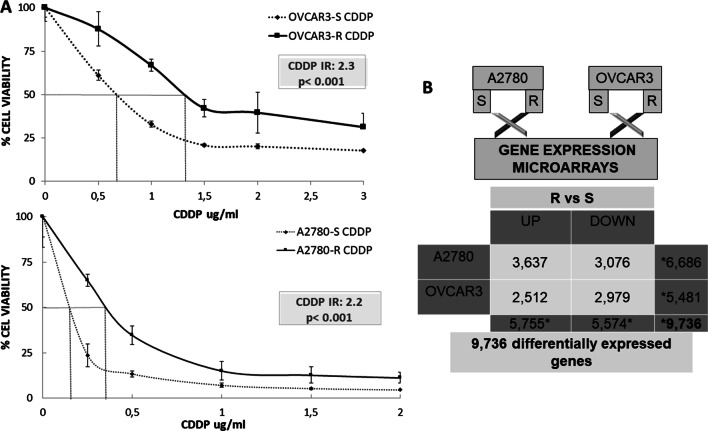
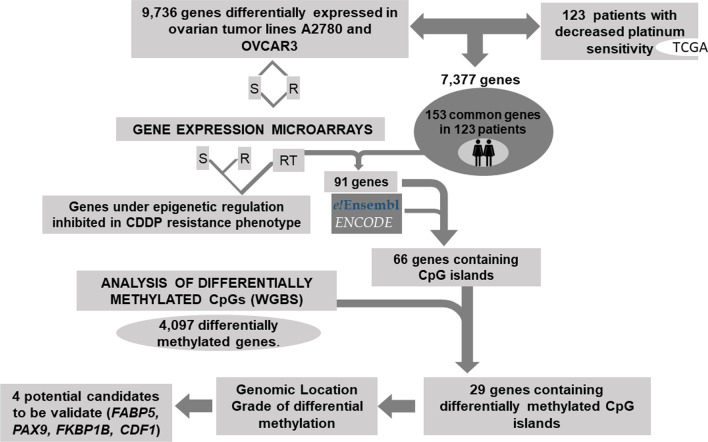
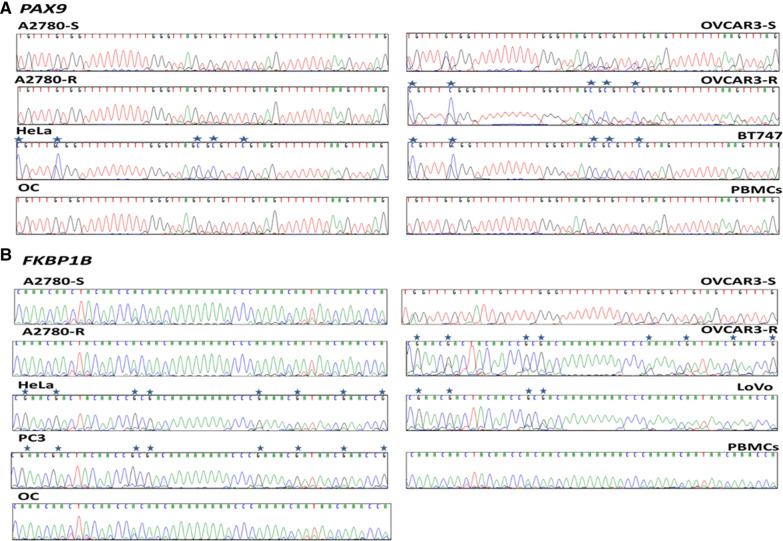
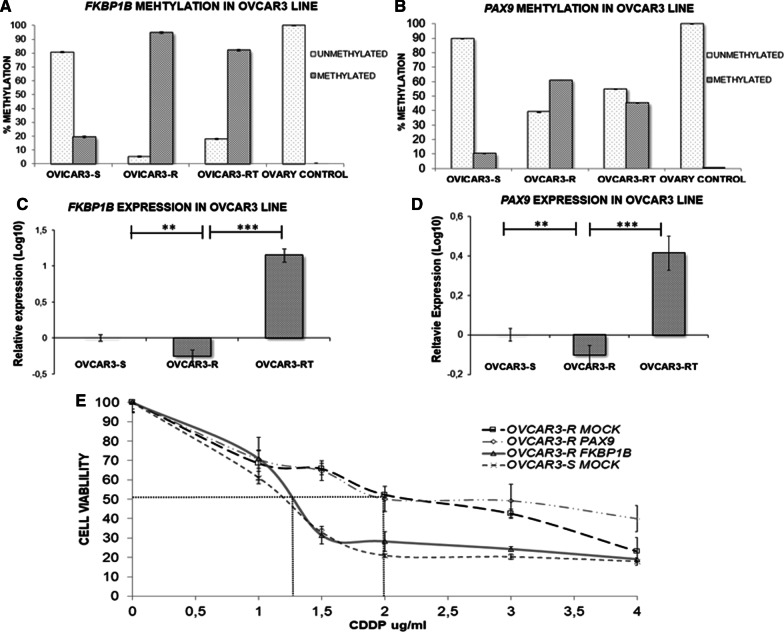
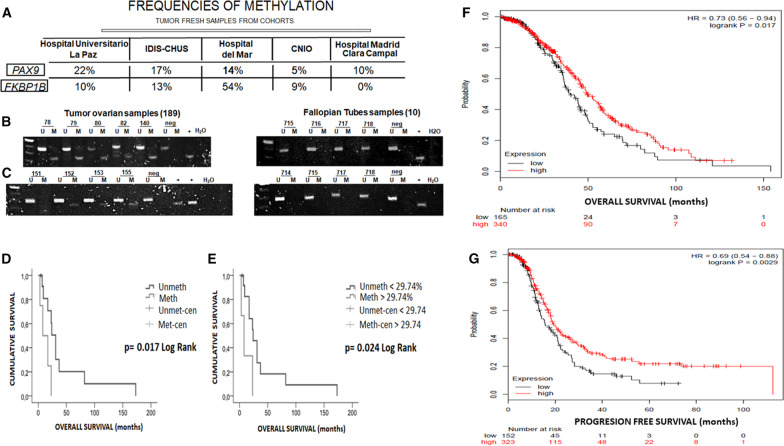
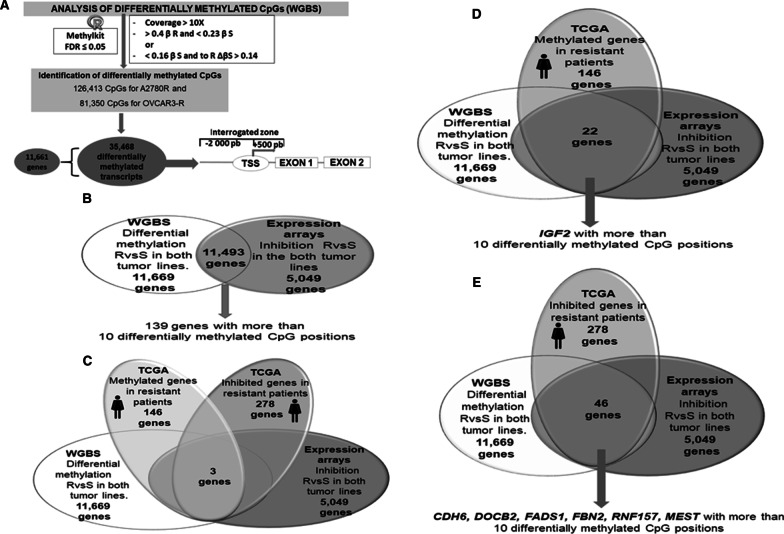
We cross-analyzed data from methylome assessments and restoration of gene expression through microarray expression in a panel of four paired cisplatin-sensitive/cisplatin-resistant ovarian cancer cell lines, along with publicly available clinical data from selected individuals representing the state of chemoresistance. We validated the methylation state and expression levels of candidate genes in each cellular phenotype through Sanger sequencing and reverse transcription polymerase chain reaction, respectively. We tested the biological role of selected targets using an ectopic expression plasmid assay in the sensitive/resistant tumor cell lines, assessing the cell viability in the transfected groups. Epigenetic features were also assessed in 189 primary samples obtained from ovarian tumors and controls.
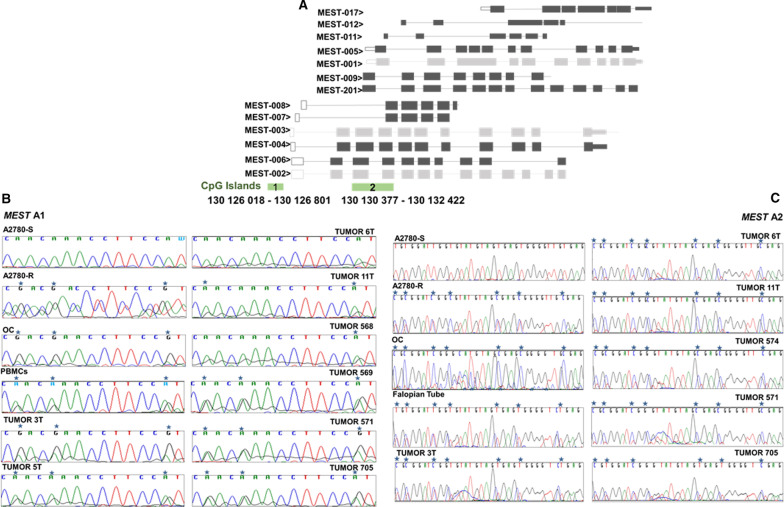
We identified PAX9 and FKBP1B as potential candidate genes, which exhibited epigenetic patterns of expression regulation in the experimental approach. Re-establishment of FKBP1B expression in the resistant OVCAR3 phenotype in which this gene is hypermethylated and inhibited allowed it to achieve a degree of platinum sensitivity similar to the sensitive phenotype. The evaluation of these genes at a translational level revealed that PAX9 hypermethylation leads to a poorer prognosis in terms of overall survival. We also set a precedent for establishing a common epigenetic signature in which the validation of a single candidate, MEST, proved the accuracy of our computational pipelines.
Epigenetic regulation of PAX9 and FKBP1B genes shows that methylation in non-promoter areas has the potential to control gene expression and thus biological consequences, such as the loss of platinum sensitivity. At the translational level, PAX9 behaves as a predictor of chemotherapy response to platinum in patients with ovarian cancer. This study revealed the importance of the transcript-specific study of each gene under potential epigenetic regulation, which would favor the identification of new markers capable of predicting each patient's progression and therapeutic response.
为了克服大多数实体瘤表现出的铂类耐药性,我们采用了一系列表观遗传学方法,整合下一代方法和公共临床数据,以确定卵巢癌中的新的潜在表观遗传生物标志物。卵巢癌被认为是妇科恶性肿瘤中最具破坏性的一种。
我们对四对顺铂敏感/顺铂耐药卵巢癌细胞系的甲基化组评估和通过微阵列表达恢复基因表达的数据进行了交叉分析,并结合了选定个体的公共临床数据,这些个体代表了化疗耐药的状态。我们通过桑格测序和逆转录聚合酶链反应分别在每个细胞表型中验证候选基因的甲基化状态和表达水平。我们使用敏感/耐药肿瘤细胞系中的异位表达质粒测定来测试选定靶标的生物学作用,评估转染组中的细胞活力。还在 189 个来自卵巢肿瘤和对照的原发性样本中评估了表观遗传特征。
我们确定了 PAX9 和 FKBP1B 作为潜在的候选基因,它们在实验方法中表现出表达调控的表观遗传模式。在该基因高度甲基化和被抑制的耐药 OVCAR3 表型中重新建立 FKBP1B 的表达,使其获得与敏感表型相似的铂类敏感性。在翻译水平上评估这些基因时,我们发现 PAX9 的高甲基化导致总体生存预后较差。我们还为建立常见的表观遗传特征奠定了基础,其中单个候选基因 MEST 的验证证明了我们计算管道的准确性。
PAX9 和 FKBP1B 基因的表观遗传调控表明,非启动子区域的甲基化有可能控制基因表达,从而产生生物学后果,如铂类敏感性丧失。在翻译水平上,PAX9 作为卵巢癌患者对铂类化疗反应的预测因子。本研究揭示了对每个基因进行潜在表观遗传调控的转录特异性研究的重要性,这将有利于识别新的标记物,这些标记物能够预测每个患者的进展和治疗反应。