Takei Seiichiro, Kambayashi Sohma, Katsuge Motoki, Okada Junichi, Hirayama Kuniaki
Institute of Sports Science & Medicine, Teikyo University, Tokyo, 192-0395, Japan.
Graduate School of Sport Sciences, Waseda University, Saitama, 359-1192, Japan.
Sci Rep. 2024 Dec 28;14(1):31021. doi: 10.1038/s41598-024-82251-8.
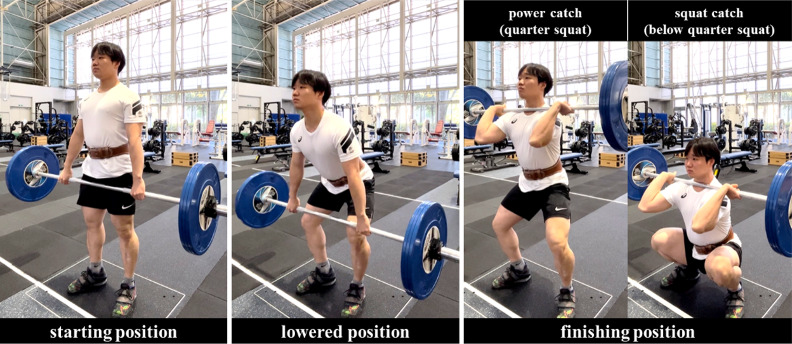
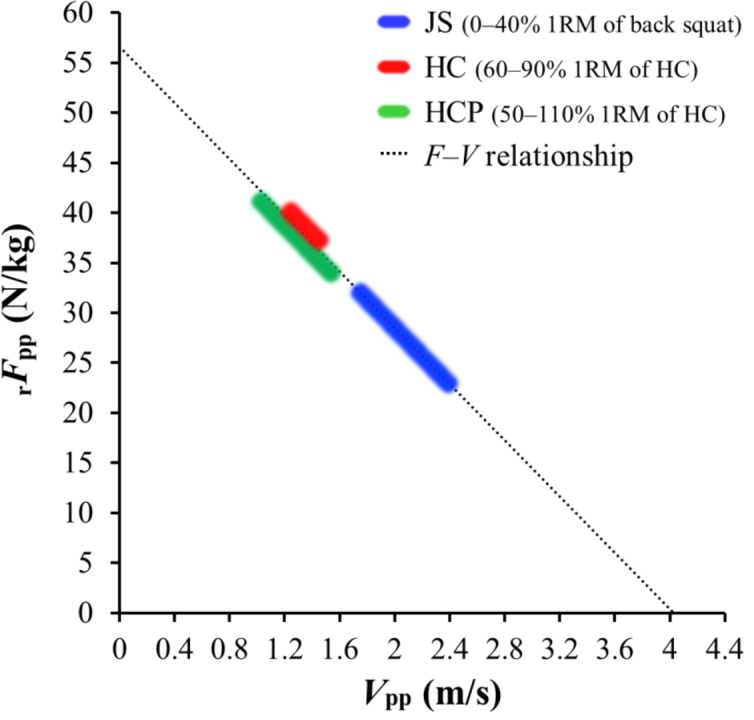
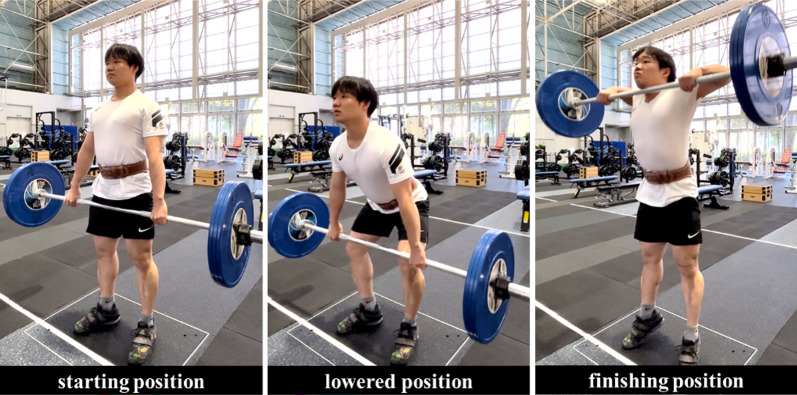
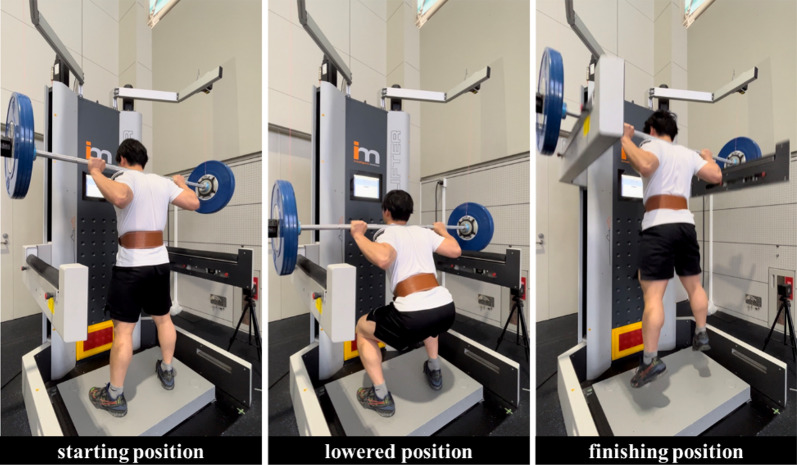
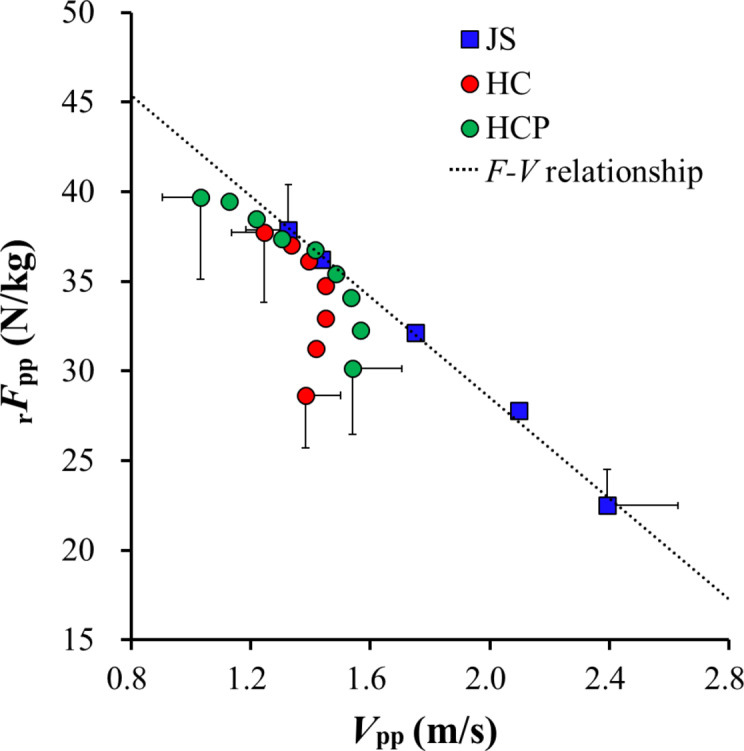
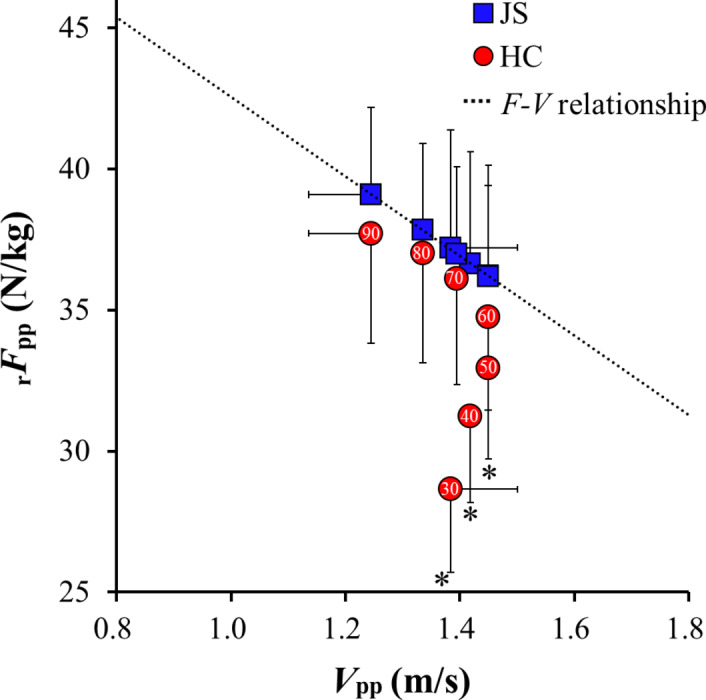
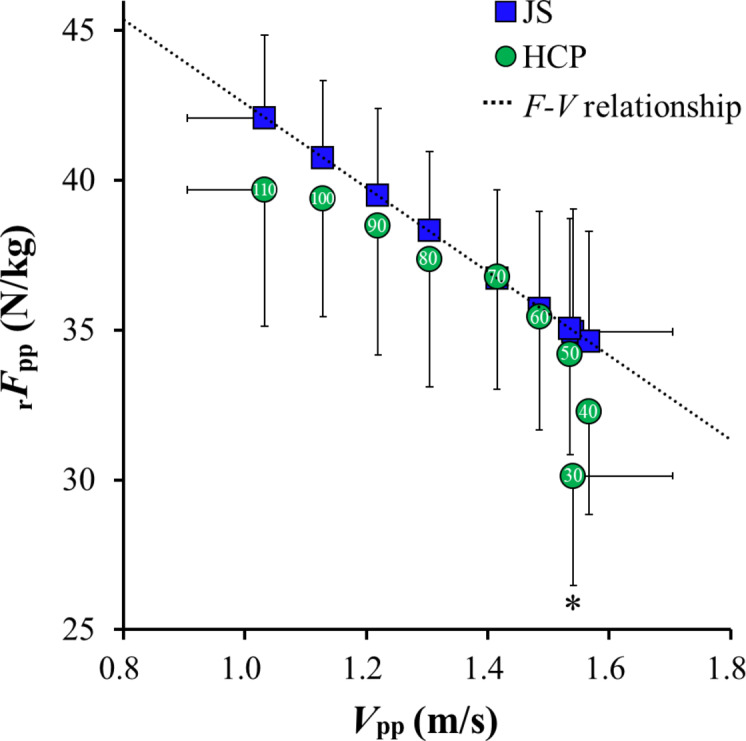
We compared the force-velocity (F-V) characteristics between jump squat (JS) and weightlifting (hang clean [HC] and HC pull [HCP]) to determine lower limb F-V portions targeted by weightlifting exercises. Ten weightlifters performed JS at 0% (body weight only) to 70% of their one-repetition maximum (1RM) for back squat, and HC and HCP at 30‒90% and 30‒110% of their 1RM for HC, respectively. Force and velocity values at each relative load were plotted to determine the F-V features of JS, HC, and HCP. Linear regression was used to evaluate each participant's JS F-V results to obtain individual F-V relationships. Regression equations evaluated the JS force at a given velocity for each relative load of HC and HCP. HC produced significantly less force than JS at given velocities for 30%, 40%, and 50% 1RM. Furthermore, HCP produced significantly less force than JS at a given velocity for 30% 1RM and exhibited less force than JS at a given velocity for 40% 1RM with moderate effect size. HC and HCP produce comparable forces to JS within the velocity ranges of 60‒90% and 50‒110% 1RM, respectively. Thus, weightlifting exercises target low‒moderate-velocity portion of the lower limb F-V relationship.
我们比较了深蹲跳(JS)与举重(悬垂翻[HC]和悬垂翻拉[HCP])之间的力-速度(F-V)特征,以确定举重练习所针对的下肢F-V部分。十名举重运动员进行了深蹲跳,重量为其深蹲一次最大重复量(1RM)的0%(仅体重)至70%,进行悬垂翻和悬垂翻拉时的重量分别为其悬垂翻1RM的30% - 90%和30% - 110%。绘制每个相对负荷下的力和速度值,以确定深蹲跳、悬垂翻和悬垂翻拉的F-V特征。使用线性回归评估每个参与者的深蹲跳F-V结果,以获得个体F-V关系。回归方程评估了在悬垂翻和悬垂翻拉的每个相对负荷下给定速度时的深蹲跳力。在1RM的30%、40%和50%时,悬垂翻在给定速度下产生的力明显小于深蹲跳。此外,在1RM的30%时,悬垂翻拉在给定速度下产生的力明显小于深蹲跳,在1RM的40%时,悬垂翻拉在给定速度下产生的力小于深蹲跳,且效应量中等。悬垂翻和悬垂翻拉分别在1RM的60% - 90%和50% - 110%的速度范围内产生与深蹲跳相当的力。因此,举重练习针对的是下肢F-V关系中的低至中等速度部分。