Song Xiaodong, Yan Shuya, Lai Shunkai, Zhang Yiliang, Wang Ying, He Jiali, Huang Dong, Zhang Jianzhao, Lu Xiaodan, Chen Guanmao, Chen Pan, Zhong Qilin, Zhang Rongxu, Wu Yangyu, Yin Jie, Zhong Shuming, Jia Yanbin
Department of Psychiatry, First Affiliated Hospital, Jinan University, Guangzhou, 510630, China.
Medical Imaging Center, First Affiliated Hospital, Jinan University, Guangzhou, 510630, China.
BMC Psychiatry. 2024 Dec 27;24(1):949. doi: 10.1186/s12888-024-06428-1.
The clinical characteristics of major depressive disorder (MDD) in adolescents show notable gender-related differences, but the cause of these differences is still not understood. The current research concentrates on the changes in neurometabolism and neuroendocrine function, aiming to identify differences in endocrine function and brain metabolism between male and female adolescents with MDD.
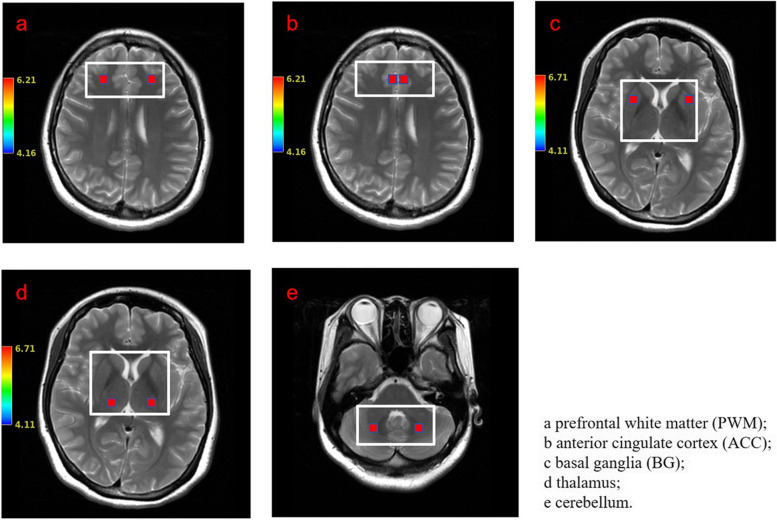
A total of 121 teenagers diagnosed with MDD (43 males and 78 females) were enlisted as participants. Measurement was conducted on levels of endocrine hormones, which included free tri-iodothyronine (FT3), total tri-iodothyronine (TT3), free thyroxin (FT4), total thyroxin (TT4), thyroid-stimulating hormone (TSH), cortisol, and adrenocorticotropic hormone (ACTH). Obtained through H-MRS, the N-acetyl aspartate (NAA) and choline containing compounds (Cho) to creatine (Cr) ratios were acquired for the prefrontal whiter matter (PWM), anterior cingulate cortex (ACC), basal ganglia (BG), thalamus, and cerebellum.
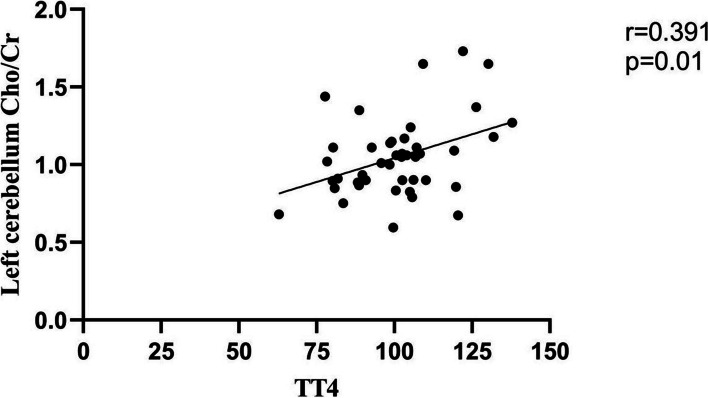
After adjusting for multiple comparisons, female adolescents with MDD showed lower ACTH levels compared to their male counterparts. An increased lateralization index (LI) was observed in female patients for both the thalamic Cho/Cr ratio and the basal ganglia NAA/Cr ratio. Additionally, an intriguing finding was that in male adolescent patients, TT4 levels were significantly correlated with the Cho/Cr ratio in the left cerebellum. However, no such correlation between hormones and brain metabolism was found in females.
Gender differences in endocrine and neurometabolic abnormalities may contribute to the gender-specific pathophysiology of MDD in adolescent patients. Metabolic abnormalities and lateralization changes are observed in different brain regions for male and female MDD patients.
青少年重度抑郁症(MDD)的临床特征存在显著的性别差异,但其成因仍不明晰。当前研究聚焦于神经代谢和神经内分泌功能的变化,旨在明确患有MDD的青少年男性和女性在内分泌功能及脑代谢方面的差异。
总共招募了121名被诊断为MDD的青少年(43名男性和78名女性)作为参与者。对内分泌激素水平进行了测量,这些激素包括游离三碘甲状腺原氨酸(FT3)、总三碘甲状腺原氨酸(TT3)、游离甲状腺素(FT4)、总甲状腺素(TT4)、促甲状腺激素(TSH)、皮质醇和促肾上腺皮质激素(ACTH)。通过氢磁共振波谱(H-MRS)获得了前额叶白质(PWM)、前扣带回皮质(ACC)、基底神经节(BG)、丘脑和小脑的N-乙酰天门冬氨酸(NAA)与含胆碱化合物(Cho)对肌酸(Cr)的比率。
在进行多重比较校正后,患有MDD的女性青少年的ACTH水平低于男性青少年。在女性患者中,丘脑Cho/Cr比率和基底神经节NAA/Cr比率的偏侧化指数(LI)均有所增加。此外,一个有趣的发现是,在男性青少年患者中,TT4水平与左小脑的Cho/Cr比率显著相关。然而,在女性中未发现激素与脑代谢之间存在此类相关性。
内分泌和神经代谢异常方面的性别差异可能导致青少年MDD患者出现性别特异性病理生理学特征。男性和女性MDD患者在不同脑区观察到代谢异常和偏侧化变化。