Zhang Shilei, Dou Ting, Li Hong, Yu Hongfang, Zhang Wei, Sun Liping, Yang Jingwen, Wang Zhenfei, Yang Hao
Department of Radiation Oncology, Peking University Cancer Hospital (Inner Mongolia Campus) & Affiliated Cancer Hospital of Inner Mongolia Medical University, Inner Mongolia Autonomous Region, Hohhot, 010020, China.
Key Laboratoy of Radiation Physics and Biology of Inner, Mongolia Medical University, Peking University Cancer Hospital (Inner Mongolia Campus) & Affiliated Cancer Hospital of Inner Mongolia Medical University, Inner Mongolia Autonomous Region, Hohhot, 010020, China.
Hereditas. 2024 Dec 28;161(1):55. doi: 10.1186/s41065-024-00360-w.
Cisplatin (DDP) resistance has long posed a challenge in the clinical treatment of lung cancer (LC). Insulin-like growth factor 2 binding protein 2 (IGF2BP2) has been identified as an oncogenic factor in LC, whereas its specific role in DDP resistance in LC remains unclear.
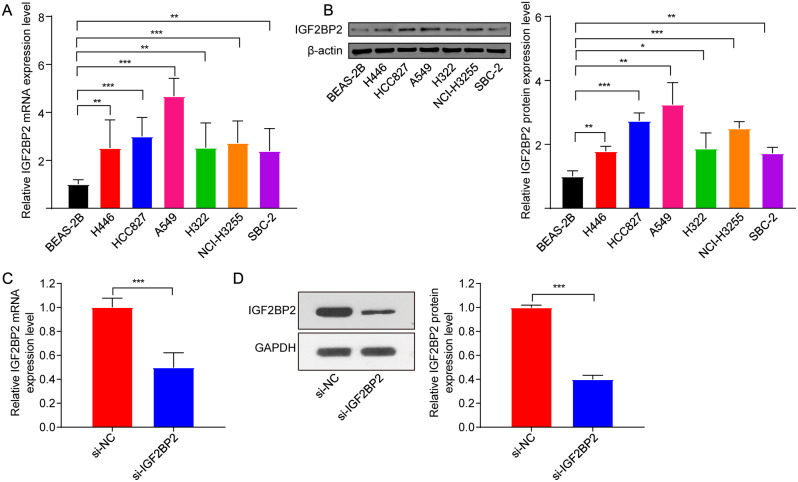
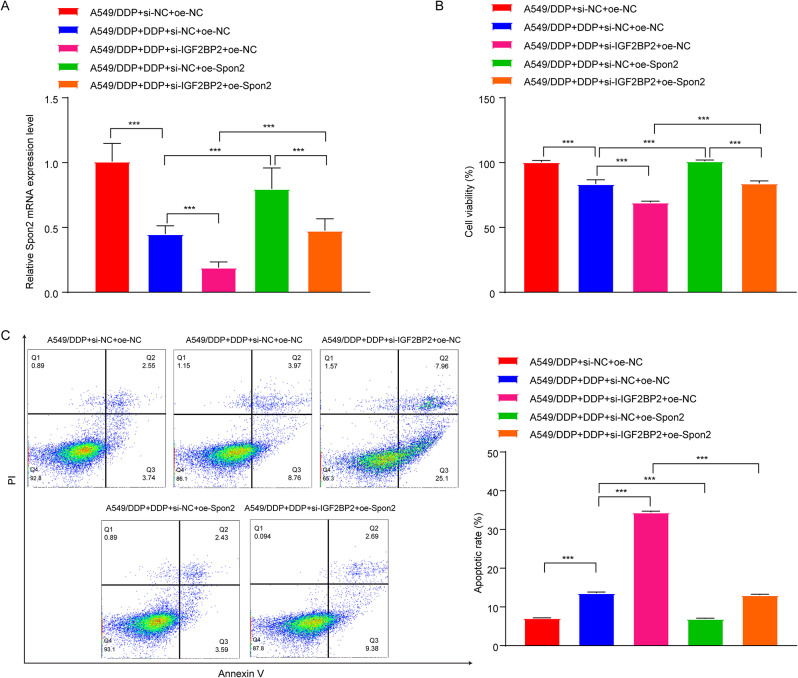
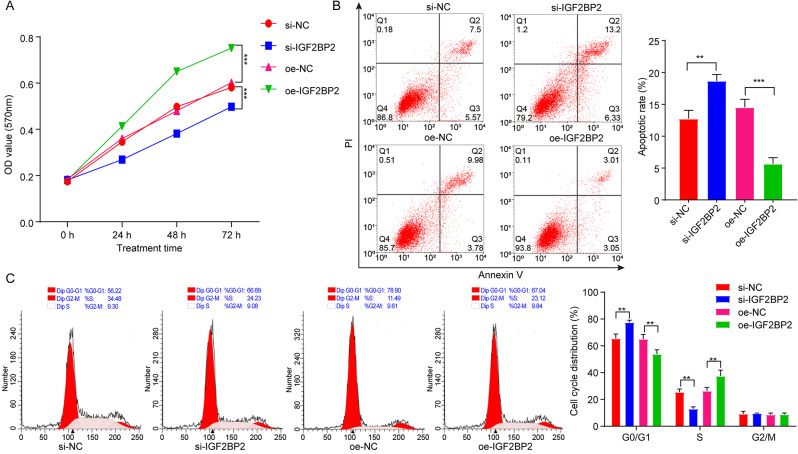
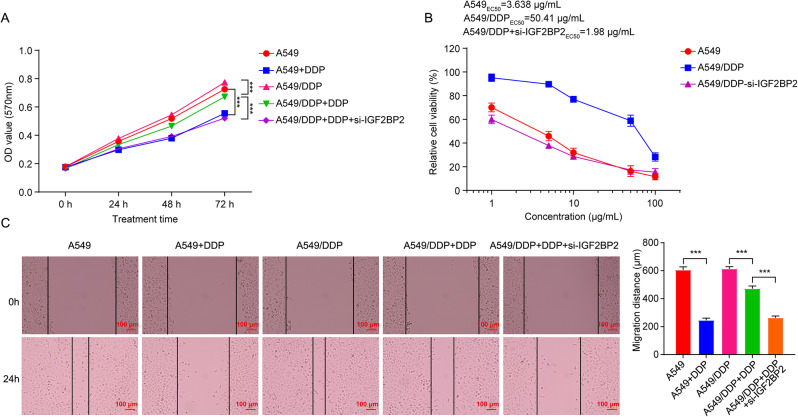
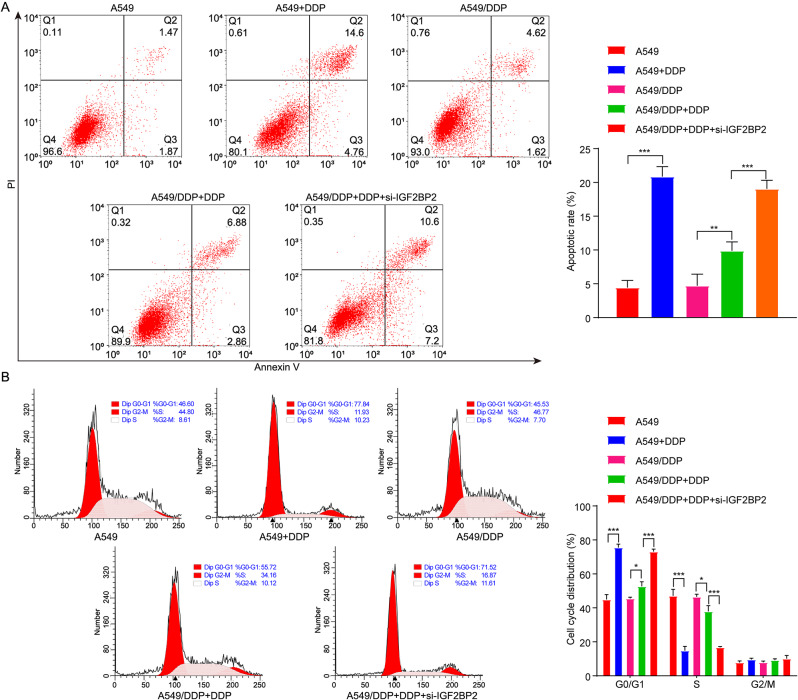
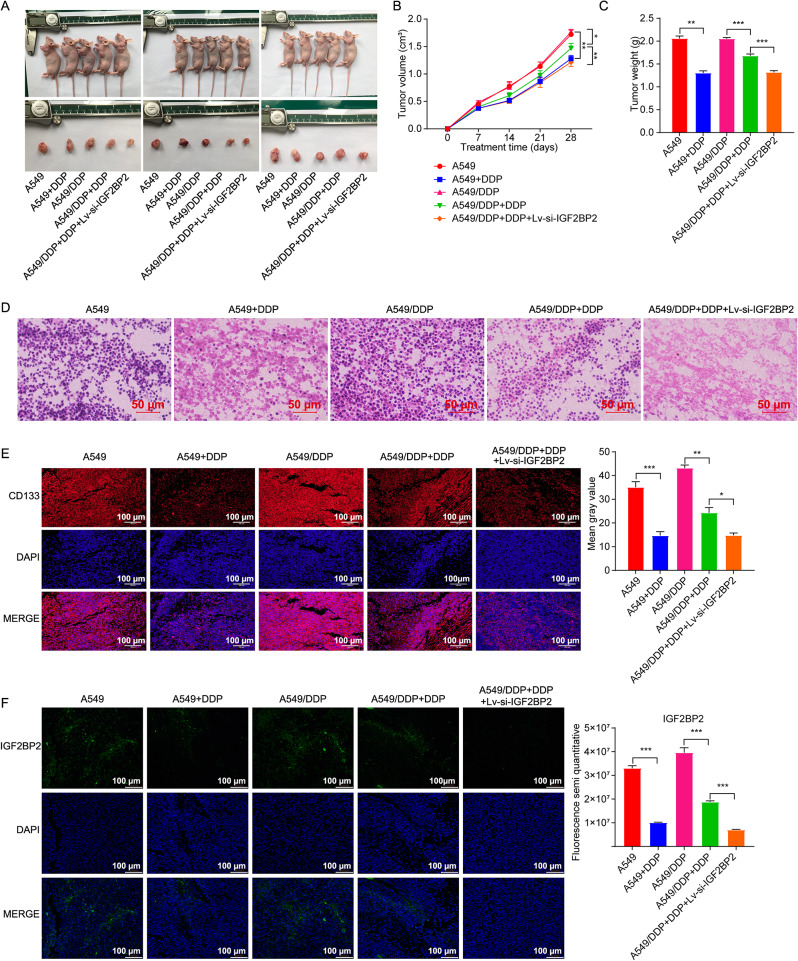
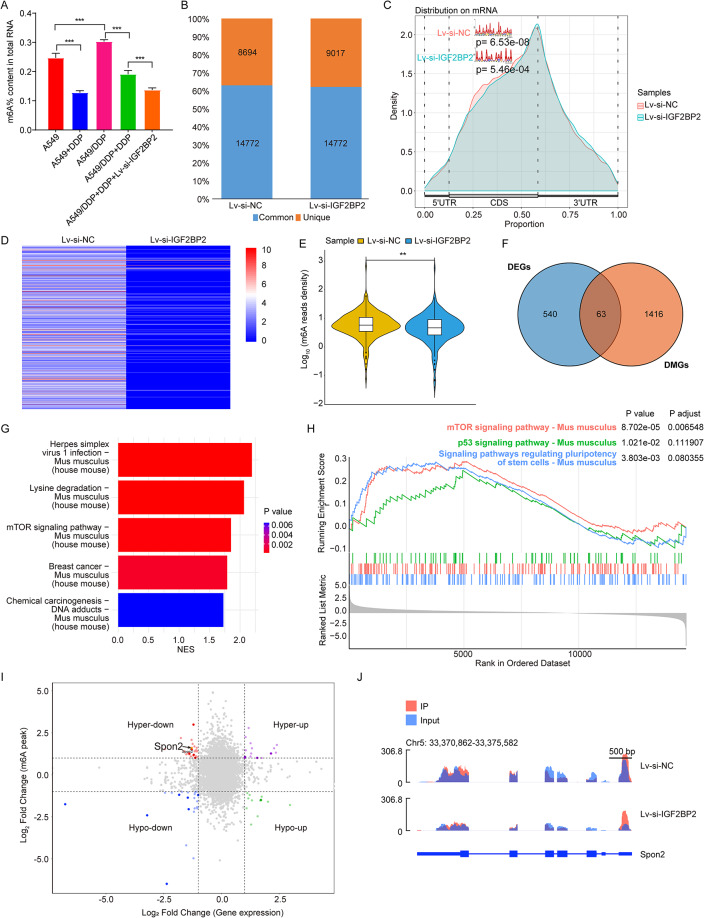
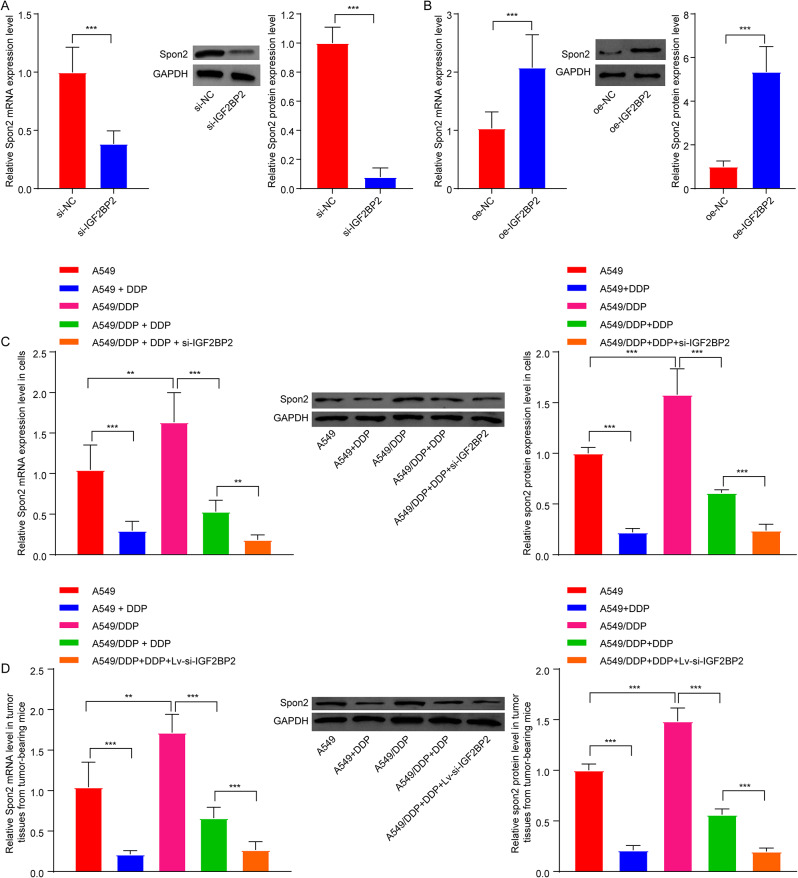
In this study, we investigated the role of IGF2BP2 on DDP resistance in DDP-resistant A549 cells (A549/DDP) in vitro and in a DDP-resistant lung tumor-bearing mouse model in vivo. Additionally, methylated RNA immunoprecipitation sequencing (MeRIP-seq) was conducted to identify the potential mRNAs regulated by IGF2BP2, an N6-methyladenosine (m6A) regulator, in the tumor tissues of mice. Compared to normal tissues, IGF2BP2 levels were increased in LC tissues and in relapsed/resistant LC tissues. Most importantly, IGF2BP2 levels were significantly higher in relapsed/resistant LC tissues than in LC tissues. Significantly, knockdown of IGF2BP2 or DDP treatment inhibited A549 cell viability, migration, and cell cycle progression. Consistently, DDP treatment suppressed the viability and migration and triggered cell cycle arrest in A549/DDP cells in vitro, as well as reduced tumor volume and weight of A549/DDP tumor-bearing mice; meanwhile, the combination of DDP and IGF2BP2 siRNA further significantly inhibited A549/DDP cell growth in vitro and in vivo compared to DDP treatment alone. Furthermore, MeRIP-seq data showed that IGF2BP2 downregulation remarkably elevated m6A levels of spondin 2 (Spon2) and reduced mRNA levels of Spon2 in tumor tissues from A549 tumor-bearing mice. Meanwhile, the combination of DDP and IGF2BP2 siRNA notably reduced Spon2 levels, as well as inhibited the viability and induced apoptosis in A549/DDP cells; however, these effects were reversed by Spon2 overexpression.
Collectively, downregulation of IGF2BP2 could overcome DDP resistance in LC through declining the Spon2 gene expression in an m6A-dependent manner. These results may provide a new strategy for overcoming DDP resistance in LC.
顺铂(DDP)耐药长期以来一直是肺癌(LC)临床治疗中的一个挑战。胰岛素样生长因子2结合蛋白2(IGF2BP2)已被确定为LC中的一种致癌因子,但其在LC顺铂耐药中的具体作用仍不清楚。
在本研究中,我们在体外研究了IGF2BP2对顺铂耐药的A549细胞(A549/DDP)顺铂耐药性的作用,并在体内顺铂耐药的荷瘤小鼠模型中进行了研究。此外,进行了甲基化RNA免疫沉淀测序(MeRIP-seq),以鉴定在小鼠肿瘤组织中由IGF2BP2(一种N6-甲基腺苷(m6A)调节剂)调控的潜在mRNA。与正常组织相比,LC组织以及复发/耐药LC组织中的IGF2BP2水平升高。最重要的是,复发/耐药LC组织中的IGF2BP2水平显著高于LC组织。值得注意的是,敲低IGF2BP2或顺铂处理可抑制A549细胞活力、迁移和细胞周期进程。同样,顺铂处理在体外抑制了A549/DDP细胞的活力和迁移并触发细胞周期停滞,以及减轻了A549/DDP荷瘤小鼠的肿瘤体积和重量;同时,与单独顺铂处理相比,顺铂与IGF2BP2 siRNA的联合进一步显著抑制了A549/DDP细胞在体外和体内的生长。此外,MeRIP-seq数据显示,IGF2BP2下调显著提高了A549荷瘤小鼠肿瘤组织中腱生蛋白2(Spon2)的m6A水平并降低了Spon2的mRNA水平。同时,顺铂与IGF2BP2 siRNA的联合显著降低了Spon2水平,并抑制了A549/DDP细胞的活力并诱导其凋亡;然而,Spon2过表达逆转了这些作用。
总体而言,IGF2BP2的下调可通过以m6A依赖的方式降低Spon2基因表达来克服LC中的顺铂耐药。这些结果可能为克服LC中的顺铂耐药提供一种新策略。