Dong Hui-Li, Wu Xing-Yue, Wang Fei-Yao, Chen Hao-Xiang, Feng Si-Liang, Zhou Chen-Yang, Zhao Zhan-Qin, Si Li-Fang
College of Animal Science and Technology, Henan University of Science and Technology, Luoyang, 471000, China.
BMC Vet Res. 2024 Dec 28;20(1):584. doi: 10.1186/s12917-024-04411-2.
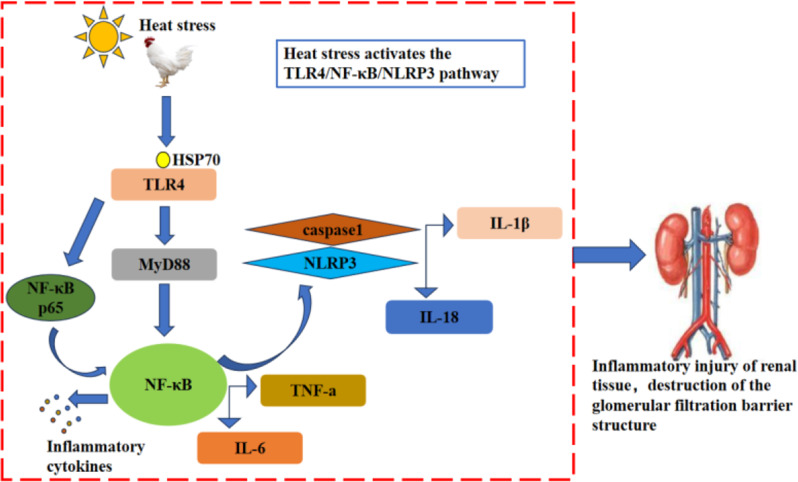
High-temperature environment can cause acute kidney injury affecting renal filtration function. To study the mechanism of renal injury caused by heat stress through activates TLR4/NF-κB/NLRP3 signaling pathway by disrupting the filtration barrier in broiler chickens. The temperature of broilers in the TN group was maintained at 23 ± 1 °C, and the HS group temperature was maintained at 35 ± 1℃ from the age of 21 days, and the high temperature was 10 h per day, and one broiler from each replicate group at the age of 35 and 42 days was selected for blood sampling, respectively.
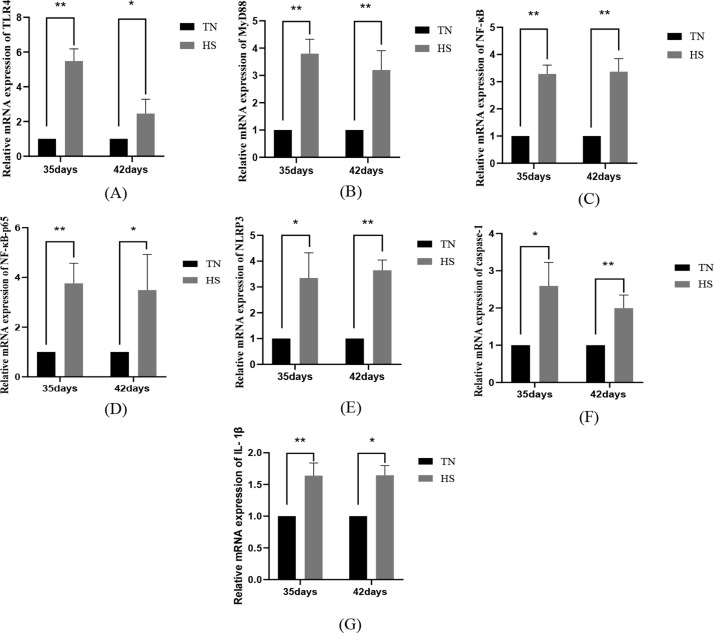
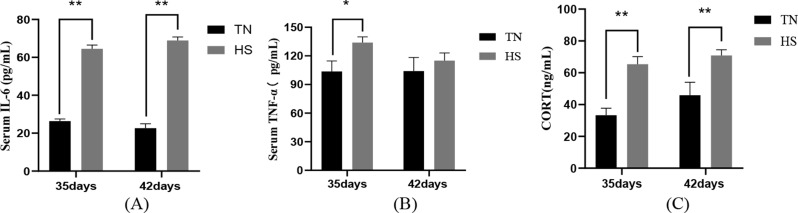
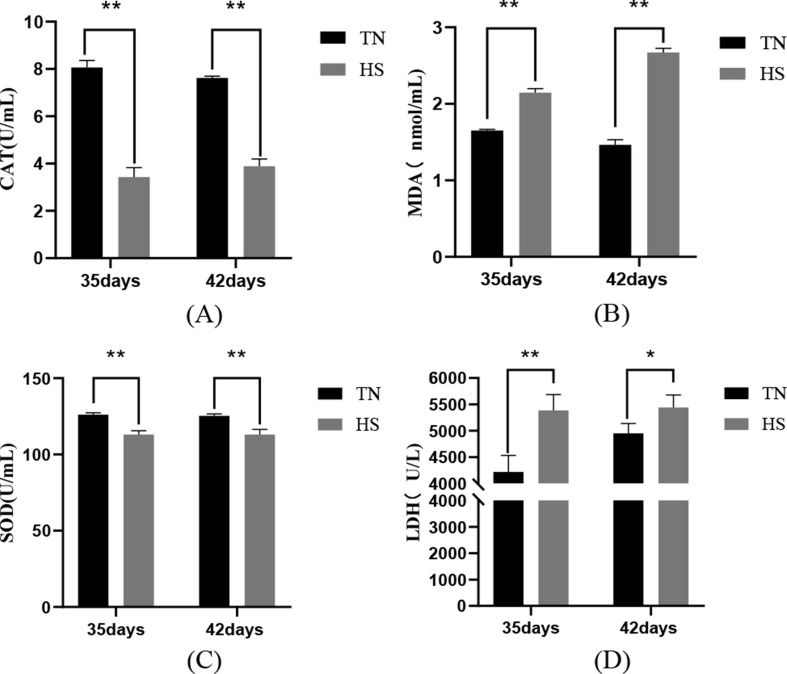
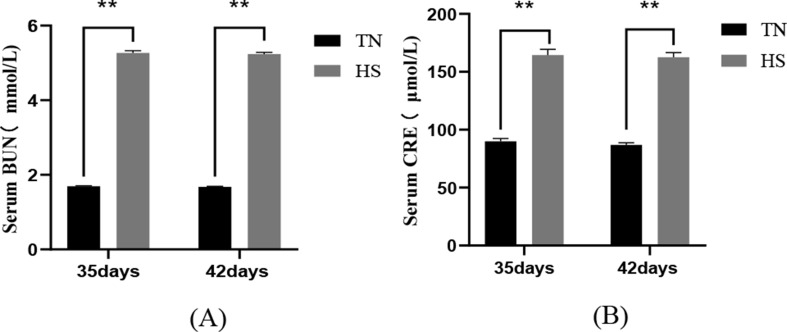
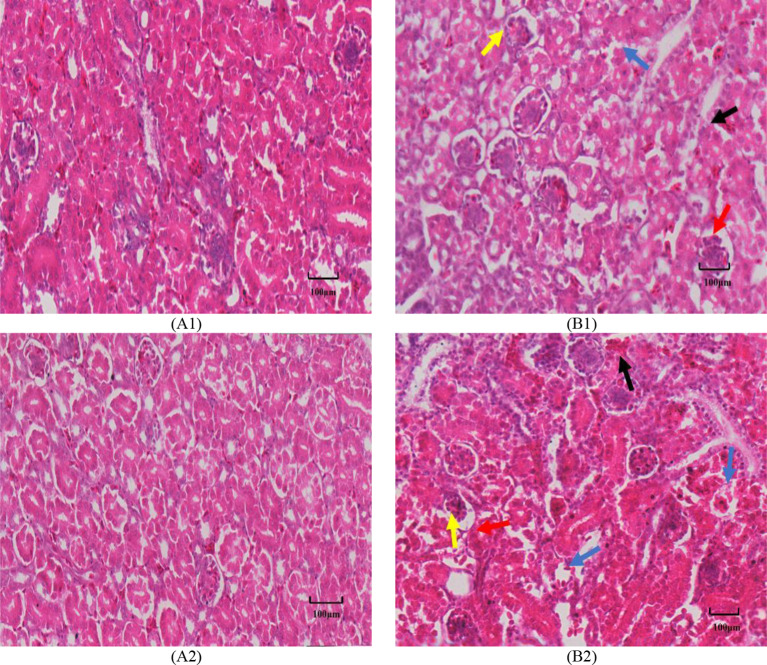
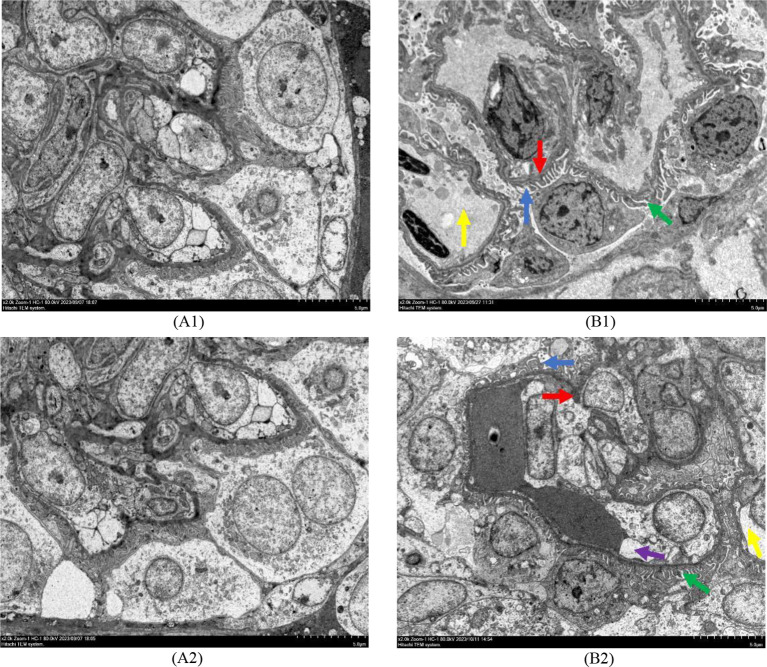
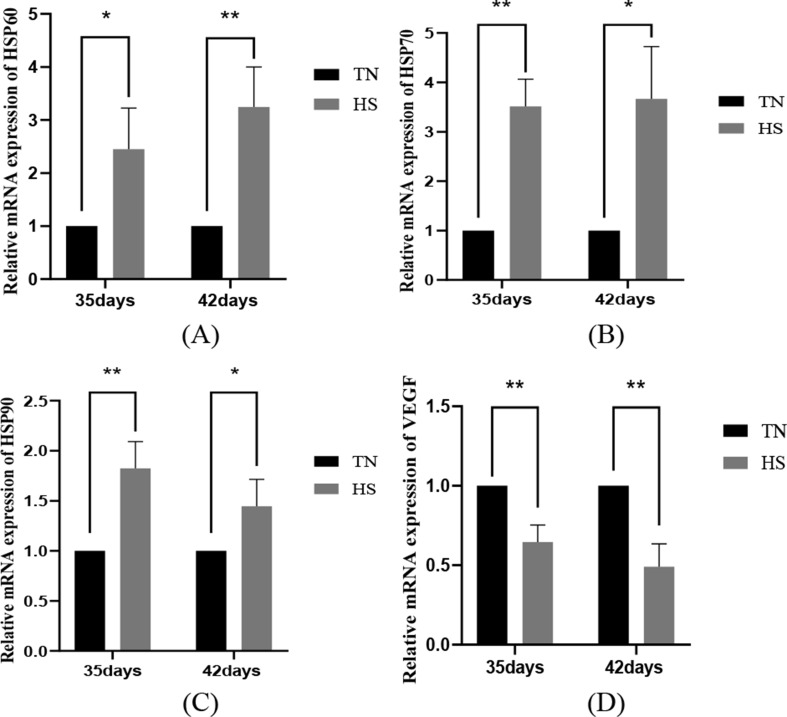
The ELISA results demonstrated that in comparison to the TN group, serum CORT content of broilers in the HS group was all remarkably elevated (P < 0.01); the levels of IL-6 and TNF-α in the serum were remarkably elevated (P < 0.05 or P < 0.01); serum CAT and SOD activities were all remarkably reduced (P < 0.05 or P < 0.01), and serum LDH activity and MDA content were all remarkably decreased (P < 0.05); serum BUN and CRE levels were remarkably elevated (P < 0.01). Pathological sections and transmission electron microscopy demonstrated that the structure of the renal filtration barrier in the HS group damaged gradually with the prolongation of heat stress in comparison to the TN group, but the damage was reduced at 42 days of age; the levels of TLR4, MyD88, NF-κB, NF-κB-p65, NLRP3, caspase-1 and IL-1β mRNAs were all up-regulated (P < 0.05 or P < 0.01) in renal tissues of the HS group, indicating that heat stress caused damage to the morphological structure and function of the renal filtration barrier and that TLR4/NF-κB/NLRP3 pathway was also affected by heat stress, leading to increased activity (P < 0.05 or P < 0.01).
It demonstrated that heat stress caused detrimental effects on both the morphological structure and function of the renal filtration barrier, and the initiation of the TLR4/NF-κB/NLRP3 signaling pathway exacerbated the inflammatory damage, leading to increased thermal damage to renal tissues and glomerular filtration barriers; however, with the prolongation of heat stress, broilers gradually developed heat tolerance, and the damage to the renal tissues and filtration barriers triggered by heat stress was mitigated.
高温环境可导致急性肾损伤,影响肾脏滤过功能。通过破坏肉鸡滤过屏障激活TLR4/NF-κB/NLRP3信号通路,研究热应激引起肾损伤的机制。TN组肉鸡温度维持在23±1℃,HS组从21日龄起温度维持在35±1℃,每天高温10小时,分别在35日龄和42日龄时从每个重复组中选取1只肉鸡进行采血。
ELISA结果显示,与TN组相比,HS组肉鸡血清CORT含量均显著升高(P<0.01);血清中IL-6和TNF-α水平显著升高(P<0.05或P<0.01);血清CAT和SOD活性均显著降低(P<0.05或P<0.01),血清LDH活性和MDA含量均显著降低(P<0.05);血清BUN和CRE水平显著升高(P<0.01)。病理切片和透射电镜显示,与TN组相比,HS组肾滤过屏障结构随热应激时间延长逐渐受损,但42日龄时损伤减轻;HS组肾组织中TLR4、MyD88、NF-κB、NF-κB-p65、NLRP3、caspase-1和IL-1β mRNA水平均上调(P<0.05或P<0.01),表明热应激导致肾滤过屏障形态结构和功能受损,且TLR4/NF-κB/NLRP3通路也受热应激影响,导致活性增加(P<0.05或P<0.01)。
表明热应激对肾滤过屏障的形态结构和功能均产生有害影响,TLR4/NF-κB/NLRP3信号通路的激活加剧了炎症损伤,导致肾组织和肾小球滤过屏障的热损伤增加;然而,随着热应激时间延长,肉鸡逐渐产生热耐受性,热应激引发的肾组织和滤过屏障损伤减轻。