
法国住院患者多克隆高球蛋白血症的病因学研究及诊断辅助算法建议:简称:法国住院患者多克隆高球蛋白血症
Etiological study of polyclonal hypergammaglobulinemia in a French cohort of hospitalized patients and proposal of a diagnostic aid algorithm : Short title: polyclonal hypergammaglobulinemia in a French cohort of hospitalized patients.
作者信息
Andre Mallory, Contis Anne, Berard Annie M
机构信息
Groupe Hospitalier Pellegrin, CHU de Bordeaux - Place Amélie Raba Léon, Bordeaux, F-33000, France.
Université Bordeaux, 146 rue Léo Saignat, Bordeaux, F-33076, France.
出版信息
Sci Rep. 2024 Dec 28;14(1):31282. doi: 10.1038/s41598-024-82735-7.
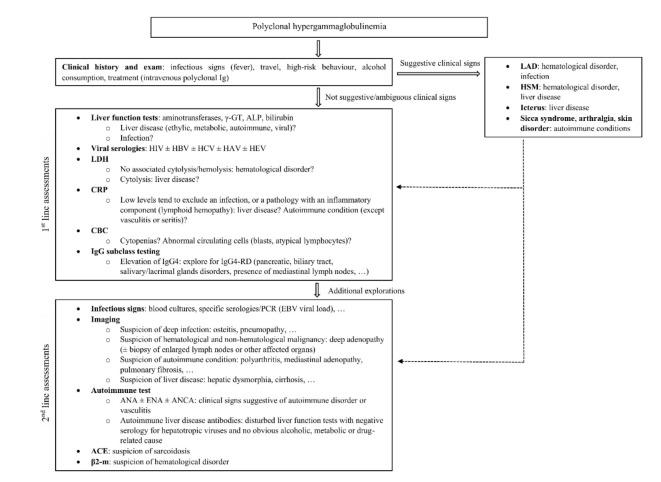
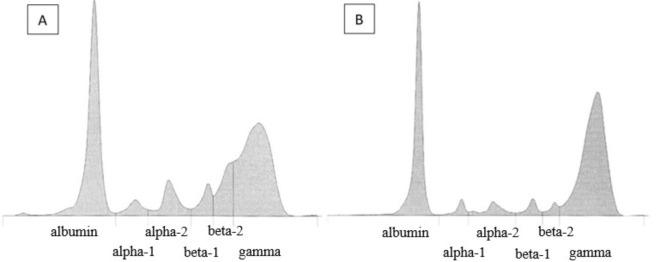
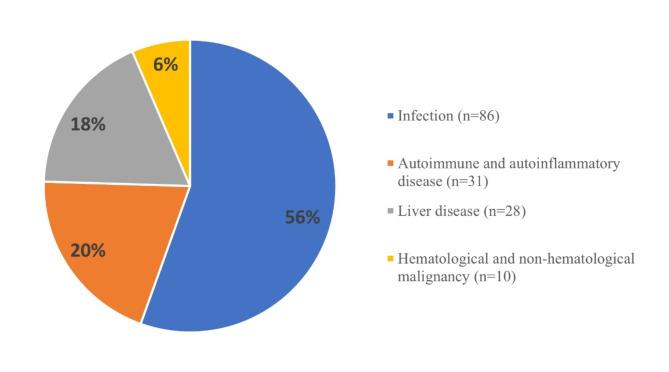
Serum protein electrophoresis can sometimes reveal polyclonal hypergammaglobulinemia. This electrophoretic abnormality can be caused by a variety of conditions and can be difficult to investigate. We sought to investigate screening practices in patients with hypergammaglobulinemia in order to establish diagnostic guidance strategies. We selected all patients with polyclonal hypergammaglobulinemia greater than or equal to 20 g/L over one year to identify the etiologies causing a significant increase in gammaglobulins in the absence of a monoclonal abnormality. We then selected patients who presented with this abnormality for the first time, with no known etiology. Clinical, medication, biological and imaging data were collected. In our study population with polyclonal hypergammaglobulinemia (n = 155), the main etiologies identified were infections (56%), autoimmune and autoinflammatory diseases (20%), liver diseases (18%) and hematological and non-hematological malignancies (6%). Once hypergammaglobulinemia was identified, the clinical examination provided diagnostic orientation but was not sufficient to make the diagnosis. The initial assessment must investigate the most common pathologies including analysis of liver function, viral status, the search for signs of intravascular haemolysis, inflammatory markers, and blood cell count. At the second time point (unless there were suggestive clinical signs at presentation), more specific biological and imaging analyses were required. Finally, we propose a diagnostic guideline for a current, rational and optimal medical practice to assist clinicians in the management of patients with hypergammaglobulinemia.
血清蛋白电泳有时可显示多克隆高球蛋白血症。这种电泳异常可由多种情况引起,且可能难以探究。我们试图研究高球蛋白血症患者的筛查方法,以制定诊断指导策略。我们选取了所有在一年中多克隆高球蛋白血症≥20g/L的患者,以确定在无单克隆异常情况下导致γ球蛋白显著升高的病因。然后我们选取了首次出现这种异常且病因不明的患者。收集了临床、用药、生物学和影像学数据。在我们的多克隆高球蛋白血症研究人群(n = 155)中,确定的主要病因是感染(56%)、自身免疫和自身炎症性疾病(20%)、肝脏疾病(18%)以及血液系统和非血液系统恶性肿瘤(6%)。一旦确定存在高球蛋白血症,临床检查可提供诊断方向,但不足以做出诊断。初始评估必须调查最常见的病症,包括肝功能分析、病毒状态、血管内溶血迹象的检查、炎症标志物以及血细胞计数。在第二个时间点(除非就诊时有提示性临床体征),则需要进行更具特异性的生物学和影像学分析。最后,我们提出了一项针对当前合理且最佳医疗实践的诊断指南,以协助临床医生管理高球蛋白血症患者。
 Zotero 插件