Hu Junyi, Wang Cui
Department of Clinical Medicine, International Medical College, Children's Hospital of Chongqing Medical University, Chongqing Medical University, Chongqing, 400016, China.
Radiology Department, Children's Hospital of Chongqing Medical University, Yuzhong District Zhongshan 2 Road 136#, Chongqing, 400014, China.
Sci Rep. 2024 Dec 28;14(1):31538. doi: 10.1038/s41598-024-83340-4.
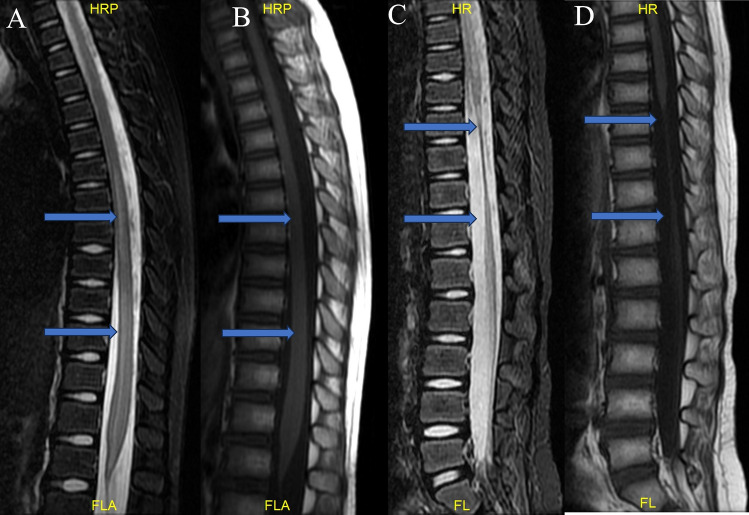
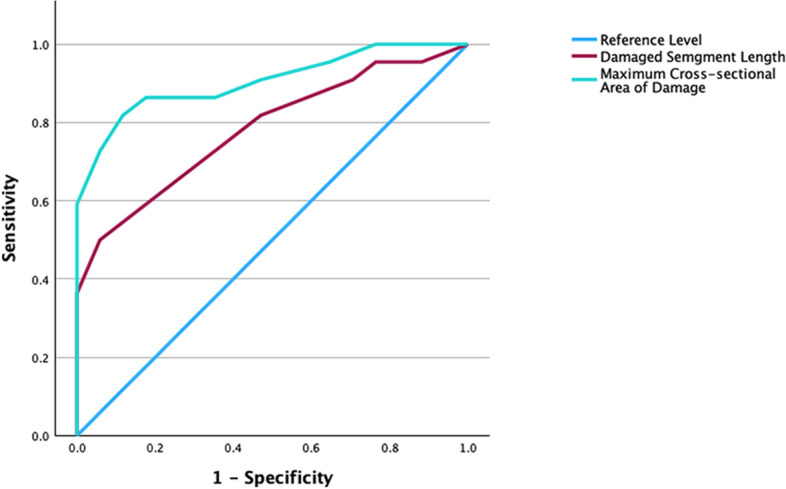
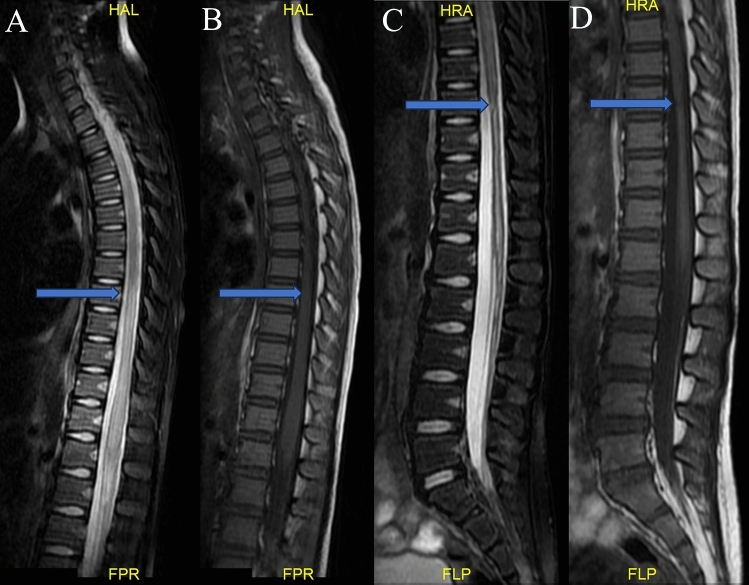
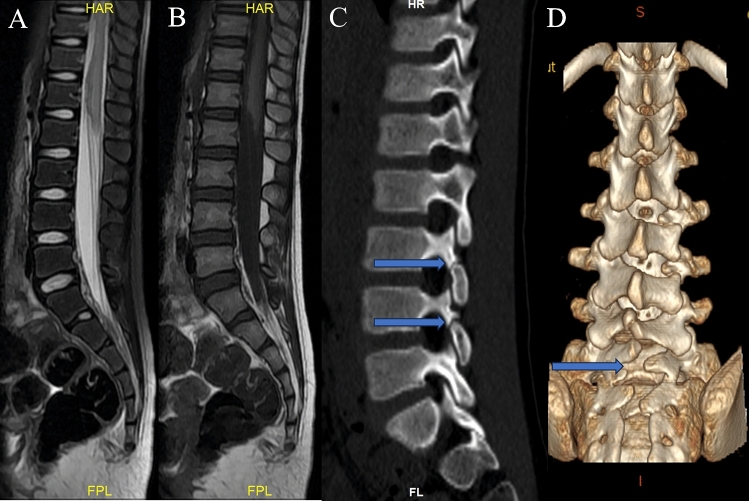
This study aimed to identify imaging risk factors for spinal cord injury without radiologic abnormalities (SCIWORA) in children. We retrospectively analyzed the medical records and magnetic resonance imaging (MRI) findings of children with SCIWORA admitted to our hospital between January 1, 2012, and September 30, 2022. Univariate and binary logistic regression analyses were used to evaluate the prognostic impact of various factors including MRI type, maximum cross-sectional area of spinal cord injury, injury length, injury signal intensity ratio. The American Spinal Injury Association (ASIA) impairment scale (AIS) was used to assess neurological improvement of spinal cord injury. A total of 39 patients met the inclusion criteria, comprising three males and 36 females aged 6.38 ± 1.7 years. The injuries were predominantly dance-related (25 patients), followed by car accidents (4 patients), and falls/sprains (10 patients). Seventeen patients showed improvement in the AIS grade, while 22 did not. Binary logistic regression analysis revealed that the maximum cross-sectional area and length of the damaged segment were significant prognostic factors. Receiver operating characteristic curve analysis demonstrated an area under the curve (AUC) of 0.91, with a maximum cutoff value, sensitivity, and specificity of 0.12, 81.80%, and 88.20%, respectively, for the maximum damage cross-sectional area. For the damaged segment length, the AUC, maximum cutoff value, sensitivity, and specificity were 0.78, 6.50, 50%, and 41%, respectively. Whole-spine MRI plays a crucial role in the diagnosis and prognosis of pediatric patients with SCIWORA. The cross-sectional area and length of spinal cord injury are risk factors for poor prognosis.Level of evidence: IV.
本研究旨在确定儿童无放射学异常的脊髓损伤(SCIWORA)的影像学危险因素。我们回顾性分析了2012年1月1日至2022年9月30日期间我院收治的SCIWORA患儿的病历和磁共振成像(MRI)结果。采用单因素和二元逻辑回归分析来评估包括MRI类型、脊髓损伤最大横截面积、损伤长度、损伤信号强度比等各种因素的预后影响。采用美国脊髓损伤协会(ASIA)损伤量表(AIS)评估脊髓损伤的神经功能改善情况。共有39例患者符合纳入标准,其中男性3例,女性36例,年龄6.38±1.7岁。损伤主要与舞蹈相关(25例),其次是车祸(4例)和跌倒/扭伤(10例)。17例患者的AIS分级有所改善,22例未改善。二元逻辑回归分析显示,受损节段的最大横截面积和长度是显著的预后因素。受试者工作特征曲线分析显示,最大损伤横截面积的曲线下面积(AUC)为0.91,最大截断值、敏感性和特异性分别为0.12、81.80%和88.20%。对于受损节段长度,AUC、最大截断值、敏感性和特异性分别为0.78、6.50、50%和41%。全脊柱MRI在小儿SCIWORA患者的诊断和预后中起着关键作用。脊髓损伤的横截面积和长度是预后不良的危险因素。证据级别:IV。