• 文献检索
  • 文档翻译
  • 深度研究
  • 学术资讯
  • Suppr Zotero 插件Zotero 插件
  • 邀请有礼
  • 套餐&价格
  • 历史记录
应用&插件
Suppr Zotero 插件Zotero 插件浏览器插件Mac 客户端Windows 客户端微信小程序
定价
高级版会员购买积分包购买API积分包
服务
文献检索文档翻译深度研究API 文档MCP 服务
关于我们
关于 Suppr公司介绍联系我们用户协议隐私条款
关注我们

Suppr 超能文献

核心技术专利:CN118964589B侵权必究
粤ICP备2023148730 号-1Suppr @ 2026

文献检索

告别复杂PubMed语法,用中文像聊天一样搜索,搜遍4000万医学文献。AI智能推荐,让科研检索更轻松。

立即免费搜索

文件翻译

保留排版,准确专业,支持PDF/Word/PPT等文件格式,支持 12+语言互译。

免费翻译文档

深度研究

AI帮你快速写综述,25分钟生成高质量综述,智能提取关键信息,辅助科研写作。

立即免费体验

比较虚拟现实和平衡训练对慢性踝关节不稳足球运动员踢球时姿势策略的影响。

Comparing virtual reality and balance training effects on postural strategies during ball kicking in soccer players with chronic ankle instability.

作者信息

Faghihi Rezvane, Khanmohammadi Roya

机构信息

Physical Therapy Department, Rehabilitation Faculty, Tehran University of Medical Sciences, Tehran, Iran.

出版信息

Sci Rep. 2024 Dec 28;14(1):31448. doi: 10.1038/s41598-024-83071-6.

DOI:10.1038/s41598-024-83071-6
PMID:39733187
原文链接:https://pmc.ncbi.nlm.nih.gov/articles/PMC11682270/
Abstract

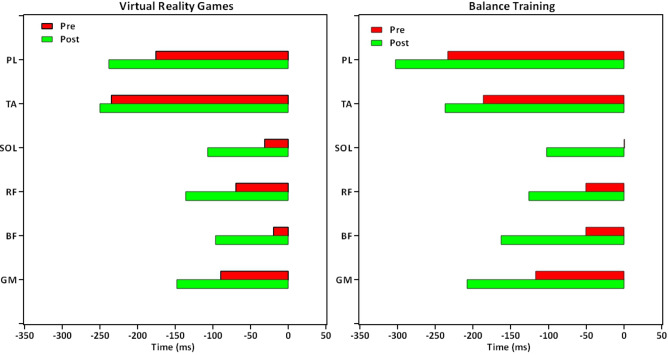
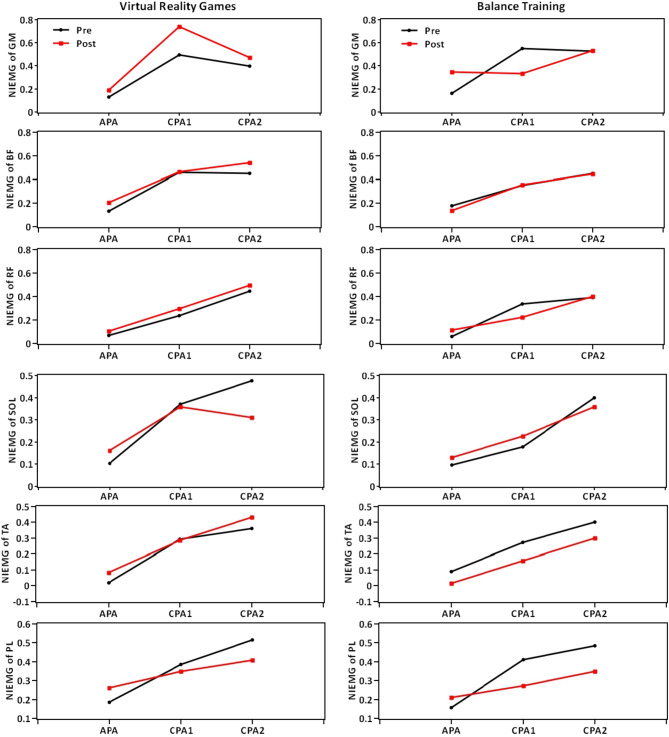
The study aimed to determine if virtual reality (VR) games could enhance neuromuscular control and improve anticipatory and compensatory strategies in ball-kicking for soccer players. It was a single-blind randomized clinical trial involving 32 male soccer players with chronic ankle instability. Participants were divided into two groups: VR games and balance training. The primary outcomes measured were the amplitude and onset time of muscle activities in the peroneus longus (PL), tibialis anterior (TA), soleus (SOL), rectus femoris (RF), biceps femoris (BF), and gluteus medius (GM) in three phases: anticipatory (APA), compensatory 1 (CPA1), and compensatory 2 (CPA2). Secondary outcomes included the Y-balance test and perceived ankle instability. Evaluations were done before and after treatment. Both groups underwent 12 sessions, three times a week, each lasting 60 min. In the VR games group, there was a significant decrease in SOL muscle activity amplitude during CPA2 after treatment (P = 0.033), and the BF muscle activated earlier (P = 0.043). The balance training group showed a significant increase in GM muscle activity amplitude during APA (P = 0.037) and earlier activation of the GM muscle post-treatment (P = 0.050). Additionally, this group demonstrated significant decreases in RF activity during CPA1 and PL activity in CPA1 and CPA2 (P = 0.048, P = 0.030, and P = 0.050, respectively). Between-group comparisons indicated a significant increase in GM muscle activity amplitude during APA and a reduction during CPA1 for the balance training group compared to the VR games group (P = 0.050 and P = 0.012, respectively). Both groups showed significant reductions in perceived ankle instability (VR group: P = 0.002, balance training group: P < 0.001) and improvements on the Y-balance test (VR group: P < 0.021, balance training group: P < 0.033), although neither group showed significant improvement in the anterior direction. Overall, both VR games and balance training effectively enhanced perceived ankle stability and dynamic postural control, with neither approach showing clear superiority. Both groups exhibited improvements in muscle activation timing, though neither outperformed the other. While both interventions led to increased muscle activity amplitude during the anticipatory and compensatory phases, the balance training group achieved somewhat greater improvements. These results suggest that both VR games and balance training are effective rehabilitation approaches for chronic ankle instability, providing comparable benefits for enhancing ankle stability and neuromuscular control, without a distinct advantage of one over the other.RCT Registration: On the Iranian Registry of Clinical Trials (IRCT20230124057197N1). Registration date: 30/06/2023.

摘要

该研究旨在确定虚拟现实(VR)游戏是否能增强足球运动员的神经肌肉控制,并改善其在踢球时的预期和补偿策略。这是一项单盲随机临床试验,涉及32名患有慢性踝关节不稳定的男性足球运动员。参与者被分为两组:VR游戏组和平衡训练组。主要测量结果是在三个阶段(预期阶段(APA)、补偿阶段1(CPA1)和补偿阶段2(CPA2))中,腓骨长肌(PL)、胫骨前肌(TA)、比目鱼肌(SOL)、股直肌(RF)、股二头肌(BF)和臀中肌(GM)的肌肉活动幅度和起始时间。次要结果包括Y平衡测试和感知到的踝关节不稳定。在治疗前后进行评估。两组均接受12次训练,每周三次,每次持续60分钟。在VR游戏组中,治疗后CPA2期间SOL肌肉活动幅度显著降低(P = 0.033),BF肌肉激活更早(P = 0.043)。平衡训练组在APA期间GM肌肉活动幅度显著增加(P = 0.037),治疗后GM肌肉激活更早(P = 0.050)。此外,该组在CPA1期间RF活动以及CPA1和CPA2期间PL活动显著降低(分别为P = 0.048、P = 0.030和P = 0.050)。组间比较表明,与VR游戏组相比,平衡训练组在APA期间GM肌肉活动幅度显著增加,在CPA1期间降低(分别为P = 0.050和P = 0.012)。两组在感知到的踝关节不稳定方面均显著降低(VR组:P = 0.002,平衡训练组:P < 0.001),在Y平衡测试中均有改善(VR组:P < 0.021,平衡训练组:P < 0.033),尽管两组在前向方向上均未显示出显著改善。总体而言,VR游戏和平衡训练均有效增强了感知到的踝关节稳定性和动态姿势控制,两种方法均未显示出明显优势。两组在肌肉激活时间方面均有改善,尽管没有一组优于另一组。虽然两种干预措施在预期和补偿阶段均导致肌肉活动幅度增加,但平衡训练组的改善程度略大。这些结果表明,VR游戏和平衡训练都是治疗慢性踝关节不稳定的有效康复方法,在增强踝关节稳定性和神经肌肉控制方面提供了相当的益处,且没有一种方法明显优于另一种。随机对照试验注册:在伊朗临床试验注册中心(IRCT20230124057197N1)。注册日期:2023年6月30日。

https://cdn.ncbi.nlm.nih.gov/pmc/blobs/211d/11682270/bdbbe4c09a96/41598_2024_83071_Fig4_HTML.jpg
https://cdn.ncbi.nlm.nih.gov/pmc/blobs/211d/11682270/2a26e1f9f8d2/41598_2024_83071_Fig1_HTML.jpg
https://cdn.ncbi.nlm.nih.gov/pmc/blobs/211d/11682270/fb467b4f04db/41598_2024_83071_Fig2_HTML.jpg
https://cdn.ncbi.nlm.nih.gov/pmc/blobs/211d/11682270/9db6c847fb6e/41598_2024_83071_Fig3_HTML.jpg
https://cdn.ncbi.nlm.nih.gov/pmc/blobs/211d/11682270/bdbbe4c09a96/41598_2024_83071_Fig4_HTML.jpg
https://cdn.ncbi.nlm.nih.gov/pmc/blobs/211d/11682270/2a26e1f9f8d2/41598_2024_83071_Fig1_HTML.jpg
https://cdn.ncbi.nlm.nih.gov/pmc/blobs/211d/11682270/fb467b4f04db/41598_2024_83071_Fig2_HTML.jpg
https://cdn.ncbi.nlm.nih.gov/pmc/blobs/211d/11682270/9db6c847fb6e/41598_2024_83071_Fig3_HTML.jpg
https://cdn.ncbi.nlm.nih.gov/pmc/blobs/211d/11682270/bdbbe4c09a96/41598_2024_83071_Fig4_HTML.jpg

相似文献

1
Comparing virtual reality and balance training effects on postural strategies during ball kicking in soccer players with chronic ankle instability.比较虚拟现实和平衡训练对慢性踝关节不稳足球运动员踢球时姿势策略的影响。
Sci Rep. 2024 Dec 28;14(1):31448. doi: 10.1038/s41598-024-83071-6.
2
The Effect of Additional Neuromuscular Training on Peri-Ankle Muscle Morphology and Function in Chronic Ankle Instability Subjects: A Randomized Controlled Trial.额外神经肌肉训练对慢性踝关节不稳患者踝关节周围肌肉形态和功能的影响:一项随机对照试验
Sports Health. 2025 May-Jun;17(3):572-584. doi: 10.1177/19417381241258467. Epub 2024 Jun 20.
3
Changes in Postural Control After a Ball-Kicking Balance Exercise in Individuals With Chronic Ankle Instability.慢性踝关节不稳患者进行踢毽子平衡训练后姿势控制的变化
J Athl Train. 2016 Jun 2;51(6):480-90. doi: 10.4085/1062-6050-51.8.02. Epub 2016 Jun 13.
4
Comparison of the effects of exergaming and balance training on dynamic postural stability during jump-landing in recreational athletes with chronic ankle instability.运动游戏与平衡训练对慢性踝关节不稳的休闲运动员跳跃落地时动态姿势稳定性影响的比较
PLoS One. 2024 Dec 16;19(12):e0314686. doi: 10.1371/journal.pone.0314686. eCollection 2024.
5
The efficacy of virtual reality assisted versus traditional rehabilitation intervention on individuals with functional ankle instability: a pilot randomized controlled trial.虚拟现实辅助与传统康复干预对功能性踝关节不稳个体的疗效:一项初步随机对照试验。
Disabil Rehabil Assist Technol. 2019 Apr;14(3):276-280. doi: 10.1080/17483107.2018.1429501. Epub 2018 Jan 31.
6
Effects of textured insoles on dynamic balance and ankle muscle activity in soccer players with and without chronic ankle instability.有慢性踝关节不稳定和无慢性踝关节不稳定的足球运动员足底纹理鞋垫对动态平衡和踝关节肌肉活动的影响。
J Sports Med Phys Fitness. 2024 Nov;64(11):1200-1207. doi: 10.23736/S0022-4707.24.16187-7. Epub 2024 Jul 17.
7
Comparison of virtual reality exercise versus conventional exercise on balance in patients with functional ankle instability: A randomized controlled trial.虚拟现实训练与传统训练对功能性踝关节不稳患者平衡功能影响的比较:一项随机对照试验。
J Back Musculoskelet Rehabil. 2019;32(6):905-911. doi: 10.3233/BMR-181376.
8
The Effect of Virtual Reality Training on Anticipatory Postural Adjustments in Patients with Chronic Nonspecific Low Back Pain: A Preliminary Study.虚拟现实训练对慢性非特异性下腰痛患者姿势预备调整的影响:一项初步研究。
Neural Plast. 2021 Jul 27;2021:9975862. doi: 10.1155/2021/9975862. eCollection 2021.
9
Neuromuscular control of ankle and hip during performance of the star excursion balance test in subjects with and without chronic ankle instability.在有和无慢性踝关节不稳定的受试者中进行星形偏移平衡测试时踝关节和髋关节的神经肌肉控制。
PLoS One. 2018 Aug 13;13(8):e0201479. doi: 10.1371/journal.pone.0201479. eCollection 2018.
10
Kinesiology taping improves balance in football players with chronic ankle instability.运动贴扎改善慢性踝关节不稳定的足球运动员的平衡能力。
J Bodyw Mov Ther. 2024 Oct;40:455-460. doi: 10.1016/j.jbmt.2024.04.048. Epub 2024 Apr 23.

本文引用的文献

1
The effects of combining sensorimotor training with transcranial direct current stimulation on the anticipatory and compensatory postural adjustments in patients with chronic low back pain.将感觉运动训练与经颅直流电刺激相结合对慢性下腰痛患者预期性和代偿性姿势调整的影响。
Disabil Rehabil. 2025 Mar;47(6):1512-1524. doi: 10.1080/09638288.2024.2375756. Epub 2024 Jul 10.
2
Acute Effects of a Hop-Stabilization Warm-Up Program on Dynamic Balance, Ground Reaction Force, and Muscle Activity During Cutting Movements in Collegiate Athletes with Chronic Ankle Instability.啤酒花稳定化热身计划对慢性踝关节不稳的大学生运动员在切入动作时动态平衡、地面反作用力和肌肉活动的急性影响。
Int J Exerc Sci. 2024 Mar 1;17(1):343-358. doi: 10.70252/PUYL9935. eCollection 2024.
3
Virtual Reality in Improving Anticipatory Postural Adjustments to Step Initiation in Individuals with Knee Osteoarthritis: A Randomized Controlled Trial.虚拟现实改善膝骨关节炎患者起始步行动作的预期姿势调整:一项随机对照试验。
Games Health J. 2024 Apr;13(2):100-108. doi: 10.1089/g4h.2023.0154. Epub 2024 Mar 5.
4
A systematic review and meta-analysis of balance training in patients with chronic ankle instability.慢性踝关节不稳患者平衡训练的系统评价和荟萃分析。
Syst Rev. 2024 Feb 12;13(1):64. doi: 10.1186/s13643-024-02455-x.
5
EMG Analysis During Static Balance in Chronic Ankle Instability, Coper and Controls.慢性踝关节不稳患者、代偿者和对照组在静态平衡期间的肌电图分析
Int J Sports Med. 2024 Jan;45(1):48-54. doi: 10.1055/a-2156-2644. Epub 2023 Nov 16.
6
Virtual reality versus Biodex training in adolescents with chronic ankle instability: a randomized controlled trial.虚拟现实与Biodex训练对慢性踝关节不稳青少年的影响:一项随机对照试验。
Arch Med Sci. 2021 Mar 18;19(4):1059-1068. doi: 10.5114/aoms/134635. eCollection 2023.
7
The Efficacy of Virtual Reality Training in the Rehabilitation of Orthopedic Ankle Injuries: A Systematic Review and Meta-analysis.虚拟现实训练在骨科踝关节损伤康复中的疗效:一项系统评价与荟萃分析。
Adv Rehabil Sci Pract. 2023 Feb 7;12:11795727231151636. doi: 10.1177/11795727231151636. eCollection 2023 Jan-Dec.
8
Postural Control Deficits During Static Single-leg Stance in Chronic Ankle Instability: A Systematic Review and Meta-Analysis.慢性踝关节不稳患者静态单腿站立时的姿势控制缺陷:系统评价和荟萃分析。
Sports Health. 2024 Jan-Feb;16(1):29-37. doi: 10.1177/19417381231152490. Epub 2023 Mar 5.
9
Maladaptive Neuroplasticity in Corticospinal Tract after Ankle Sprain: Causal Links Established by Mendelian Randomization.踝扭伤后皮质脊髓束的神经适应不良:孟德尔随机化确立的因果关系。
Med Sci Sports Exerc. 2023 Jun 1;55(6):1114-1120. doi: 10.1249/MSS.0000000000003134. Epub 2023 Feb 9.
10
The effect of exergaming on cognition and brain activity in older adults: A motor- related cortical potential study.运动游戏对老年人认知和大脑活动的影响:一项运动相关皮质电位研究。
Physiol Behav. 2022 Oct 15;255:113941. doi: 10.1016/j.physbeh.2022.113941. Epub 2022 Aug 11.