Tezen Özge, Bilir Emine Esra, Uzun Öznur, Yaniktaş Duygu, Şentürk Başak, Yaşar Evren
Department of Physical Medicine and Rehabilitation, Ankara Bilkent City Hospital, Ankara, Turkiye.
Turk J Med Sci. 2024 Oct 7;54(6):1302-1309. doi: 10.55730/1300-0144.5913. eCollection 2024.
BACKGROUND/AIM: This study aimed to compare the therapeutic efficacy of conventional physical therapy (CPT) methods for knee osteoarthritis (OA) and transfer energy capacitive and resistive (TECAR) therapy, a relatively new and increasingly used treatment modality, based on patient clinical outcomes assessments.
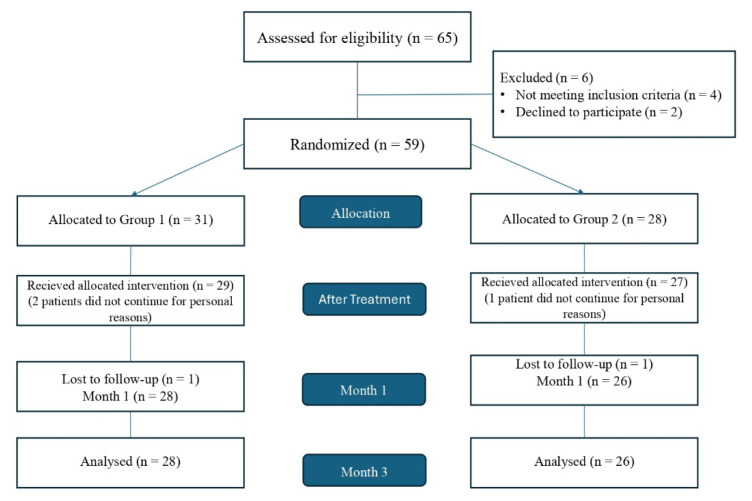
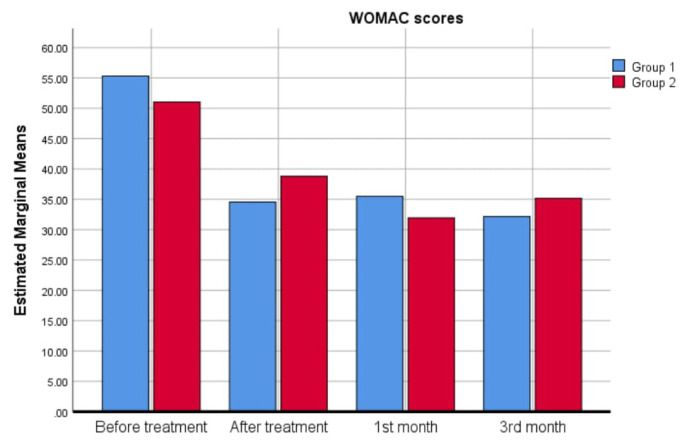
Two groups of 54 patients, aged 40 to 75, were randomly assigned. CPT was given to both groups. In addition to CPT, Group 2 underwent TECAR therapy for six sessions, three times a week for two weeks. The Western Ontario and McMaster Universities Arthritis Index (WOMAC) was used to measure the disability and pain levels of each patient before and at the end of treatment and at 1 month and 3 months. Additionally, goniometric measurements of each patient's knee joint range of motion and isometric quadriceps muscle strength were taken.
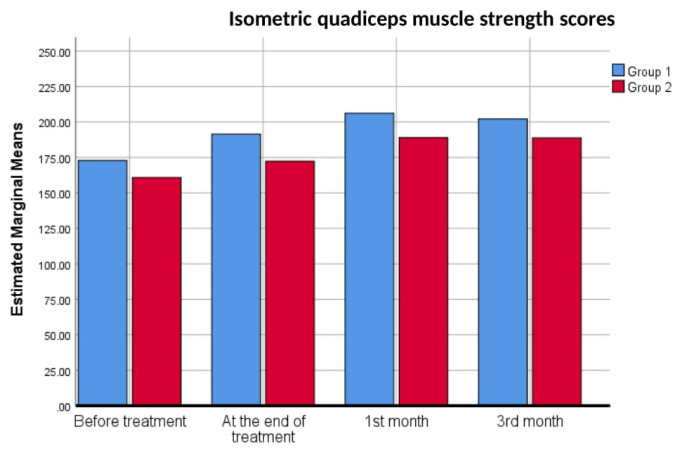
Significant improvements were noted in the VAS, WOMAC, and isometric quadriceps strength ratings in both groups between the pre- and posttreatment follow-ups. However, there was no discernible difference between the groups.
For the conservative treatment of OA in the knee, TECAR therapy may be a helpful therapeutic approach.
背景/目的:本研究旨在基于患者临床结局评估,比较传统物理治疗(CPT)方法与转移能量电容电阻(TECAR)疗法(一种相对较新且使用日益广泛的治疗方式)对膝关节骨关节炎(OA)的治疗效果。
将两组各54名年龄在40至75岁之间的患者随机分组。两组均接受CPT治疗。除CPT外,第2组接受6次TECAR治疗,每周3次,共两周。采用西安大略和麦克马斯特大学骨关节炎指数(WOMAC)在治疗前、治疗结束时、1个月和3个月时测量每位患者的残疾和疼痛程度。此外,对每位患者的膝关节活动范围进行测角测量,并测量股四头肌等长肌力。
两组在治疗前和治疗后随访之间的视觉模拟评分(VAS)、WOMAC评分和股四头肌等长肌力评分均有显著改善。然而,两组之间没有明显差异。
对于膝关节OA的保守治疗,TECAR疗法可能是一种有益的治疗方法。