Dudin Oleksandr, Mintser Ozar, Gurianov Vitalii, Kobyliak Nazarii, Kaminskyi Dmytro, Matvieieva Alina, Shabalkov Roman, Mashukov Artem, Sulaieva Oksana
Scientific Department, Medical Laboratory CSD, Kyiv, Ukraine.
Department of Informatics, Information Technology and Transdisciplinary Learning, Shupyk National Healthcare University of Ukraine, Kyiv, Ukraine.
J Skin Cancer. 2024 Dec 19;2024:3690228. doi: 10.1155/jskc/3690228. eCollection 2024.
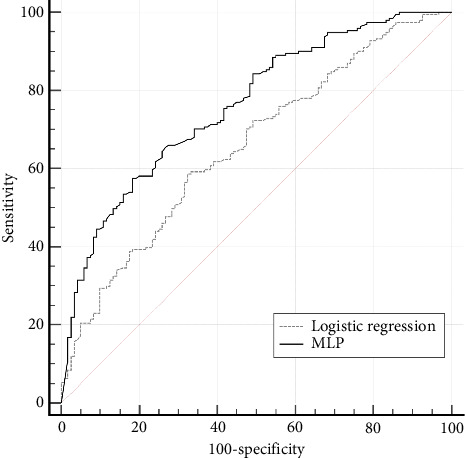
Point mutations at codon 600 of the BRAF oncogene are the most common alterations in cutaneous melanoma (CM). Assessment of BRAF status allows to personalize patient management, though the affordability of molecular testing is limited in some countries. This study aimed to develop a model for predicting alteration in BRAF based on routinely available clinical and histological data. For identifying the key factors associated with point mutations in BRAF, 2041 patients with CM were recruited in the study. The presence of BRAF mutations was an endpoint. The variables included demographic data (gender and age), anatomic location, stage, histological subtype, number of mitosis, and also such features as ulceration, Clark level, Breslow thickness, infiltration by lymphocytes, invasiveness, regression, microsatellites, and association with nevi. A relatively high rate of BRAF mutation was revealed in the Ukrainian cohort of patients with CM. BRAF-mutant melanoma was associated with younger age and location of nonsun-exposed skin. Besides, sex-specific differences were found between CM of various anatomic distributions and the frequency of distinct BRAF mutation subtypes. A minimal set of variables linked to BRAF mutations, defined by the genetic input selection algorithm, included patient age, primary tumor location, histological type, lymphovascular invasion, ulceration, and association with nevi. To encounter nonlinear links, neural network modeling was applied resulting in a multilayer perceptron (MLP) with one hidden layer. Its architecture included four neurons with a logistic activation function. The AUROCMLP6 of the MLP model comprised 0.79 (95% CІ: 0.74-0.84). Under the optimal threshold, the model demonstrated the following parameters: sensitivity: 89.4% (95% CІ: 84.5%-93.1%), specificity: 50.7% (95% CІ: 42.2%-59.1%), positive predictive value: 73.1% (95% CІ: 69.6%-76.3%), and negative predictive value: 76.0% (95% CІ: 67.6%-82.8%). The developed MLP model enables the prediction of the mutation in BRAF oncogene in CM, alleviating decisions on personalized management of patients with CM. In conclusion, the developed MLP model, which relies on the assessment of 6 variables, can predict the mutation status in patients with CM, supporting decisions on patient management.
BRAF癌基因第600位密码子的点突变是皮肤黑色素瘤(CM)中最常见的改变。评估BRAF状态有助于实现患者管理的个性化,不过在一些国家,分子检测的可及性有限。本研究旨在基于常规可用的临床和组织学数据开发一种预测BRAF改变的模型。为了确定与BRAF点突变相关的关键因素,该研究招募了2041例CM患者。BRAF突变的存在为一个终点。变量包括人口统计学数据(性别和年龄)、解剖位置、分期、组织学亚型、有丝分裂数,以及溃疡、克拉克分级、布雷斯洛厚度、淋巴细胞浸润、侵袭性、消退、微卫星以及与痣的关联等特征。在乌克兰CM患者队列中发现了相对较高的BRAF突变率。BRAF突变型黑色素瘤与较年轻的年龄以及非阳光暴露皮肤的位置相关。此外, 在不同解剖分布的CM与不同BRAF突变亚型的频率之间发现了性别特异性差异。由遗传输入选择算法定义的与BRAF突变相关的一组最少变量包括患者年龄、原发肿瘤位置、组织学类型、淋巴管浸润、溃疡以及与痣的关联。为了处理非线性联系,应用了神经网络建模,得到了一个具有一个隐藏层的多层感知器(MLP)。其架构包括四个具有逻辑激活函数的神经元。MLP模型的曲线下面积(AUROCMLP6)为0.79(95%置信区间:0.74 - 0.84)。在最佳阈值下,该模型显示出以下参数:灵敏度:89.4%(95%置信区间:84.5% - 93.1%),特异性:50.7%(95%置信区间:42.2% - 59.1%),阳性预测值:73.1%(95%置信区间:69.6% - 76.3%),阴性预测值:76.0%(95%置信区间:67.6% - 82.8%)。所开发的MLP模型能够预测CM中BRAF癌基因的突变,有助于做出CM患者个性化管理的决策。总之,所开发的依赖于对6个变量进行评估的MLP模型能够预测CM患者的突变状态,辅助做出患者管理决策。