Huang Yuxia, Zhang Lan, Zhang Wentian, Lv Na, Wang Tao
Department of Pulmonary and Critical Care Medicine, The Third Affiliated Hospital of Sun Yat-sen University, Institute of Respiratory Diseases of Sun Yat-sen University, Guangzhou, China.
Department of Thoracic Surgery, Shanghai Pulmonary Hospital, Tongji University School of Medicine, Shanghai, China.
Front Cell Infect Microbiol. 2024 Dec 16;14:1474998. doi: 10.3389/fcimb.2024.1474998. eCollection 2024.
We aimed to identify the diagnostic value of next-generation sequencing (NGS) of bronchoalveolar lavage fluid (BALF) from patients with non-small-cell lung cancer (NSCLC).
Forty patients who were initially diagnosed with pulmonary nodules were enrolled. Frozen section histology was used to identify the NSCLC cell types. NGS of collected BALF samples was used for microbial identification. We compared the bacterial and viral distributions in BALF samples from patients with NSCLC with and without obstructive pneumonia as well as their NSCLC drainage times following surgery.
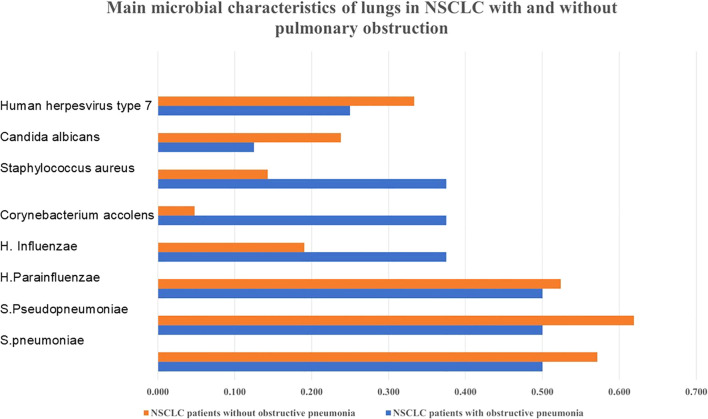
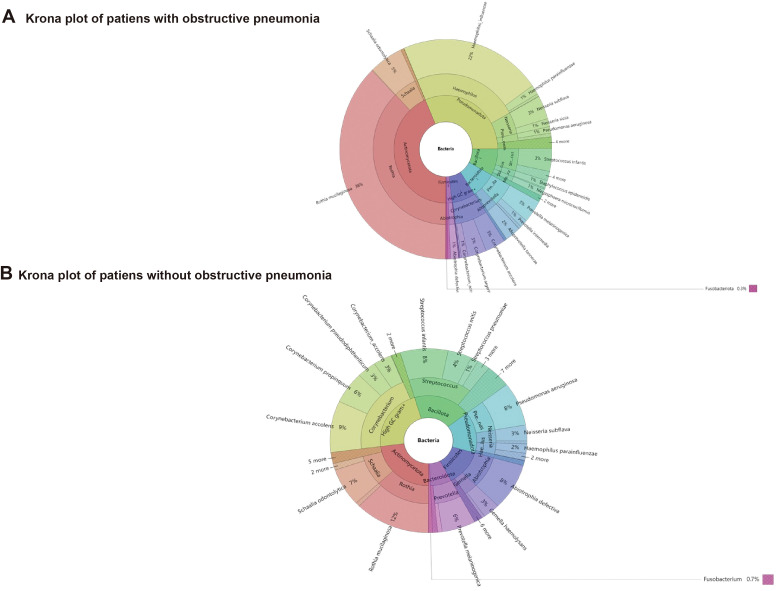
Of the 29 patients with NSCLC, eight had obstructive pneumonia. , , and were the top three bacteria present in almost 50% of patients, both with and without obstructive pneumonia. The viral detection rate was higher in the BALF of patients with NSCLC who did not have obstructive pneumonia. However, in patients with NSCLC and drain times of >5 days, the human herpes virus type 7 detection rate was higher following surgery than it was in patients with NSCLC who had drain times of ≤5 days.
Viral imbalance in NSCLC is closely related to the occurrence of obstructive pneumonia and postoperative drainage time.
我们旨在确定非小细胞肺癌(NSCLC)患者支气管肺泡灌洗液(BALF)的下一代测序(NGS)的诊断价值。
纳入40例最初诊断为肺结节的患者。采用冰冻切片组织学方法确定NSCLC细胞类型。对收集的BALF样本进行NGS用于微生物鉴定。我们比较了有和没有阻塞性肺炎的NSCLC患者BALF样本中的细菌和病毒分布以及他们术后的NSCLC引流时间。
在29例NSCLC患者中,8例有阻塞性肺炎。在几乎50%有和没有阻塞性肺炎的患者中,[此处原文缺失具体细菌名称]、[此处原文缺失具体细菌名称]和[此处原文缺失具体细菌名称]是最常见的三种细菌。在没有阻塞性肺炎的NSCLC患者的BALF中病毒检测率更高。然而,在NSCLC且引流时间>5天的患者中,术后人类疱疹病毒7型检测率高于引流时间≤5天的NSCLC患者。
NSCLC中的病毒失衡与阻塞性肺炎的发生和术后引流时间密切相关。