Li Xuemei, Xiong Chao, Wang Siyi, Ren Zhangjun, Jin Qi, Yu Jinhai, Chen Yunxiu, Gan Puying, Xu Qihua, Wang Yaohua, Liao Hongfei
School of Optometry, Jiangxi Medical College, Nanchang University, Nanchang, Jiangxi, China.
Department of Ophthalmology, The Affiliated Eye Hospital, Jiangxi Medical College, Nanchang University, Nanchang, Jiangxi, China.
Front Immunol. 2024 Dec 13;15:1422497. doi: 10.3389/fimmu.2024.1422497. eCollection 2024.
Thyroid-associated orbitopathy (TAO) is an autoimmune inflammatory disorder of the orbital adipose tissue, primarily causing oxidative stress injury and tissue remodeling in the orbital connective tissue. Ferroptosis is a form of programmed cell death driven by the accumulation of reactive oxygen species (ROS), iron metabolism disorder, and lipid peroxidation. This study aims to identify and validate the optimal feature genes (OFGs) of ferroptosis with diagnostic and therapeutic potential in TAO orbital adipose tissue through bioinformatics analysis and to assess their correlation with disease-related immune cell infiltration.
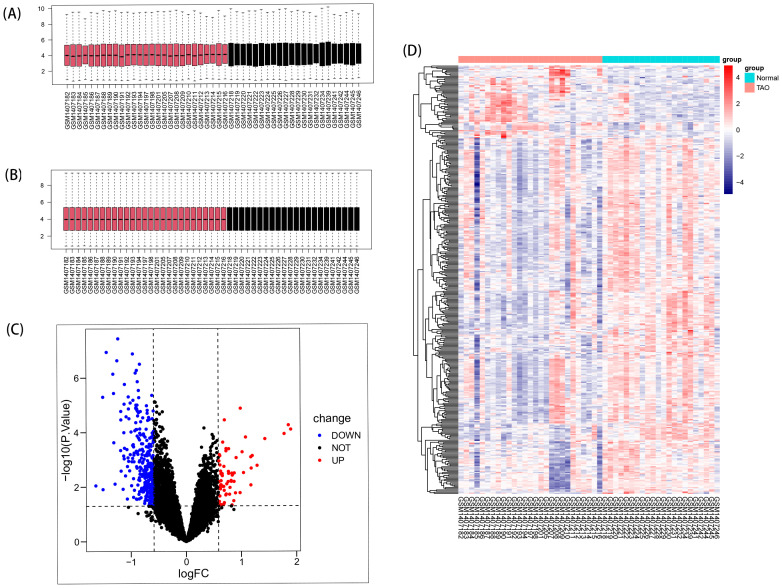
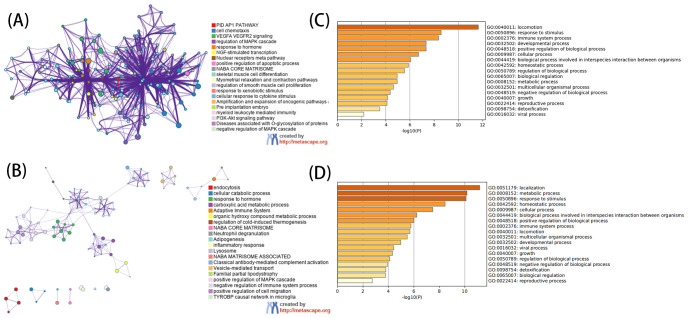
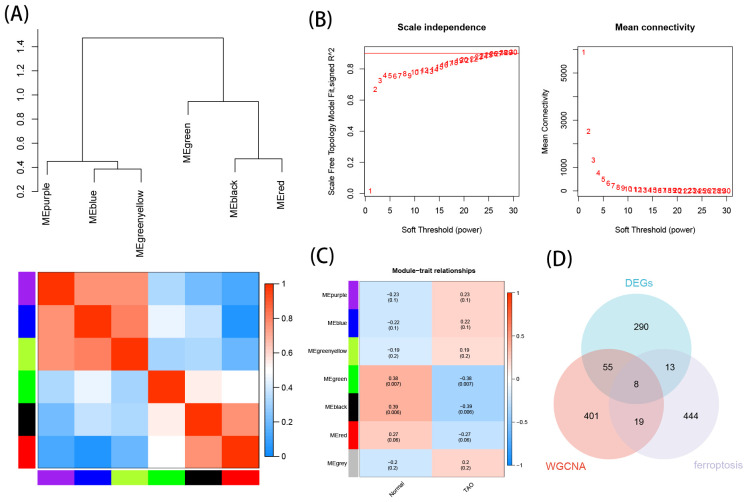
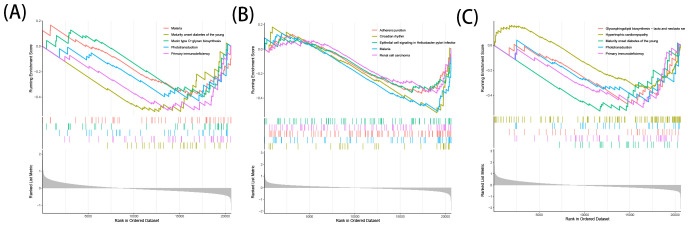
Search of the Gene Expression Omnibus database for TAO-related gene datasets led to the selection of GSE58331 for differential gene expression analysis. WGCNA was employed to identify key disease modules and hub genes. The intersection of DEGs, hub genes and ferroptosis-related gene yielded key genes of ferroptosis. Machine learning algorithms identified OFGs of ferroptosis. Meanwhile, by comparing the expression of FRGs in the orbital adipose tissue and the orbital fibroblasts (OFs) of healthy controls and TAO patients, as well as co-culturing macrophages and OFs , the influence of macrophages on FRGs in OFs was explored. CIBERSORT analyzed immune cell infiltration to determine proportions of immune cell types in each sample, and Spearman correlation analysis explored relationships between OFGs and infiltrating immune cells. Finally, GSEA determined the function of each key biomarker based on the median expression of OFGs.
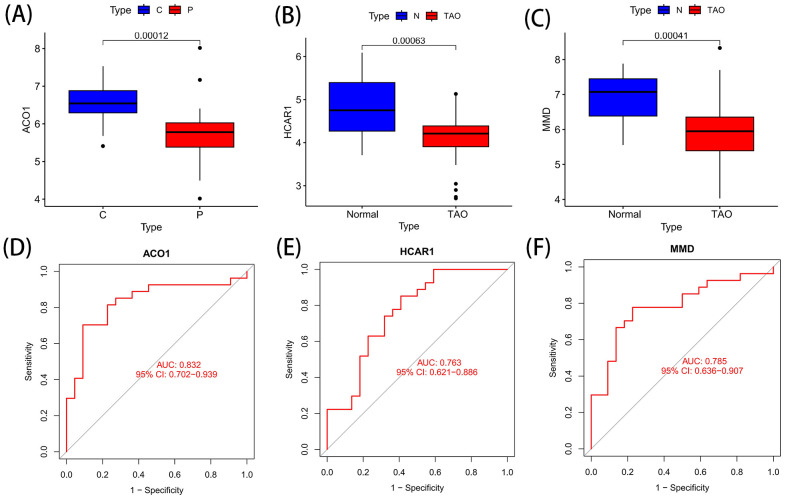
Three TAO FRGs (ACO1, MMD, and HCAR1) were screened in the dataset. The ROC results of ACO1 showed that the AUC value was greater than 0.8 in all the datasets, which was the strongest for disease specificity and diagnostic ability. Validation results showed that, in addition to MMD, the expression of ACO1 and HCAR1 in orbital adipose tissue of TAO patients was significantly down-regulated, while M2-type macrophages might be involved in regulating the expression of ACO1 in orbital adipose-derived OFs. CIBERSORT immune cell infiltration analysis showed that in orbital adipose tissue of TAO patients, memory B-lymphocytes, T regulatory cells, NK-cells, M0-type macrophages, M1-type macrophages, resting dendritic cells, activated mast cells, and neutrophils infiltration levels were significantly elevated.
Through bioinformatics analysis, this study identified and validated two OFGs of ferroptosis with diagnostic and therapeutic potential in TAO orbital adipose tissue, suggesting that the downregulation of ACO1 and HCAR1 may be potential molecular targets in the pathogenesis of TAO.
甲状腺相关眼病(TAO)是一种眼眶脂肪组织的自身免疫性炎症性疾病,主要导致眼眶结缔组织的氧化应激损伤和组织重塑。铁死亡是一种由活性氧(ROS)积累、铁代谢紊乱和脂质过氧化驱动的程序性细胞死亡形式。本研究旨在通过生物信息学分析鉴定并验证TAO眼眶脂肪组织中具有诊断和治疗潜力的铁死亡最佳特征基因(OFG),并评估它们与疾病相关免疫细胞浸润的相关性。
在基因表达综合数据库中搜索与TAO相关的基因数据集,选择GSE58331进行差异基因表达分析。采用加权基因共表达网络分析(WGCNA)来识别关键疾病模块和枢纽基因。差异表达基因(DEG)、枢纽基因与铁死亡相关基因的交集产生铁死亡的关键基因。机器学习算法鉴定铁死亡的OFG。同时,通过比较健康对照和TAO患者眼眶脂肪组织及眼眶成纤维细胞(OF)中FRG的表达,以及巨噬细胞与OF的共培养,探讨巨噬细胞对OF中FRG的影响。CIBERSORT分析免疫细胞浸润以确定每个样本中免疫细胞类型的比例,Spearman相关性分析探索OFG与浸润免疫细胞之间的关系。最后,基因集富集分析(GSEA)基于OFG的中位表达确定每个关键生物标志物的功能。
在数据集中筛选出三个TAO的FRG(ACO1、MMD和HCAR1)。ACO1的ROC结果显示,在所有数据集中AUC值均大于0.8,对疾病特异性和诊断能力最强。验证结果表明,除MMD外,TAO患者眼眶脂肪组织中ACO1和HCAR1的表达均显著下调,而M2型巨噬细胞可能参与调节眼眶脂肪来源的OF中ACO1的表达。CIBERSORT免疫细胞浸润分析显示,TAO患者眼眶脂肪组织中记忆B淋巴细胞、调节性T细胞、自然杀伤细胞、M0型巨噬细胞、M1型巨噬细胞、静息树突状细胞、活化肥大细胞和中性粒细胞的浸润水平显著升高。
通过生物信息学分析,本研究鉴定并验证了TAO眼眶脂肪组织中两个具有诊断和治疗潜力的铁死亡OFG,提示ACO1和HCAR1的下调可能是TAO发病机制中的潜在分子靶点。