Cheng Shanshan, Li Yue, Wang Yingying, Zhang Yin
Department of Psychology, Shaoxing University, Shaoxing, Zhejiang, China.
Center for Brain, Mind, and Education, Shaoxing University, Shaoxing, Zhejiang, China.
Front Psychol. 2024 Dec 16;15:1437701. doi: 10.3389/fpsyg.2024.1437701. eCollection 2024.
In previous studies, an in-group advantage in emotion recognition has been demonstrated to suggest that individuals are more proficient in identifying emotions within their own culture than in other cultures. However, the existing research focuses mainly on the cross-cultural variations in vocal emotion recognition, with limited attention paid to exploring intracultural differences. Furthermore, there is little research conducted on the ability of adolescents to recognize the emotions conveyed by vocal cues in various cultural settings. To fill these research gaps, three experiments were conducted in this study to explore the differences among different regions within a culture.
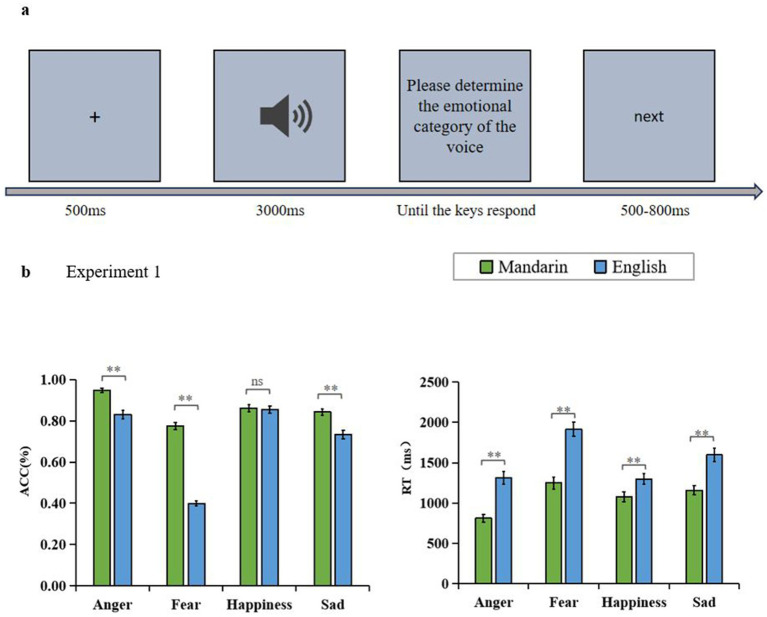
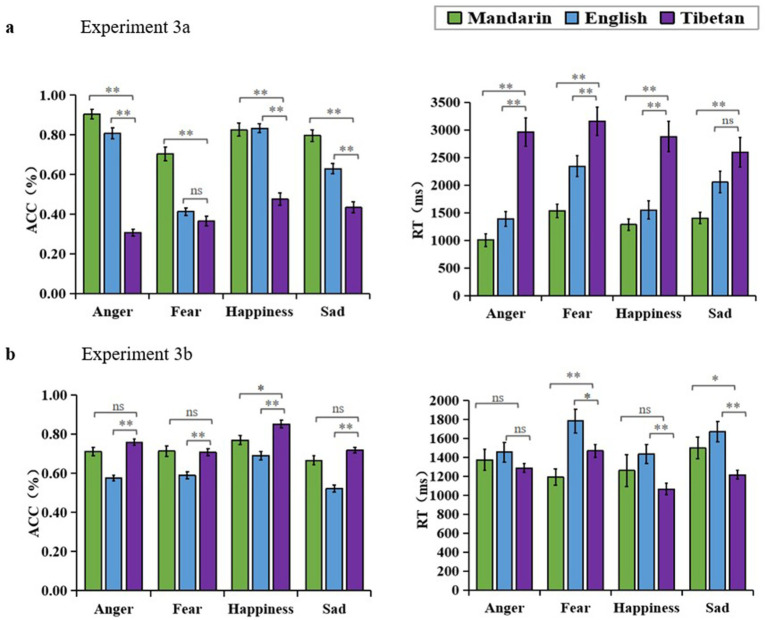
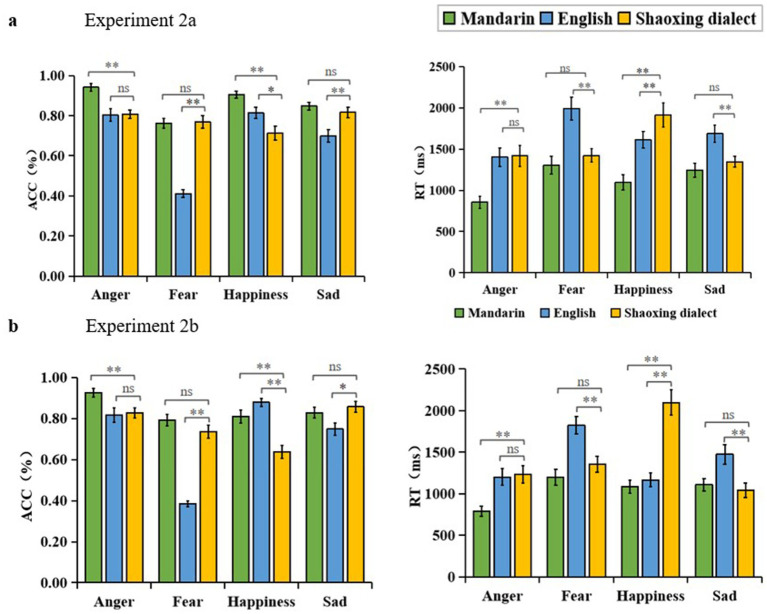
The study involved three experiments. In Experiment 1, a within-subjects design of 2 (language: Mandarin vs. English) × 4 (emotion: anger vs. fear vs. happiness vs. sadness) was used to establish whether adolescents exhibit a similar in-group advantage in vocal emotion recognition with adults. As an expansion of Experiment 1, Experiment 2 incorporated the Shaoxing dialect to assess the ability of adolescents to identify the emotions in voices across different cultural regions of a nation. In Experiment 3, the regional variation was extended by substituting the Shaoxing dialect with Tibetan to explore the disparities in vocal emotion recognition among adolescents.
As indicated by the results of Experiment 1, Mandarinspeaking adolescents performed well in recognizing emotions in Mandarin compared to English. In Experiment 2, the results of Experiment 1 were replicated to reveal that Shaoxingspeaking adolescents performed better in emotion recognition of Mandarin in comparison to the Shaoxing dialect and English. As indicated by Experiment 3, both Mandarinspeaking adolescents and Tibetanspeaking adolescents possessed a higher capacity of vocal emotion recognition within their own language groups.
Chinese adolescents demonstrated a stronger ability to recognize vocal emotions within their own cultural group compared to other regional cultures, an advantage that became more pronounced as the cultural differences between groups increased. These findings underscore the significance of cultural factors in adolescent emotional recognition research, indicating the directions of cross-cultural interventions.
在先前的研究中,内群体在情绪识别方面的优势已得到证明,这表明个体在识别自身文化中的情绪时比在其他文化中更熟练。然而,现有研究主要集中在语音情绪识别的跨文化差异上,对探索文化内部差异的关注有限。此外,关于青少年在不同文化背景下识别语音线索所传达情绪的能力的研究很少。为了填补这些研究空白,本研究进行了三项实验,以探讨一种文化中不同地区之间的差异。
该研究包括三项实验。在实验1中,采用 2(语言:普通话与英语)×4(情绪:愤怒与恐惧与快乐与悲伤)的被试内设计,以确定青少年在语音情绪识别中是否与成年人表现出相似的内群体优势。作为实验1的扩展,实验2纳入了绍兴方言,以评估青少年识别一个国家不同文化地区语音中情绪的能力。在实验3中,用藏语代替绍兴方言来扩展地区差异,以探索青少年在语音情绪识别方面的差异。
实验1的结果表明,说普通话的青少年在识别普通话表达的情绪方面比识别英语表达的情绪表现更好。在实验2中,重复了实验1的结果,以揭示说绍兴话的青少年在识别普通话情绪方面比识别绍兴方言和英语情绪的表现更好。实验3表明,说普通话的青少年和说藏语的青少年在各自语言群体中都具有更高的语音情绪识别能力。
与其他地区文化相比,中国青少年在识别自身文化群体中的语音情绪方面表现出更强的能力,随着群体间文化差异的增加,这种优势更加明显。这些发现强调了文化因素在青少年情绪识别研究中的重要性,为跨文化干预指明了方向。