Singh Lovepreet, Drott Milton T, Kim Hye-Seon, Proctor Robert H, McCormick Susan P, Elmore J Mitch
Department of Agronomy and Plant Genetics, University of Minnesota, St. Paul, MN, 55108, USA.
Cereal Disease Laboratory, Agricultural Research Service, US Department of Agriculture, St. Paul, MN, 55108, USA.
Sci Rep. 2024 Dec 30;14(1):31680. doi: 10.1038/s41598-024-81131-5.
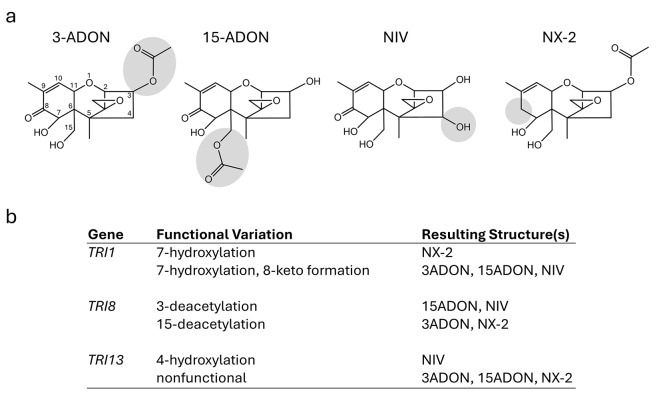
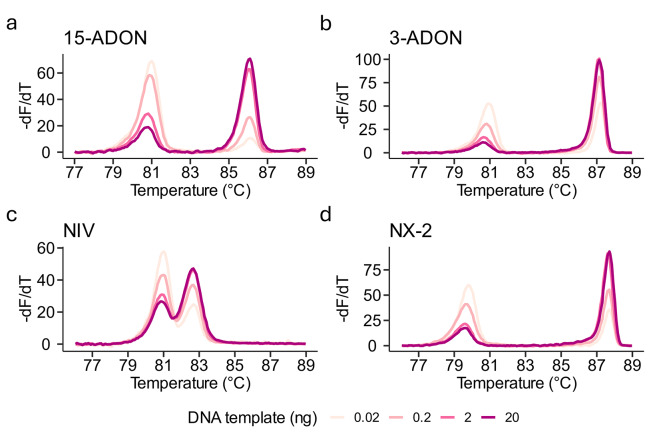
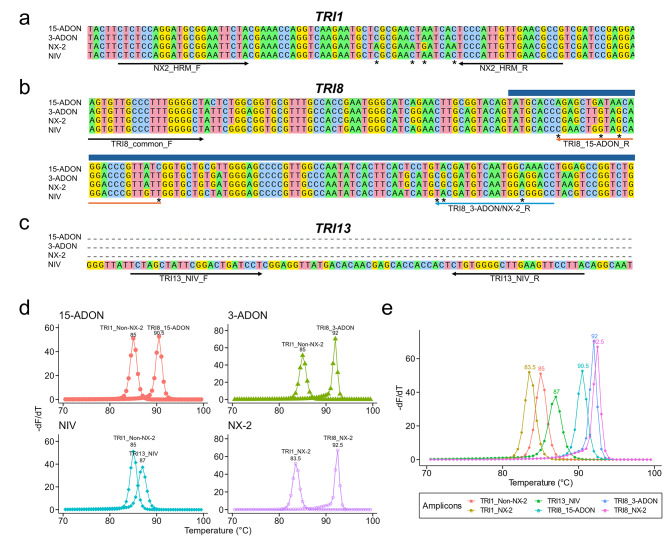
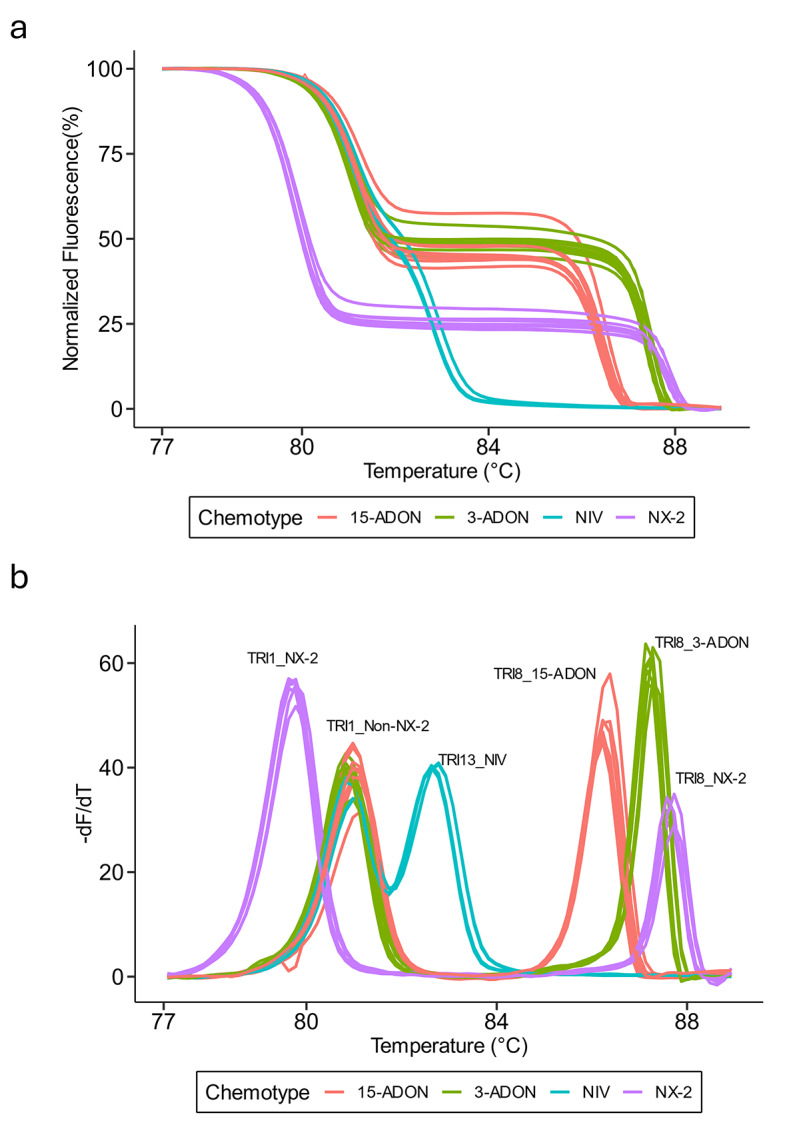
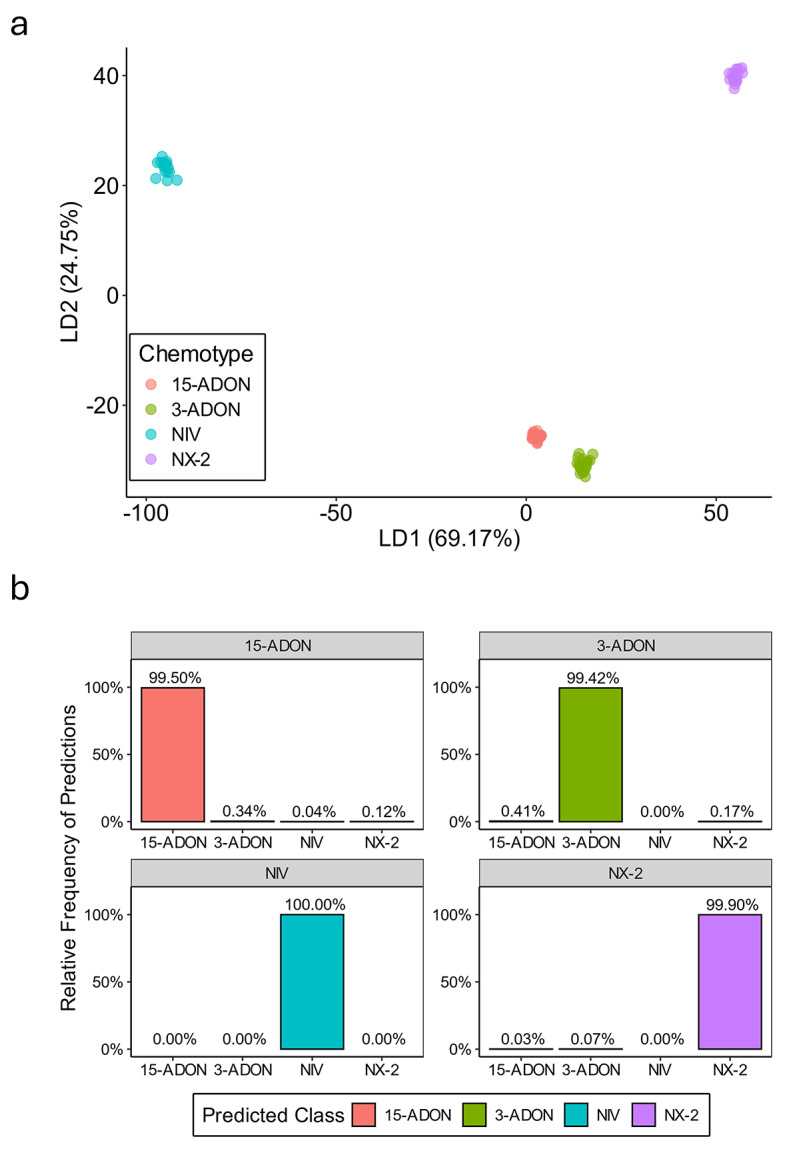
Fusarium graminearum is a primary cause of Fusarium head blight (FHB) on wheat and barley. The fungus produces trichothecene mycotoxins that render grain unsuitable for food, feed, or malt. Isolates of F. graminearum can differ in trichothecene production phenotypes (chemotypes), with individuals producing predominantly one of four toxins: 3-acetyldeoxynivalenol, 15-acetyldeoxynivalenol, nivalenol, or NX-2. Molecular tools to diagnose chemotypes remain inefficient. This study aimed to develop a single-tube, multiplex molecular assay that can predict the four F. graminearum chemotypes. Conserved functional regions of three trichothecene biosynthetic genes (TRI1, TRI8, and TRI13) were targeted to develop a high-resolution melting (HRM) assay. Multiplex HRM analysis produced unique melting profiles for each chemotype, and was validated on a panel of 80 isolates. We applied machine learning-based linear discriminant analysis (LDA) to automate the classification of chemotypes from the HRM data, achieving a prediction accuracy of over 99%. The assay is sensitive, with a limit of detection below 0.02 ng of fungal DNA. The HRM analysis also differentiated chemotypes from a small sample of F. gerlachii, F. asiaticum, and F. vorosii isolates. Together, our results demonstrate that this simple, rapid, and accurate assay can be applied to F. graminearum molecular diagnostics and population surveillance programs.
禾谷镰刀菌是小麦和大麦赤霉病的主要病因。该真菌产生单端孢霉烯族毒素,使谷物不适于用作食品、饲料或麦芽。禾谷镰刀菌的分离株在单端孢霉烯族毒素产生表型(化学型)上可能存在差异,个体主要产生四种毒素之一:3-乙酰脱氧雪腐镰刀菌烯醇、15-乙酰脱氧雪腐镰刀菌烯醇、雪腐镰刀菌烯醇或NX-2。诊断化学型的分子工具仍然效率低下。本研究旨在开发一种单管多重分子检测方法,能够预测四种禾谷镰刀菌化学型。针对三个单端孢霉烯族生物合成基因(TRI1、TRI8和TRI13)的保守功能区域开发了一种高分辨率熔解(HRM)检测方法。多重HRM分析为每种化学型产生了独特的熔解曲线,并在一组80个分离株上进行了验证。我们应用基于机器学习的线性判别分析(LDA)从HRM数据中自动对化学型进行分类,预测准确率超过99%。该检测方法灵敏,检测限低于0.02 ng真菌DNA。HRM分析还区分了来自格氏镰刀菌、亚洲镰刀菌和沃氏镰刀菌分离株小样本的化学型。总之,我们的结果表明,这种简单、快速且准确的检测方法可应用于禾谷镰刀菌的分子诊断和群体监测项目。