Bitencourt Ricardo de Oliveira Barbosa, de Sousa Queiroz Raymyson Rhuryo, Ribeiro Anderson, de Souza Ribeiro Yrexam Rodrigues, Boechat Marcela Santana Bastos, Carolino Aline Teixeira, Santa-Catarina Claudete, Samuels Richard Ian
Laboratório de Entomologia e Fitopatologia, Universidade Estadual do Norte Fluminense Darcy Ribeiro, Campos dos Goytacazes, Rio de Janeiro, 28013-602, Brazil.
Laboratório de Biologia Celular e Tecidual, Universidade Estadual do Norte Fluminense Darcy Ribeiro, Avenida Alberto Lamego, Campos dos Goytacazes, Rio de Janeiro, 28013-602, Brazil.
Sci Rep. 2024 Dec 30;14(1):31894. doi: 10.1038/s41598-024-83036-9.
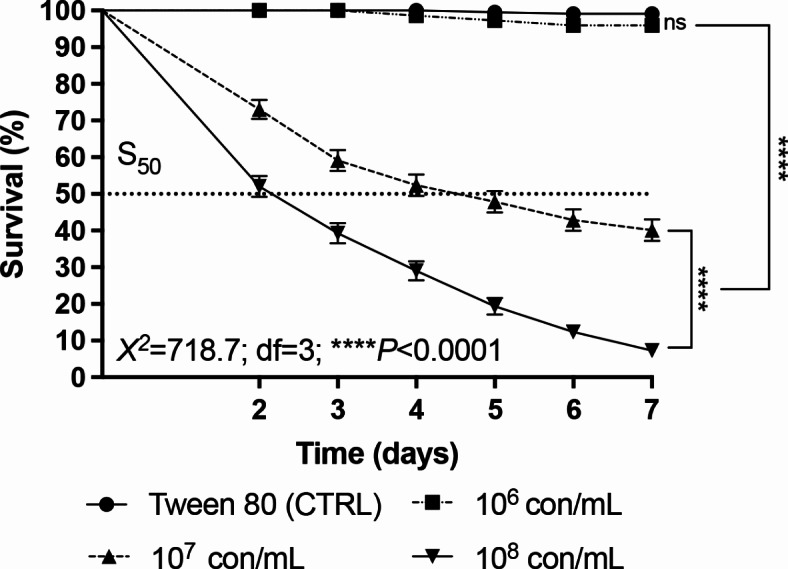
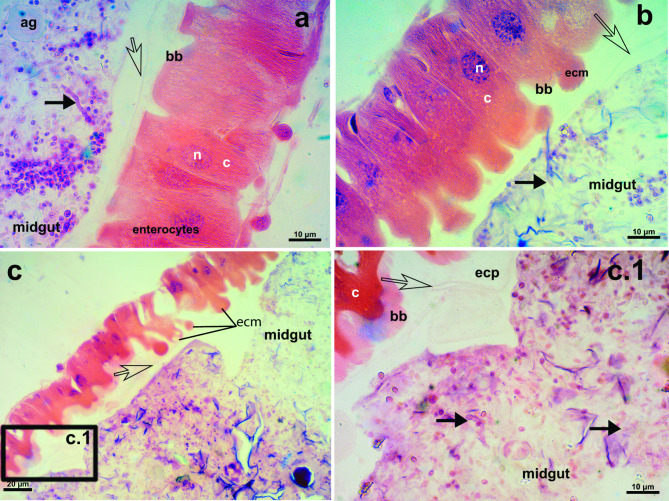
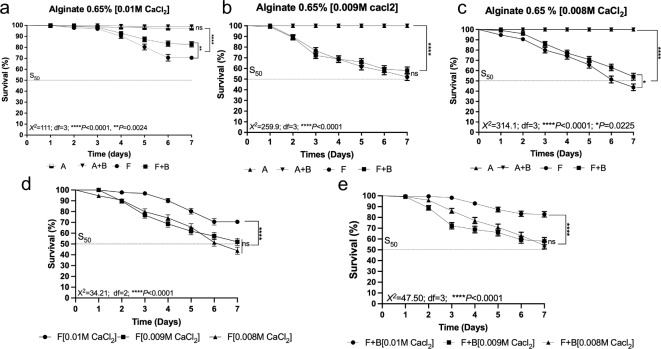
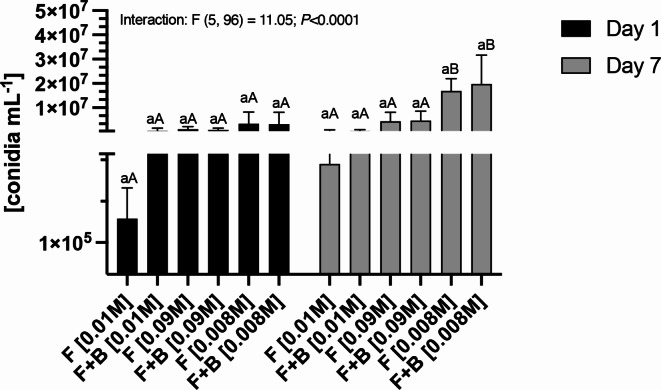
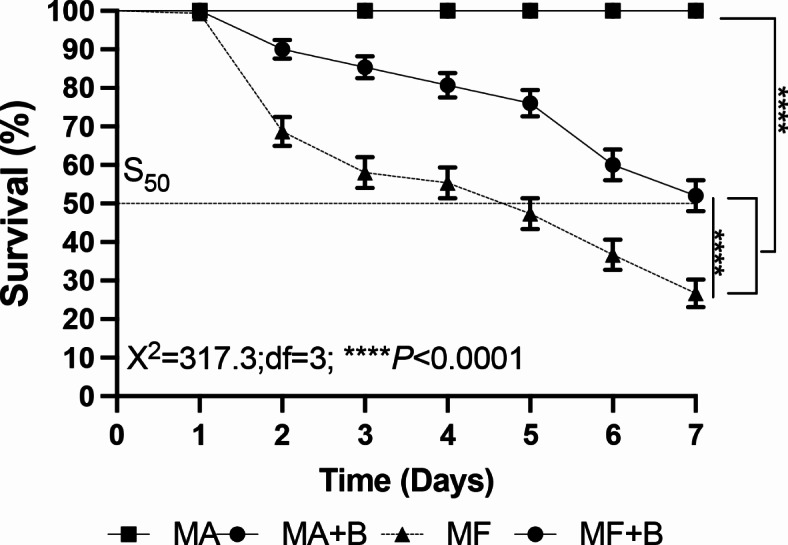
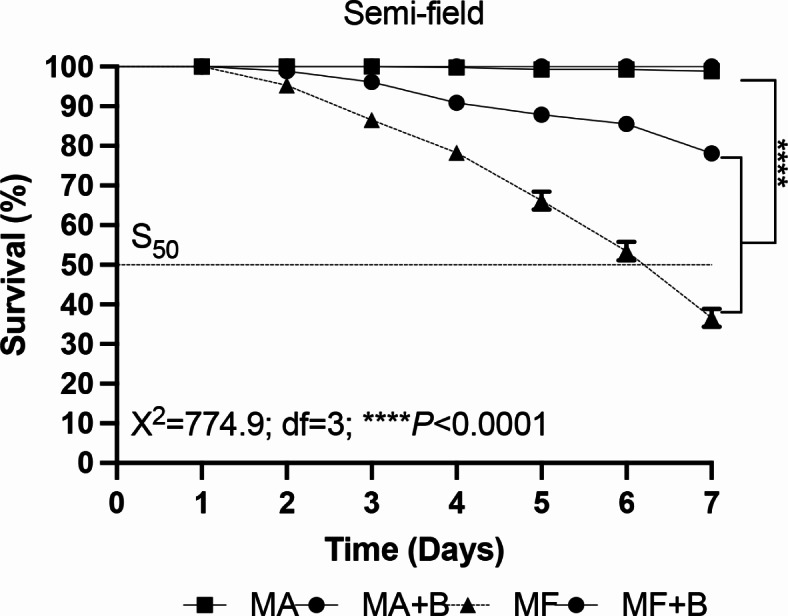
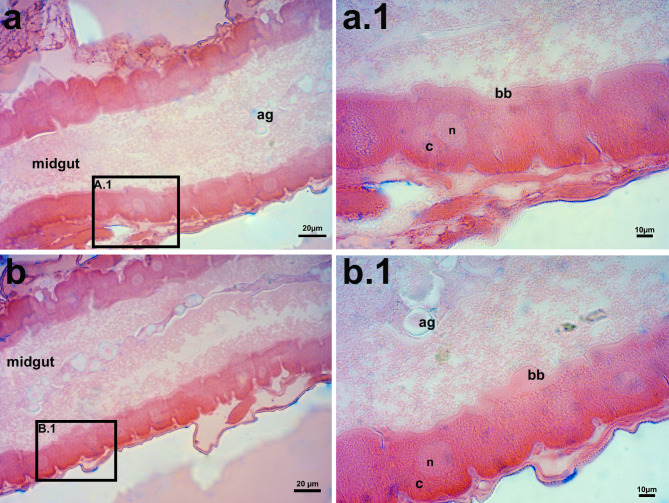
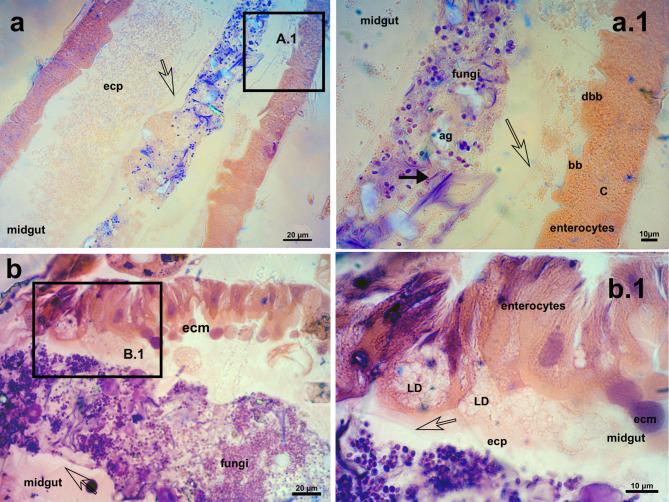
The virulence of encapsulated fungal conidia against Aedes aegypti larvae was investigated. Molecular studies confirmed that the fungal isolate used here was Beauveria bassiana. Different conidial concentrations were tested. A concentration of 1 × 10 conidia mL was the most effective, resulting in 7% larval survival after 7 days. Next, alginate capsules (0.65%) containing conidia were prepared with different densities of calcium chloride (0.01 M, 0.009 M, and 0.008 M CaCl₂) and tested against larvae. Furthermore, groups of capsules were prepared with bird diet to act as an attractant. All capsule densities tested reduced larval survival (ranging from 22 to 67%). However, capsules with 0.008 M CaCl₂ were the most effective. Furthermore, fungus-only capsules were more efficient when compared to those containing bird diet. Laboratory and semi-field bioassays were conducted using mixtures of capsules with different densities. In the laboratory, survival ranged from 26 to 53%, whereas in semi-field conditions, 35%, and 80% survival was observed for groups exposed to fungus-only capsules or capsules containing diet, respectively. Histopathological studies of larvae exposed to capsules showed the presence of the fungus in the digestive tract and visible damage to enterocytes. These findings offer new insights into the biological control of Ae. aegypti larvae.
研究了被包囊的真菌分生孢子对埃及伊蚊幼虫的毒力。分子研究证实,此处使用的真菌分离株为球孢白僵菌。测试了不同的分生孢子浓度。浓度为1×10分生孢子/mL最为有效,7天后幼虫存活率为7%。接下来,制备了含有不同密度氯化钙(0.01 M、0.009 M和0.008 M CaCl₂)的含分生孢子的藻酸盐胶囊(0.65%),并对幼虫进行测试。此外,制备了添加鸟类食物作为引诱剂的胶囊组。所有测试的胶囊密度均降低了幼虫存活率(范围为22%至67%)。然而,含0.008 M CaCl₂的胶囊最为有效。此外,仅含真菌的胶囊与含鸟类食物的胶囊相比效率更高。使用不同密度的胶囊混合物进行了实验室和半田间生物测定。在实验室中,存活率范围为26%至53%,而在半田间条件下,仅暴露于含真菌胶囊或含食物胶囊的组中,观察到的存活率分别为35%和80%。对暴露于胶囊的幼虫进行的组织病理学研究表明,在消化道中存在真菌,并且肠细胞有明显损伤。这些发现为埃及伊蚊幼虫的生物防治提供了新的见解。