Mantini G, Agostini A, Tufo M, Rossi S, Kulesko M, Carbone C, Salvatore L, Tortora G, Scambia G, Giacò L
Bioinformatics Research Core Facility, Gemelli Science and Technology Park (GSTeP), Fondazione Policlinico Universitario Agostino Gemelli IRCCS, Rome, Italy.
Medical Oncology, Comprehensive Cancer Center, Fondazione Policlinico Universitario Agostino Gemelli IRCCS, Rome, Italy.
Sci Rep. 2024 Dec 30;14(1):31749. doi: 10.1038/s41598-024-82563-9.
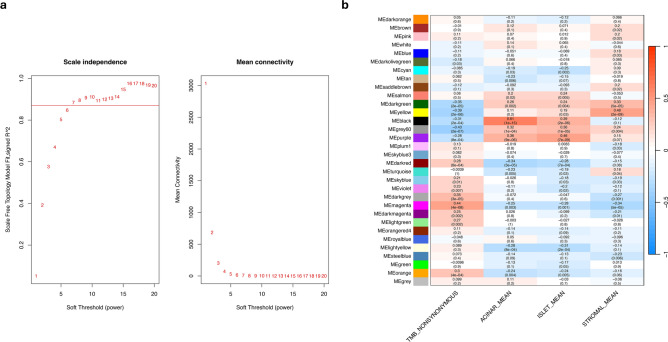
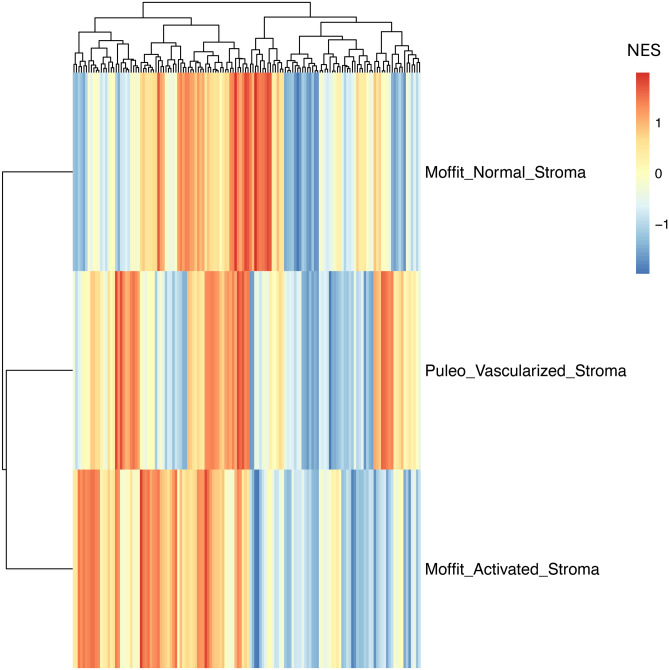
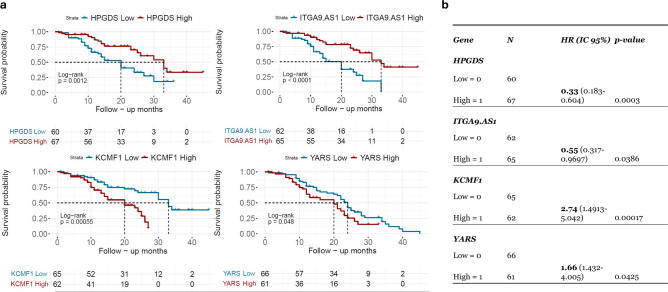
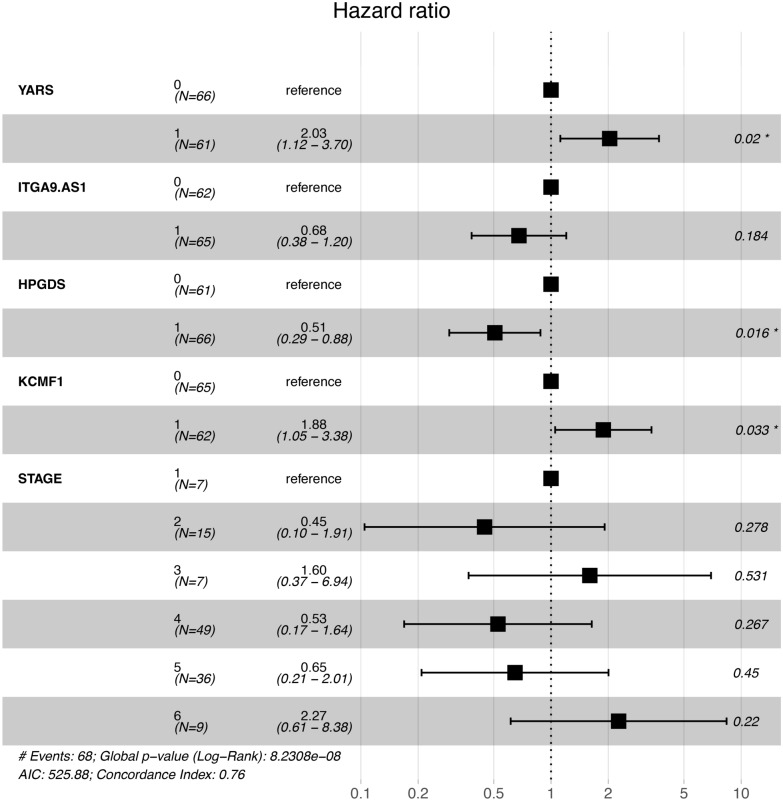
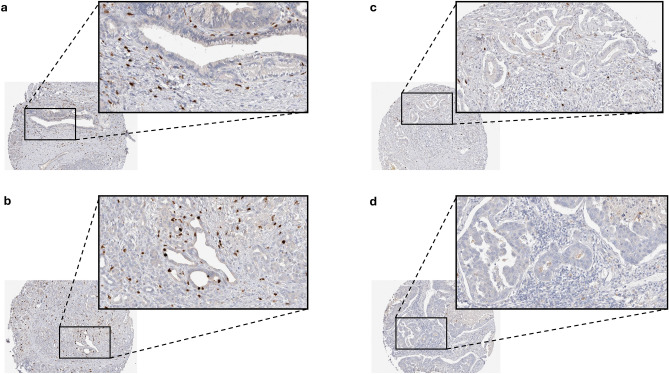
In recent years, it has been shown that stroma compartment can favor tumor proliferation and aggressiveness. Although extensive research with network analyses such as Weighted Gene Co-expression Network Analysis (WGCNA) has been conducted on pancreatic cancer and its stromal components, WGCNA has not previously been applied to isolate and identify genes associated with the abundance of stroma and survival outcome from bulk RNA data. We investigated the gene expression profile and clinical information of 140 pancreatic ductal adenocarcinoma patients from TCGA. Network analysis was performed using WGCNA and four modules were found to be associated to patients' clinical traits. Specifically, one module of 2459 genes, was associated to stromal sample content. Subsequently, those genes were further analyzed for survival association through log-rank test and Cox regression. HPGDS and ITGA9-AS1 emerged as significant indicators of favorable prognosis while KCMF1 and YARS1 were implicated in poorer prognostic outcomes. Importantly, HPGDS was found to be stromal-specific in the TMA cohort of Human Protein Atlas. Single sample GSEA showed that the stromal module is enriched for stromal signature of Moffitt and Puleo. These findings suggest that we uncovered a stromal specific signature through WGCNA and found putative prognostic markers.
近年来,研究表明基质成分可促进肿瘤增殖和侵袭性。尽管已经利用诸如加权基因共表达网络分析(WGCNA)等网络分析方法对胰腺癌及其基质成分进行了广泛研究,但此前WGCNA尚未应用于从批量RNA数据中分离和鉴定与基质丰度及生存结果相关的基因。我们研究了来自TCGA的140例胰腺导管腺癌患者的基因表达谱和临床信息。使用WGCNA进行网络分析,发现有四个模块与患者的临床特征相关。具体而言,一个包含2459个基因的模块与基质样本含量相关。随后,通过对数秩检验和Cox回归对这些基因进行生存相关性进一步分析。HPGDS和ITGA9-AS1成为良好预后的显著指标,而KCMF1和YARS1则与较差的预后结果相关。重要的是,在人类蛋白质图谱的TMA队列中发现HPGDS是基质特异性的。单样本GSEA显示,基质模块富含Moffitt和Puleo的基质特征。这些发现表明,我们通过WGCNA揭示了一种基质特异性特征,并发现了潜在的预后标志物。