Teng Tian-Qi, Liu Jing, Wang Meng-Meng, Mo De-Gang, Chen Rui, Xu Jia-Chao, Dong Zi-Han, Zhang Ning, Yu Hai-Chu
Department of Cardiology, The Affiliated Hospital of Qingdao University, Qingdao, 266000, Shandong, China.
Institute of Cardiovascular Disease, Qingdao University, Qingdao, 266000, Shandong, China.
Sci Rep. 2024 Dec 30;14(1):31925. doi: 10.1038/s41598-024-83414-3.
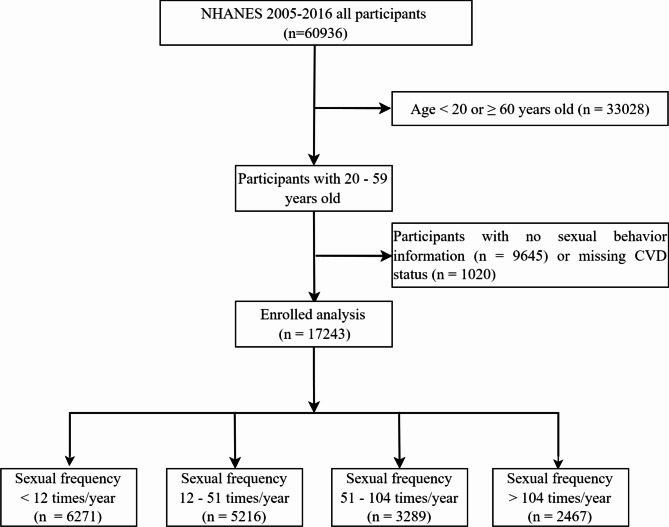
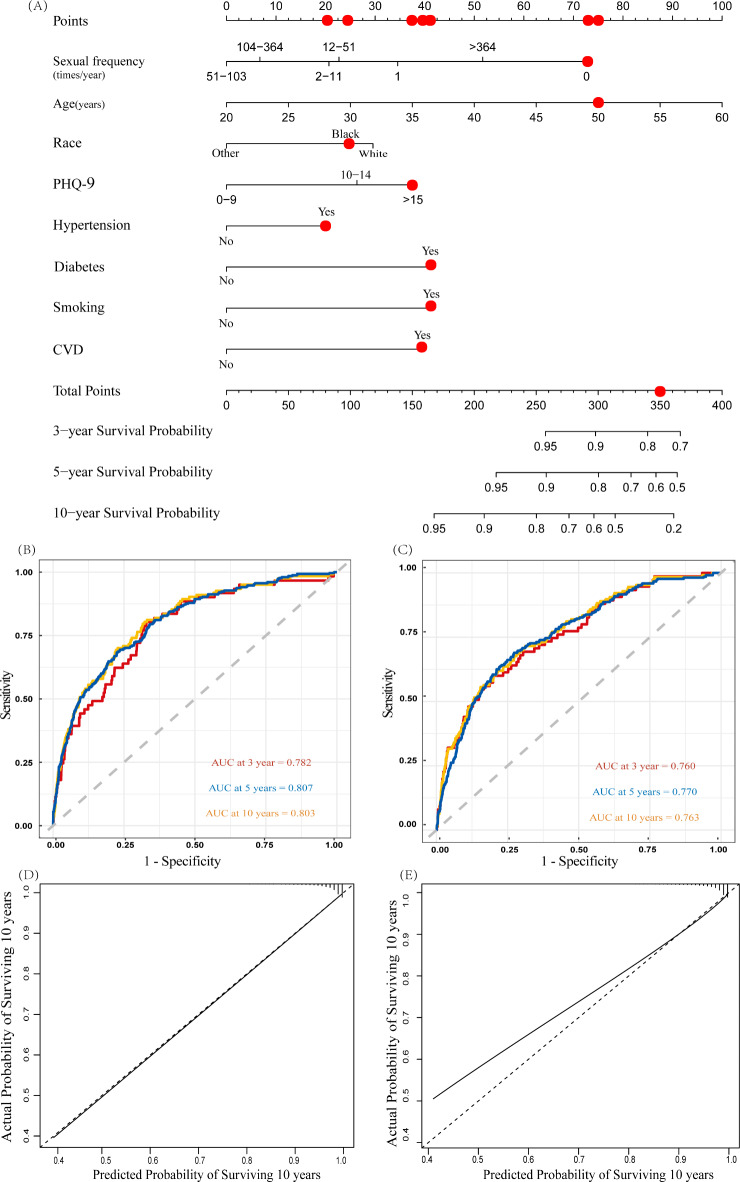
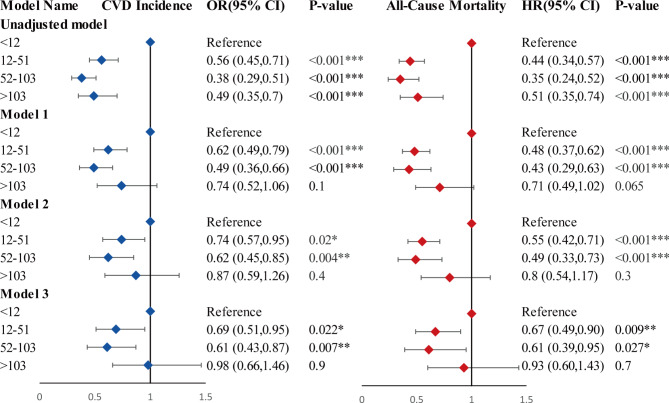
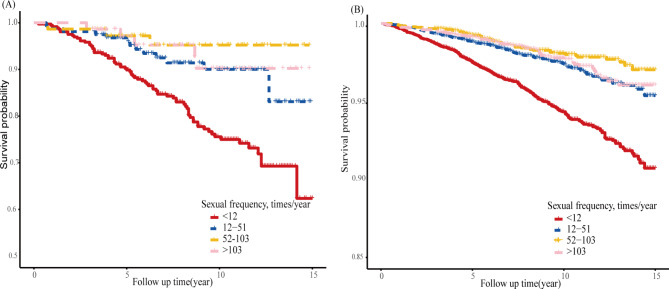
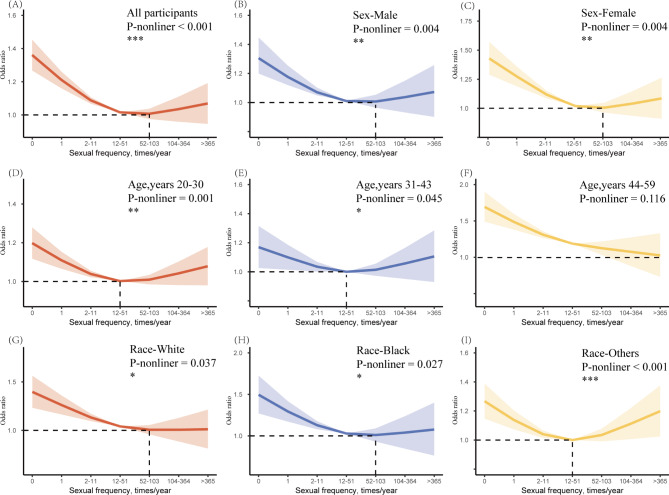
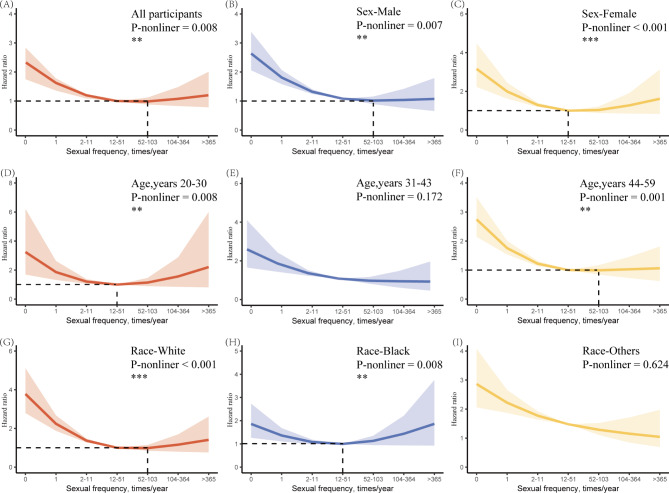
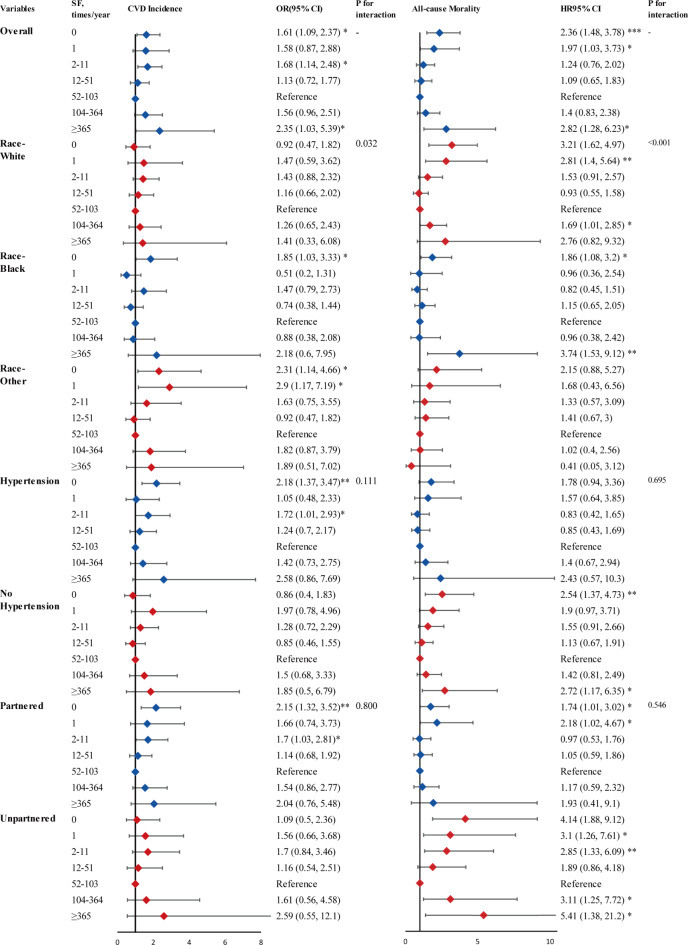
Sexual activity exists in a complex relationship with human health. This study aims to elucidate the correlation between the sexual frequency and the incidence of cardiovascular diseases (CVD) and all-cause mortality among young and middle-aged adults of the United States. We analyzed 17,243 participants from the National Health and Nutrition Examination Survey(NHANES)(2005-2016), comparing CVD incidence and all-cause mortality risks across sexual frequencies using multivariable Logistic and Cox regression models. Kaplan-Meier curves assessed survival probability stratified by sexual frequency, and a restricted cubic spline regression examined the nonlinear relationship between sexual frequency, CVD and survival status. We also established a nomogram and validated it by ROC and calibration curves. Over a median follow-up period of 106 months, 443 patients (2.57%) died. After adjusting for confounders, sexual frequency was found to be associated with CVD incidence and all-cause mortality among young and middle-aged individuals. Those with sexual acts less than 12 times/year faced the highest risks of CVD incidence and all-cause mortality, as frequency increased, the risks gradually decreased, reaching a nadir at approximately 52-103 times/year, but then a negative correlation began to emerge. A nomogram predicting survival rates based on sexual frequency achieved ROC areas of 0.782, 0.807, and 0.803 for 3, 5, and 10 years, with a calibration curve matching the ideal generally. Sexual frequency was associated with the incidence of CVD and all-cause mortality among young and middle-aged adults. Both excessive and infrequent sexual frequency may be detrimental to health.
性活动与人类健康存在着复杂的关系。本研究旨在阐明美国中青年人性交频率与心血管疾病(CVD)发病率及全因死亡率之间的相关性。我们分析了来自国家健康与营养检查调查(NHANES)(2005 - 2016年)的17243名参与者,使用多变量逻辑回归和Cox回归模型比较不同性交频率下的CVD发病率和全因死亡风险。Kaplan - Meier曲线评估按性交频率分层的生存概率,限制立方样条回归检验性交频率、CVD与生存状态之间的非线性关系。我们还建立了列线图,并通过ROC曲线和校准曲线进行验证。在中位随访期106个月内,443名患者(2.57%)死亡。调整混杂因素后,发现性交频率与中青年个体的CVD发病率和全因死亡率相关。每年性行为少于12次的人面临CVD发病率和全因死亡率的最高风险,随着频率增加,风险逐渐降低,在每年约52 - 103次时达到最低点,但随后开始出现负相关。基于性交频率预测生存率的列线图在3年、5年和10年时的ROC曲线下面积分别为0.782、0.807和0.803,校准曲线总体上与理想情况相符。性交频率与中青年成人的CVD发病率和全因死亡率相关。性交频率过高或过低都可能对健康有害。