Zhang Jinjin, Jia Cuijing, Dong Jinping, Wu Jingliang, Liu Minggang, Zhang Hansong, Zhao Chengshuo
Weifang University of Science and Technology, Jinguang Road No. 1299, Weifang City, Shandong Province, China.
Sci Rep. 2024 Dec 30;14(1):32033. doi: 10.1038/s41598-024-83704-w.
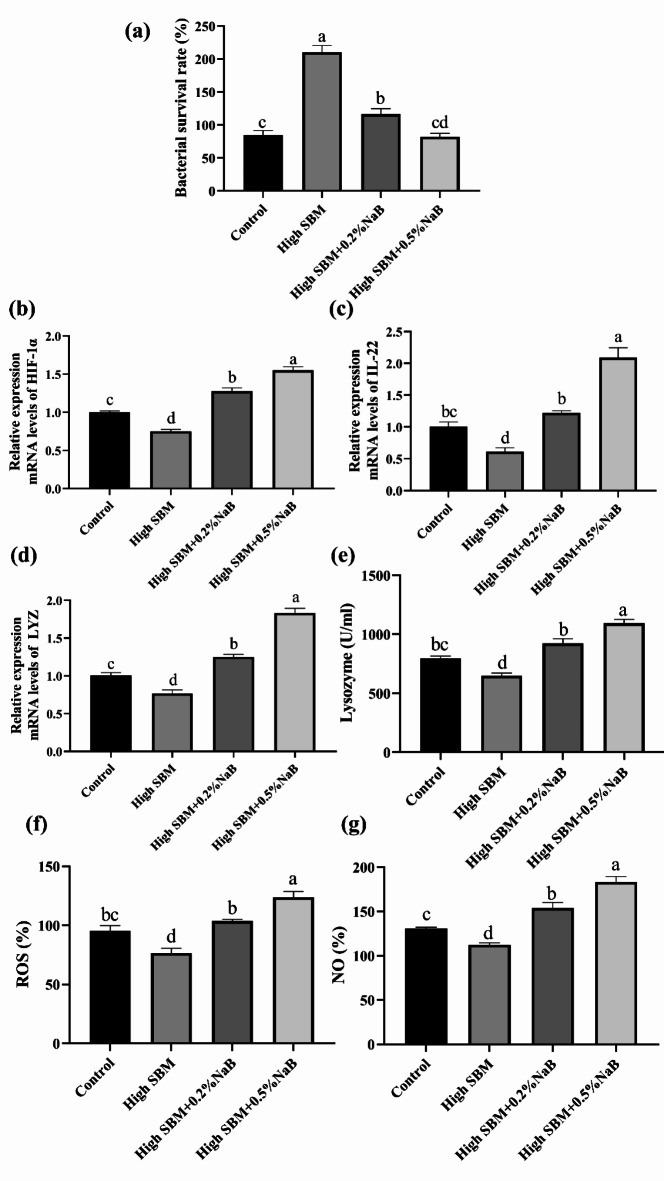
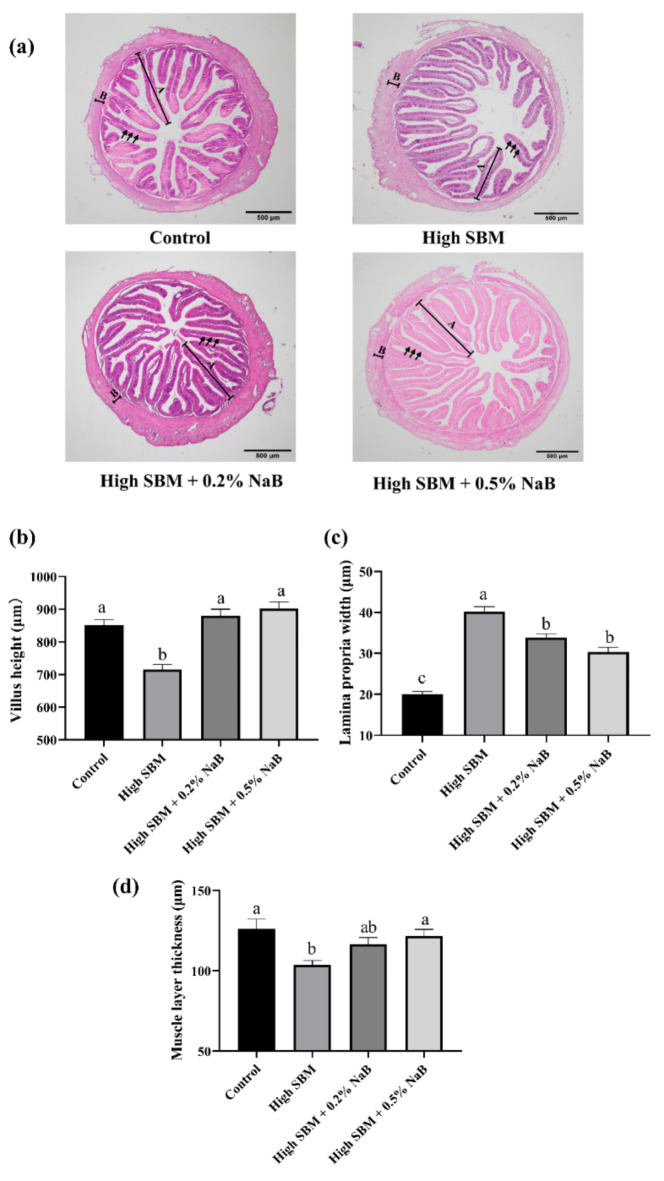
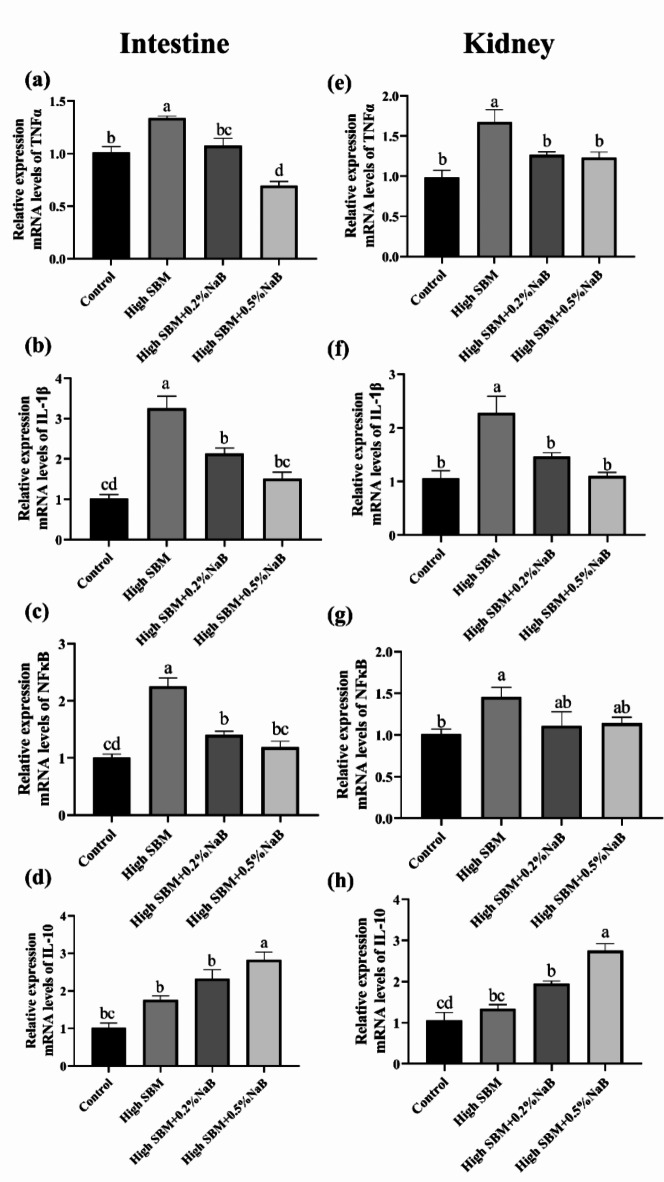
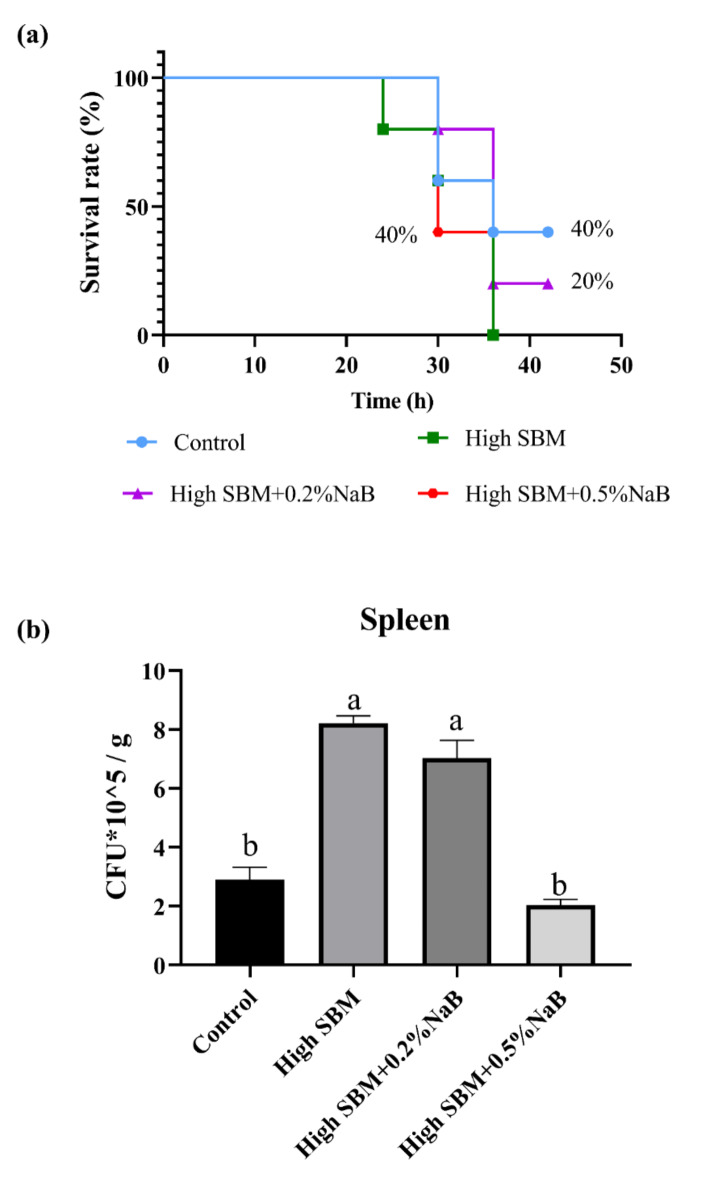
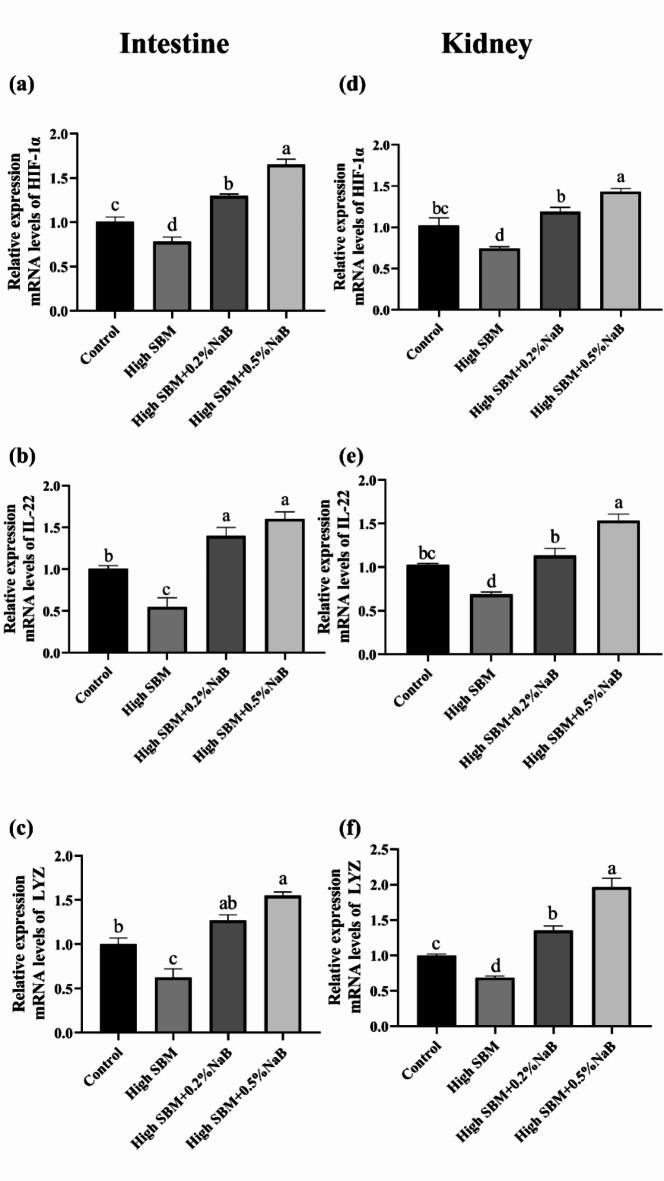
Butyrate is one of the most abundant short-chain fatty acids (SCFAs), which are important metabolites of dietary fiber by fermentation of gut commensals, and has been shown to be vital in maintaining host health. The present study mainly investigated how sodium butyrate (NaB) supplementation in the diet with high proportion of soybean meal (SBM) affected turbot. Four experimental diets were formulated: (1) fish meal (FM) based diet (control group), (2) SBM protein replacing 45% FM protein in the diet (high SBM group), (3) 0.2% NaB supplementation in the high SBM diet (high SBM + 0.2% NaB group), and (4) 0.5% NaB supplementation in the high SBM diet (high SBM + 0.5% NaB group). The fish were fed four different diets for 8 weeks. The results showed that the high SBM diet significantly suppressed growth performance, induced typical enteritis symptoms and decreased resistance to bacterial infection. However, inclusion of 0.2% and 0.5% NaB in the high SBM diet both effectively increased the growth performance of turbot. Meanwhile, dietary NaB protected the intestinal morphology, and regulated the gene expression of inflammatory cytokines to relieve the inflammation of turbot, such as TNFα, IL-1β, NFκB and IL-10. Moreover, supplementation with NaB in the high SBM diet activated HIF-1α/IL-22/Lysozyme signaling pathway to against Edwardsiella tarda (E. tarda) infection, especially 0.5% NaB supplementation exerted more effectively to defence bacterial infection under inflammatory state. In conclusion, dietary NaB significantly promoted growth and gut health of turbot. Besides, it enhanced the resistance of fish to bacterial infection, especially dietary 0.5% NaB supplementation.
丁酸是最丰富的短链脂肪酸(SCFAs)之一,它是膳食纤维经肠道共生菌发酵后的重要代谢产物,并且已被证明对维持宿主健康至关重要。本研究主要探究了在高比例豆粕(SBM)日粮中添加丁酸钠(NaB)如何影响大菱鲆。配制了四种实验日粮:(1)以鱼粉(FM)为基础的日粮(对照组),(2)日粮中用SBM蛋白替代45%的FM蛋白(高SBM组),(3)在高SBM日粮中添加0.2% NaB(高SBM + 0.2% NaB组),以及(4)在高SBM日粮中添加0.5% NaB(高SBM + 0.5% NaB组)。将鱼投喂四种不同日粮8周。结果表明,高SBM日粮显著抑制生长性能,引发典型的肠炎症状并降低对细菌感染的抵抗力。然而,在高SBM日粮中添加0.2%和0.5%的NaB均有效提高了大菱鲆的生长性能。同时,日粮中的NaB保护肠道形态,并调节炎性细胞因子的基因表达以减轻大菱鲆的炎症,如肿瘤坏死因子α(TNFα)、白细胞介素-1β(IL-1β)、核因子κB(NFκB)和白细胞介素-10(IL-10)。此外,在高SBM日粮中添加NaB激活了缺氧诱导因子-1α(HIF-1α)/白细胞介素-22(IL-22)/溶菌酶信号通路以抵抗迟缓爱德华氏菌(E. tarda)感染,尤其是添加0.5% NaB在炎症状态下对抵御细菌感染更有效。总之,日粮中的NaB显著促进了大菱鲆的生长和肠道健康。此外,它增强了鱼对细菌感染的抵抗力,尤其是日粮中添加0.5% NaB。