Sun Huiyuan, Zhang Jinjin, Wang Wentao, Shao Rui, Liang Shufei, Xu Weiqi, Li Mingzhu, Ai Qinghui, Mai Kangsen, Wan Min
Key Laboratory of Aquaculture Nutrition and Feed, Ministry of Agriculture & Key Laboratory of Mariculture, Ministry of Education, College of Fisheries, Ocean University of China, Qingdao, China.
College of Agriculture, Ludong University, Yantai, China.
Aquac Nutr. 2022 Aug 31;2022:8952755. doi: 10.1155/2022/8952755. eCollection 2022.
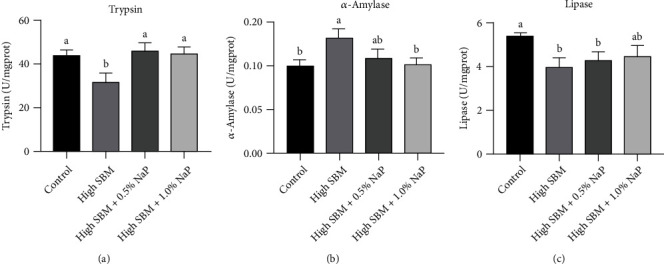
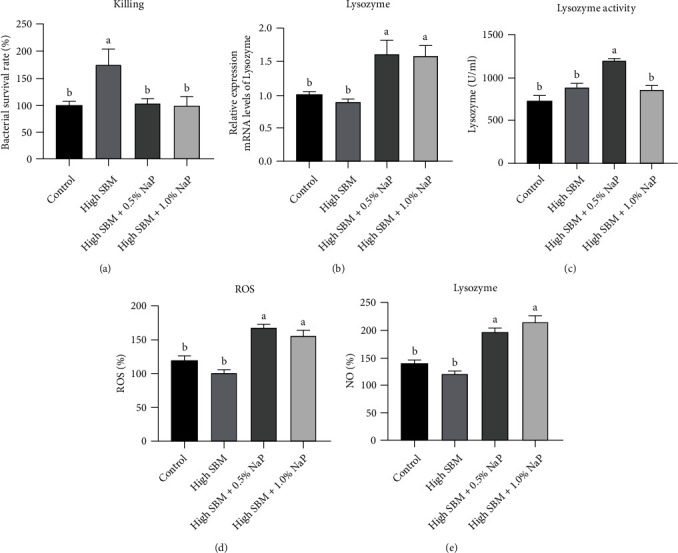
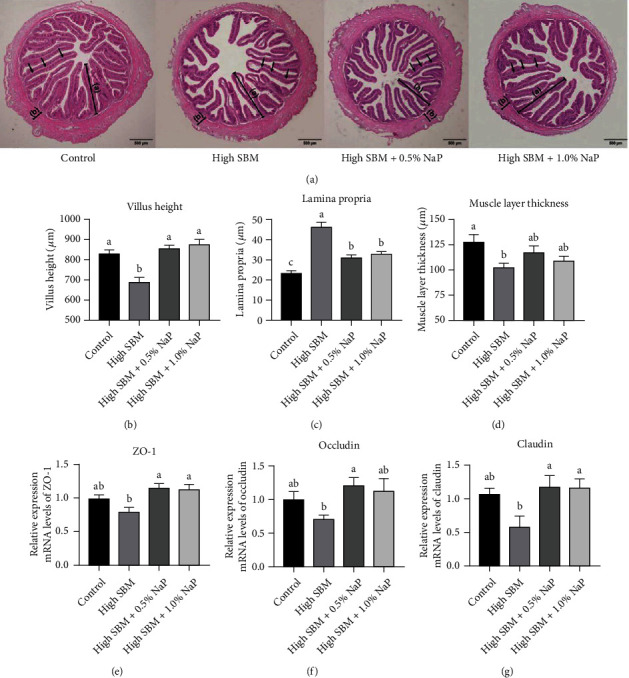
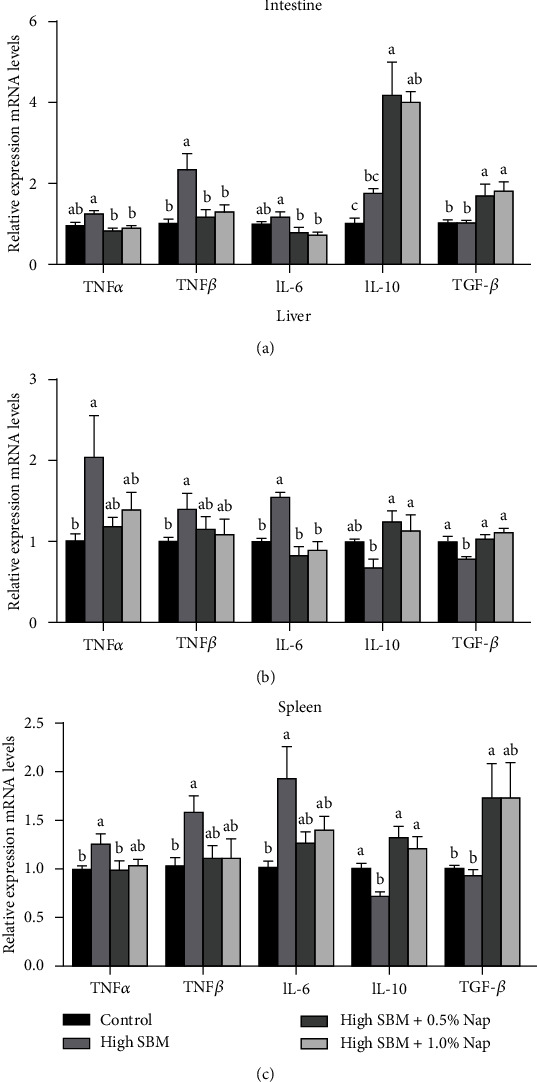
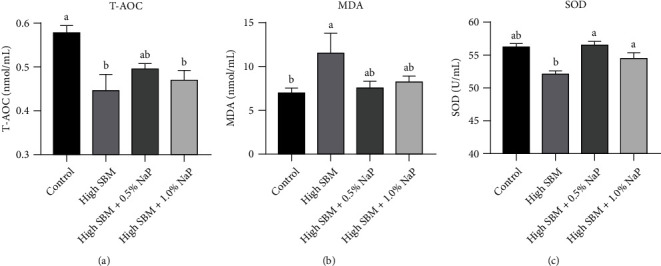
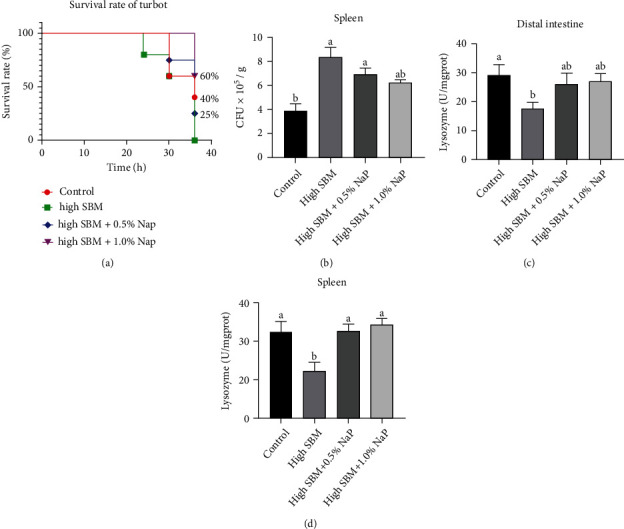
Short-chain fatty acids (SCFAs) are the products of the microbial fermentation of dietary fiber in the intestine. Acetate, propionate, and butyrate are the most abundant SCFA metabolites and play an important role in maintaining host health. This study was aimed at investigating the effects of sodium propionate (NaP) supplementation in the diet with a high proportion of soybean meal (SBM) on the growth, inflammatory status, and anti-infectious ability in juvenile turbot. Four experimental diets were designed: (1) fish meal- (FM-) based diet (control group), (2) SBM protein replacing 45% FM protein in the diet (high SBM group), (3) 0.5% NaP supplementation in the high SBM diet (high SBM+0.5% NaP group), and (4) 1.0% NaP supplementation in the high SBM diet (high SBM+1.0% NaP group). The results confirmed that the fish fed the high SBM diet for 8 weeks showed the decreased growth performance, the typical enteritis symptoms, and the increased mortality responding to () infection. However, 0.5% NaP supplementation in the high SBM diet promoted the growth performance of turbot and restored the activities of digestive enzymes in the intestine. Moreover, dietary NaP ameliorated the intestinal morphology, enhanced the expression of intestinal tight junction proteins, improved the antioxidant capacity, and suppressed the inflammatory status in turbot. Finally, the expression of antibacterial components and the resistance to bacterial infection were increased in NaP-fed turbot, especially in high SBM+1.0% NaP group. In conclusion, the supplementation of NaP in high SBM diet promotes the growth and health in turbot and provides a theoretical basis for the development of NaP as a functional additive in fish feed.
短链脂肪酸(SCFAs)是肠道中膳食纤维微生物发酵的产物。乙酸、丙酸和丁酸是最丰富的SCFA代谢产物,在维持宿主健康方面发挥着重要作用。本研究旨在探讨在高比例豆粕(SBM)日粮中添加丙酸钠(NaP)对幼体大菱鲆生长、炎症状态和抗感染能力的影响。设计了四种实验日粮:(1)以鱼粉(FM)为基础的日粮(对照组),(2)日粮中SBM蛋白替代45%的FM蛋白(高SBM组),(3)高SBM日粮中添加0.5% NaP(高SBM+0.5% NaP组),以及(4)高SBM日粮中添加1.0% NaP(高SBM+1.0% NaP组)。结果证实,饲喂高SBM日粮8周的鱼生长性能下降,出现典型的肠炎症状,对()感染的死亡率增加。然而,高SBM日粮中添加0.5% NaP可促进大菱鲆的生长性能,并恢复肠道消化酶的活性。此外,日粮中的NaP改善了肠道形态,增强了肠道紧密连接蛋白的表达,提高了抗氧化能力,并抑制了大菱鲆的炎症状态。最后,饲喂NaP的大菱鲆中抗菌成分的表达和对细菌感染的抵抗力增加,尤其是在高SBM+1.0% NaP组。总之,在高SBM日粮中添加NaP可促进大菱鲆的生长和健康,并为将NaP开发为鱼饲料中的功能性添加剂提供理论依据。