Barros Catarina, Alberro Ainhoa, Fernandes Adelaide
Research Institute for Medicines (iMed.ULisboa), Faculdade de Farmácia, Universidade de Lisboa, Lisboa, Portugal.
IIS Biogipuzkoa Health Research Institute, San Sebastian, Spain.
J Neuroinflammation. 2024 Dec 31;21(1):332. doi: 10.1186/s12974-024-03326-x.
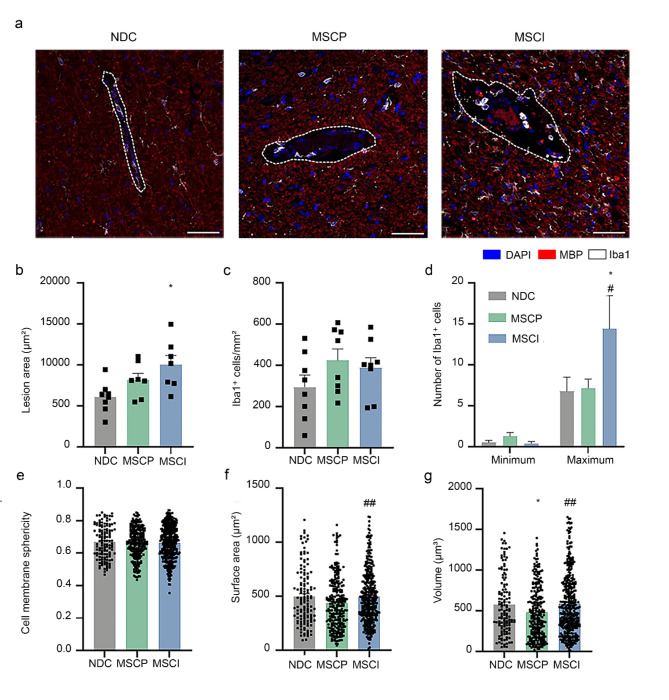
Multiple Sclerosis (MS), a neuroinflammatory disease of the central nervous system, is one of the commonest causes of non-traumatic disability among young adults. Impaired cognition arises as an impactful symptom affecting more than 50% of the patients and with substantial impact on social, economic, and individual wellbeing. Despite the lack of therapeutic strategies, many efforts have been made to understand the mechanisms behind cognitive impairment in MS patients. Here, we aimed to investigate whether microglia-derived synaptic elimination and immune interactions are exacerbated in MS patients with impaired cognition when compared to non-demented controls (NDC) and cognitively preserved MS patients, that may clarify the role of immune cell interplay in MS cognitive deficits. Postmortem hippocampal samples were obtained from NDCs and MS patients. Sixteen MS patients were categorized based on their cognitive status: preserved cognition (MSCP) and impaired cognition (MSCI). Immunohistochemistry studies were conducted to explore the density of microglia, their role in synaptic engulfment, and their interaction with CD8 immune cells in the context of cognitive impairment in MS. In high synaptic density hippocampal regions, MSCI patients exhibited a massive presence of microglia cells actively engulfing both excitatory and inhibitory synapses, accompanied by morphological alterations. Additionally, there was an increased expression of the complement protein C1q particularly localized at inhibitory synapses within microglia cells, suggesting a preferential engulfment of complement-tagged inhibitory synapses in MSCI patients. Furthermore, in hippocampal lesions of MSCI patients, we detected a significant infiltration of microglia and CD8 T cells that may be contributing to the smouldering MS and cognitive deterioration. These findings demonstrate that cognitive deficits occurring in MS are associated with microglia engulfment of C1q-tagged inhibitory synapses, which may be driven by direct or indirect stimulation from CD8+ T cells.
多发性硬化症(MS)是一种中枢神经系统的神经炎症性疾病,是年轻成年人非创伤性残疾的最常见原因之一。认知障碍是一种影响超过50%患者的重要症状,对社会、经济和个人福祉有重大影响。尽管缺乏治疗策略,但人们已做出许多努力来了解MS患者认知障碍背后的机制。在此,我们旨在研究与非痴呆对照(NDC)和认知功能保留的MS患者相比,认知受损的MS患者中,小胶质细胞衍生的突触消除和免疫相互作用是否会加剧,这可能会阐明免疫细胞相互作用在MS认知缺陷中的作用。从NDC和MS患者获取死后海马样本。16名MS患者根据其认知状态进行分类:认知功能保留(MSCP)和认知受损(MSCI)。进行免疫组织化学研究,以探讨小胶质细胞的密度、它们在突触吞噬中的作用以及在MS认知障碍背景下它们与CD8免疫细胞的相互作用。在高突触密度的海马区域,MSCI患者表现出大量小胶质细胞,它们积极吞噬兴奋性和抑制性突触,并伴有形态改变。此外,补体蛋白C1q的表达增加,尤其定位于小胶质细胞内的抑制性突触,这表明MSCI患者优先吞噬补体标记的抑制性突触。此外,在MSCI患者的海马病变中,我们检测到小胶质细胞和CD8 T细胞的显著浸润,这可能导致MS的隐匿进展和认知恶化。这些发现表明,MS中出现的认知缺陷与C1q标记的抑制性突触的小胶质细胞吞噬有关,这可能由CD8 + T细胞的直接或间接刺激驱动。