de Groot Daniel, Spanjaard Aldo, Shah Ronak, Kreft Maaike, Morris Ben, Lieftink Cor, Catsman Joyce J I, Ormel Shirley, Ayidah Matilda, Pilzecker Bas, Buoninfante Olimpia Alessandra, van den Berk Paul C M, Beijersbergen Roderick L, Jacobs Heinz
Division of Tumor Biology & Immunology, The Netherlands Cancer Institute, Plesmanlaan 121, 1066 CX, Amsterdam, The Netherlands.
Division of Molecular Carcinogenesis, The NKI Robotics and Screening Center, The Netherlands Cancer Institute, Plesmanlaan 121, 1066CX, Amsterdam, The Netherlands.
Genome Biol. 2024 Dec 31;25(1):323. doi: 10.1186/s13059-024-03451-z.
DNA damage tolerance (DDT) enables replication to continue in the presence of fork stalling lesions. In mammalian cells, DDT is regulated by two independent pathways, controlled by the polymerase REV1 and ubiquitinated PCNA, respectively.
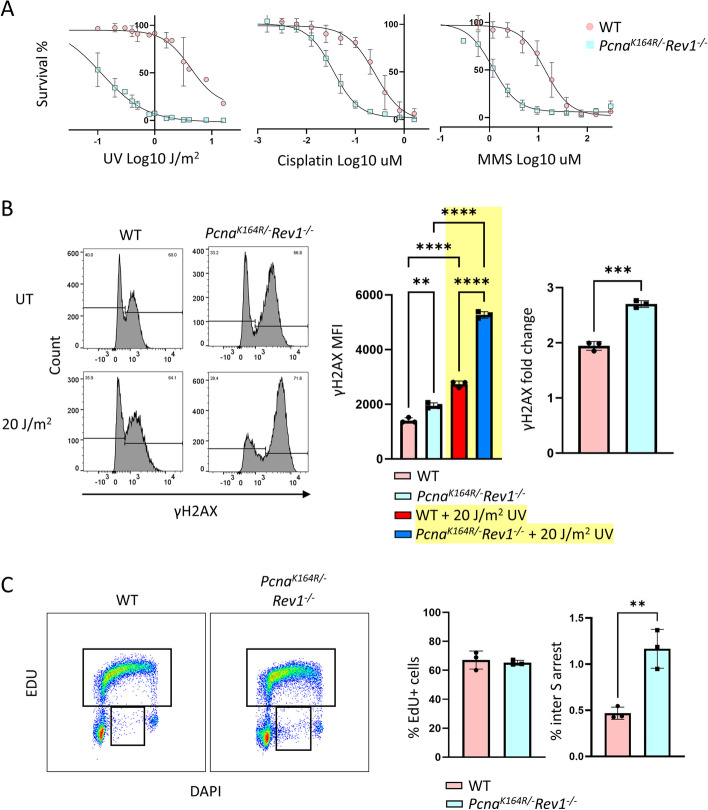
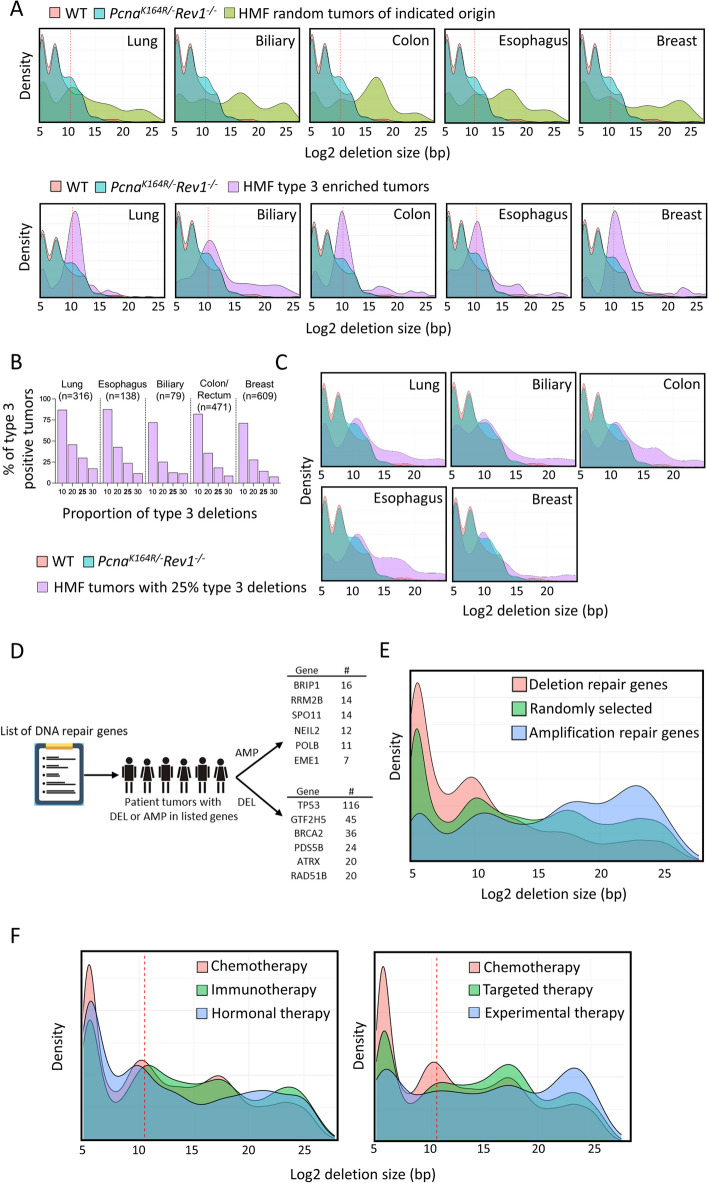
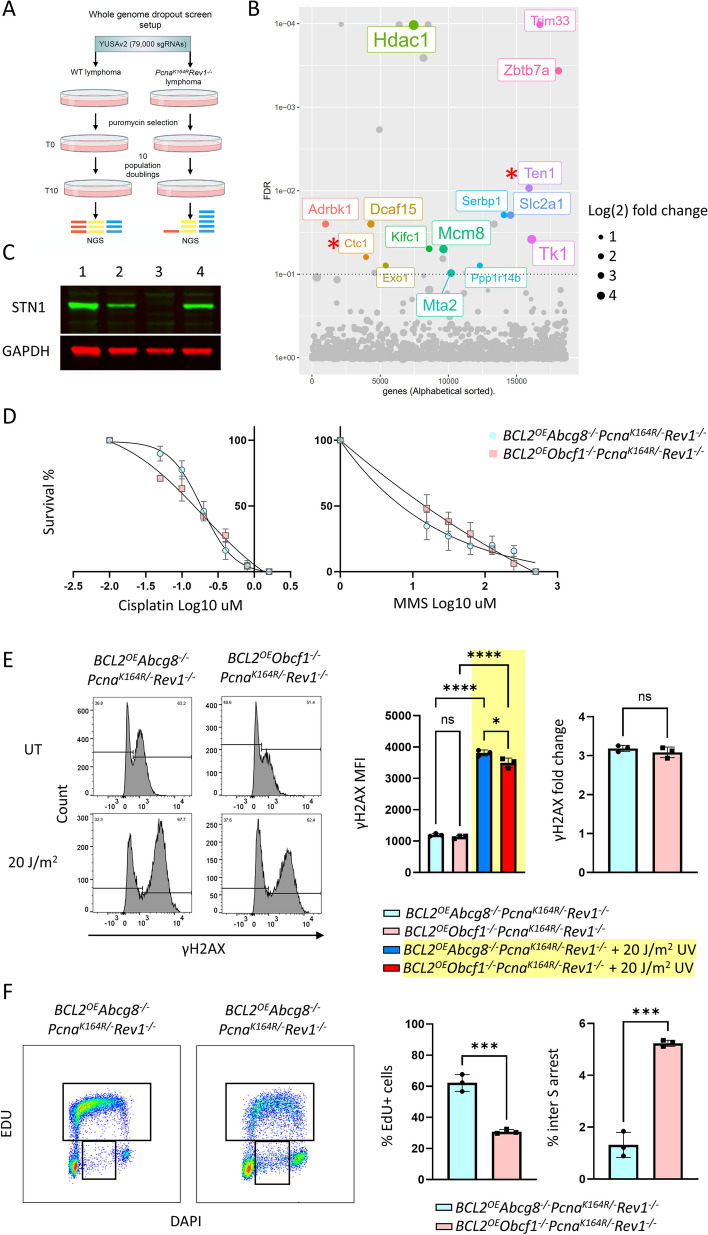
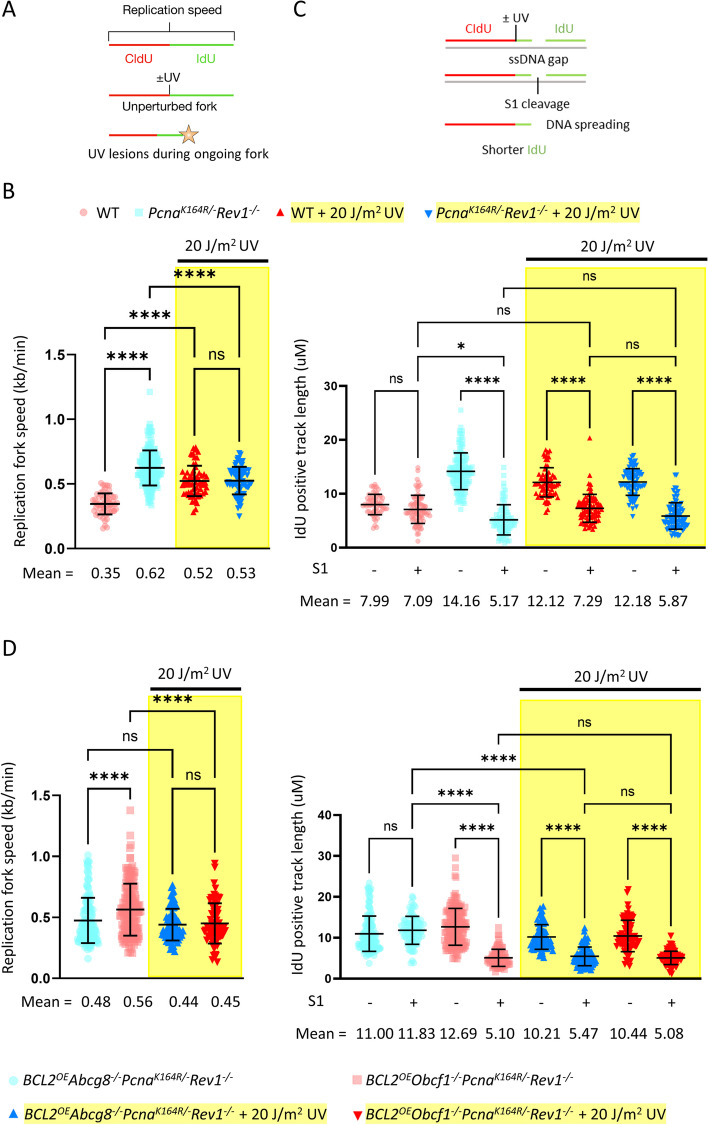
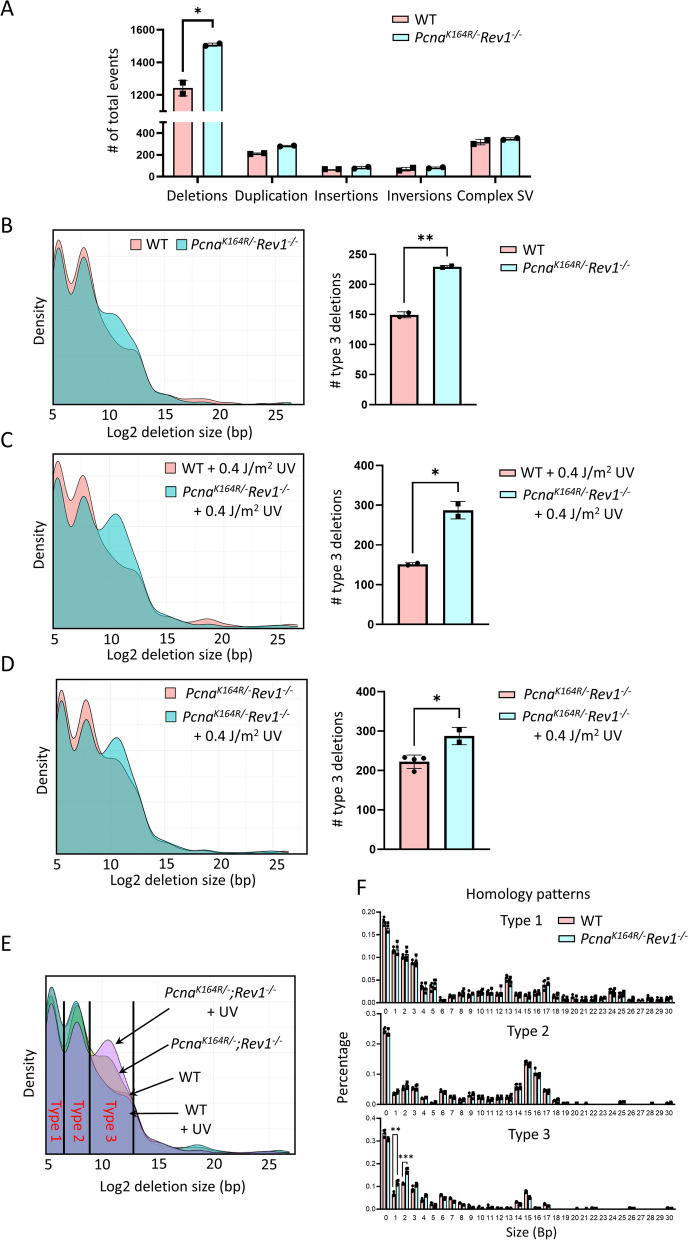
To determine the molecular and genomic impact of a global DDT defect, we studied Pcna;Rev1 compound mutants in mouse cells. Double-mutant cells display increased replication stress, hypersensitivity to genotoxic agents, replication speed, and repriming. A whole-genome CRISPR-Cas9 screen revealed a strict reliance of double-mutant cells on the CST complex, where CST promotes fork stability. Whole-genome sequencing indicated that this double-mutant DDT defect favors the generation of large, replication-stress inducible deletions of 0.4-4.0 kbp, defined as type 3 deletions. Junction break sites of these deletions reveal microhomology preferences of 1-2 base pairs, differing from the smaller type 1 and type 2 deletions. These differential characteristics suggest the existence of molecularly distinct deletion pathways. Type 3 deletions are abundant in human tumors, can dominate the deletion landscape, and are associated with DNA damage response status and treatment modality.
Our data highlight the essential contribution of the DDT system to genome maintenance and type 3 deletions as mutational signature of replication stress. The unique characteristics of type 3 deletions implicate the existence of a novel deletion pathway in mice and humans that is counteracted by DDT.
DNA损伤耐受(DDT)能使复制在存在叉状停滞损伤的情况下继续进行。在哺乳动物细胞中,DDT由两条独立的途径调控,分别由聚合酶REV1和泛素化的增殖细胞核抗原(PCNA)控制。
为了确定全球DDT缺陷的分子和基因组影响,我们研究了小鼠细胞中的Pcna;Rev1复合突变体。双突变细胞显示出复制应激增加、对基因毒性剂超敏、复制速度加快和重新引发。全基因组CRISPR-Cas9筛选揭示了双突变细胞对CST复合物的严格依赖,其中CST促进叉状稳定性。全基因组测序表明,这种双突变DDT缺陷有利于产生0.4-4.0kbp的大的、复制应激诱导缺失,定义为3型缺失。这些缺失的连接断裂位点显示出1-2个碱基对的微同源偏好,不同于较小的1型和2型缺失。这些差异特征表明存在分子上不同的缺失途径。3型缺失在人类肿瘤中很丰富,可以主导缺失格局,并与DNA损伤反应状态和治疗方式相关。
我们的数据突出了DDT系统对基因组维持的重要贡献,以及3型缺失作为复制应激的突变特征。3型缺失的独特特征暗示在小鼠和人类中存在一种新的缺失途径,该途径被DDT抵消。