Hwang Sung-Min, Rahman Md Mahbubur, Go Eun Jin, Roh Jueun, Park Rayoung, Lee Sung-Gwon, Nahm Minyeop, Berta Temugin, Kim Yong Ho, Park Chul-Kyu
Gachon Pain Center and Department of Physiology, Gachon University College of Medicine, Incheon, Republic of Korea.
Bio-IT Foundry Center of Chonnam National University and FromDATA, Buk-Gu, Gwangju, South Korea.
Mol Ther. 2025 Feb 5;33(2):786-804. doi: 10.1016/j.ymthe.2024.12.039. Epub 2024 Dec 30.
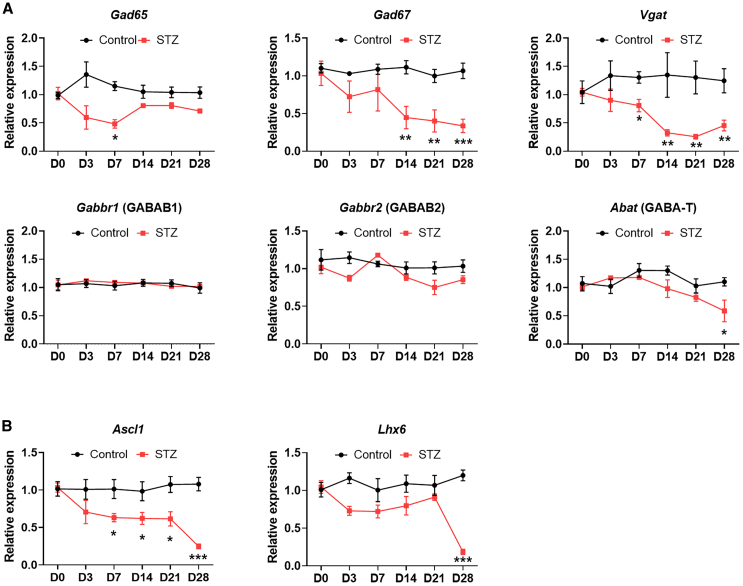
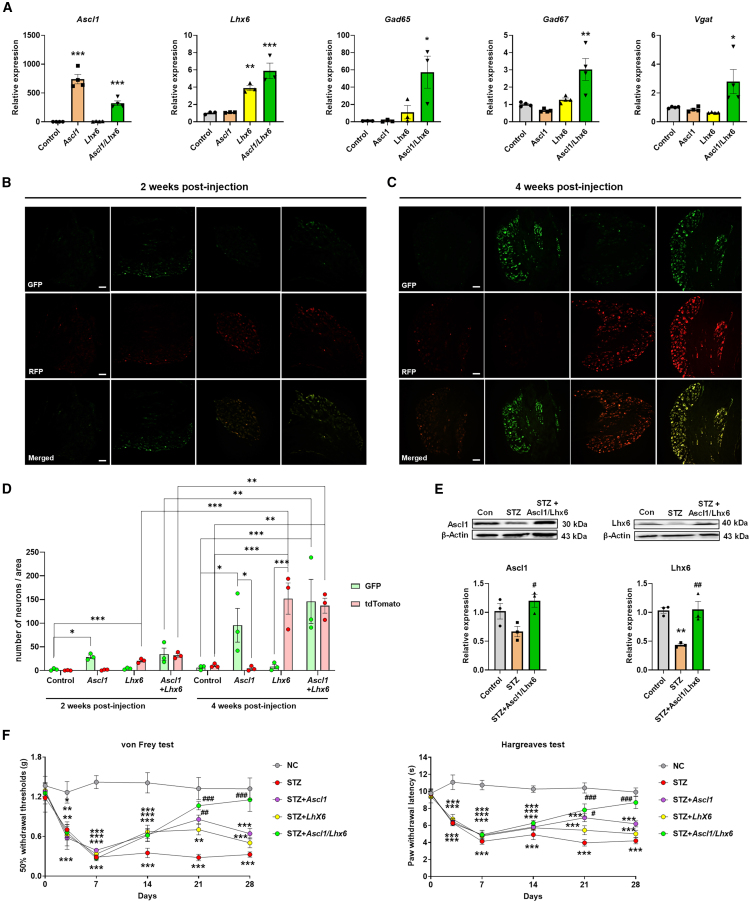
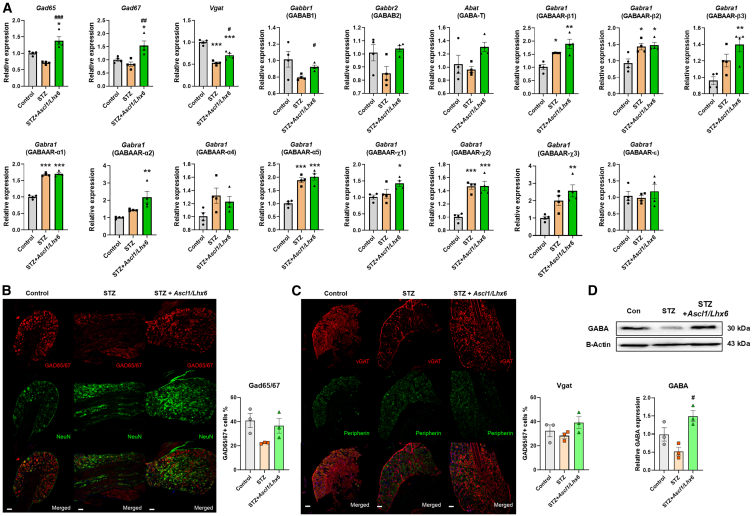
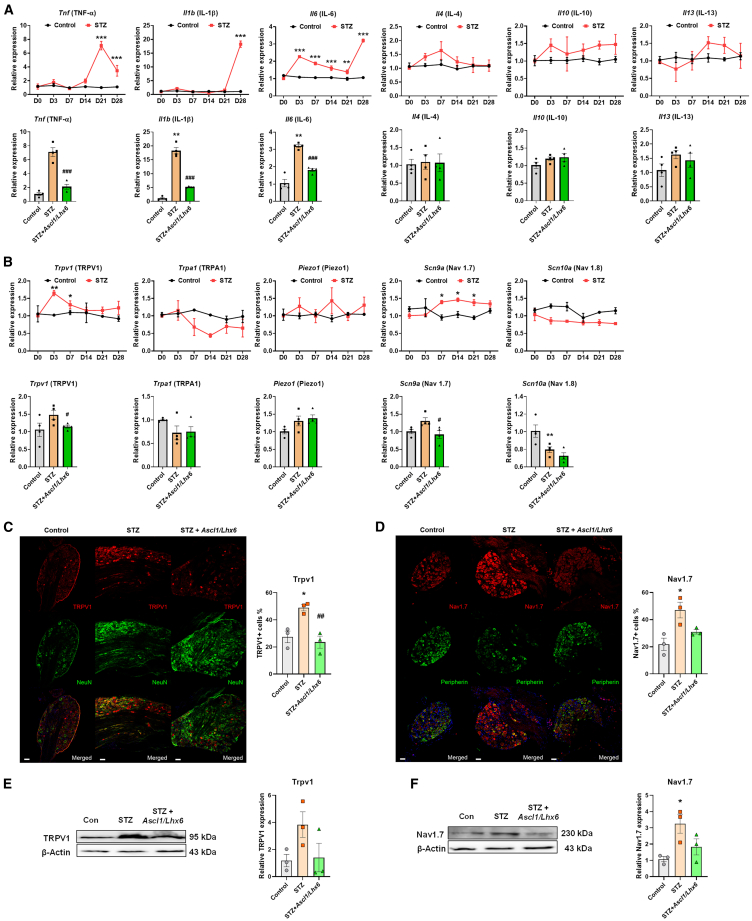
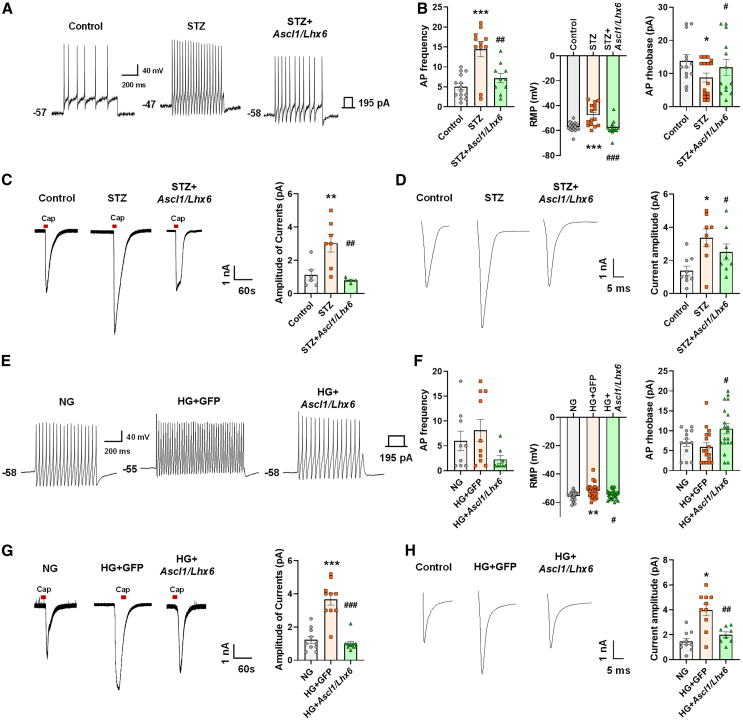
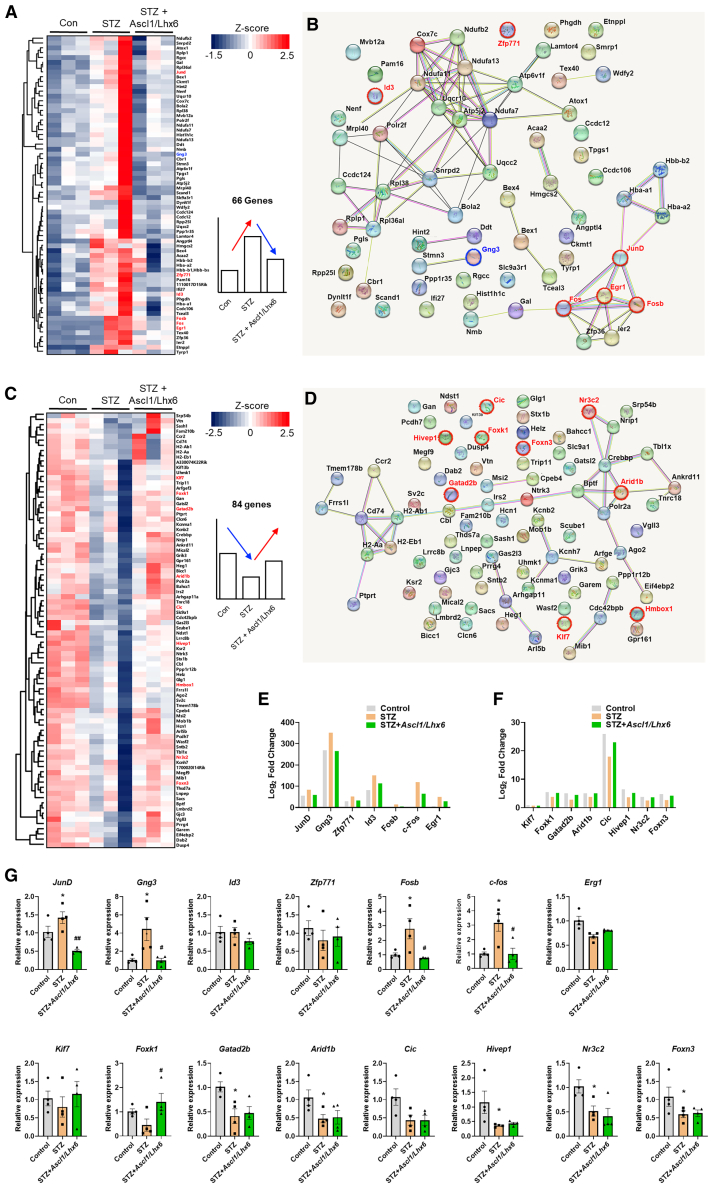
Painful diabetic neuropathy commonly affects the peripheral nervous system in individuals with diabetes. However, the pathological processes and mechanisms underlying diabetic neuropathic pain remain unclear. We aimed to identify the overall profiles and screen for genes potentially involved in pain mechanisms using transcriptome analysis of the dorsal root ganglion of diabetic mice treated with streptozotocin (STZ). Using RNA sequencing, we identified differentially expressed genes between streptozotocin-treated diabetic mice and controls, focusing on altered GABAergic neuron-related genes and inflammatory pathways. Behavioral and molecular analyses revealed a marked reduction in GABAergic neuronal markers (GAD65, GAD67, VGAT) and increased pro-inflammatory cytokines (TNF-α, IL-1β, IL-6) in the diabetic group compared with controls. Intrathecal administration of lentiviral vectors expressing transcription factors Ascl1 and Lhx6 reversed pain hypersensitivity and restored normal expression of GABAergic genes and inflammatory mediators. Protein-protein interaction network analysis revealed five key proteins influenced by Ascl1 and Lhx6 treatment, including those in the JunD/FosB/C-fos signaling pathway. These findings suggest that Ascl1 and Lhx6 mitigate diabetic neuropathic pain by modulating GABAergic neuronal function, pro-inflammatory responses, and pain-related channels (TRPV1, Nav1.7). These results provide a basis for developing transcription factor-based therapies targeting GABAergic neurons for diabetic neuropathic pain relief.
疼痛性糖尿病神经病变通常影响糖尿病患者的周围神经系统。然而,糖尿病性神经病理性疼痛的病理过程和机制仍不清楚。我们旨在通过对链脲佐菌素(STZ)处理的糖尿病小鼠背根神经节进行转录组分析,确定总体概况并筛选可能参与疼痛机制的基因。通过RNA测序,我们确定了链脲佐菌素处理的糖尿病小鼠与对照组之间差异表达的基因,重点关注与GABA能神经元相关的基因和炎症途径的改变。行为和分子分析显示,与对照组相比,糖尿病组中GABA能神经元标志物(GAD65、GAD67、VGAT)明显减少,促炎细胞因子(TNF-α、IL-1β、IL-6)增加。鞘内注射表达转录因子Ascl1和Lhx6的慢病毒载体可逆转疼痛超敏反应,并恢复GABA能基因和炎症介质的正常表达。蛋白质-蛋白质相互作用网络分析揭示了受Ascl1和Lhx6处理影响的五种关键蛋白质,包括JunD/FosB/C-fos信号通路中的蛋白质。这些发现表明,Ascl1和Lhx6通过调节GABA能神经元功能、促炎反应和疼痛相关通道(TRPV1、Nav1.7)来减轻糖尿病性神经病理性疼痛。这些结果为开发基于转录因子的疗法以靶向GABA能神经元缓解糖尿病性神经病理性疼痛提供了依据。