Zhang Bing-Rui, Liu Xue-Han, Ling Yu-Tong, Lu Chun-Li, Jin Xin-Yan, Wei Yi-Ming, Cai Yi-Qing, Robinson Nicola, Liu Jian-Ping
Centre for Evidence-Based Chinese Medicine Beijing University of Chinese Medicine, Beijing 100029, China.
Dongzhimen Hospital Beijing University of Chinese Medicine, Beijing 100700, China.
Cardiovasc Ther. 2024 Jun 20;2024:2127018. doi: 10.1155/2024/2127018. eCollection 2024.
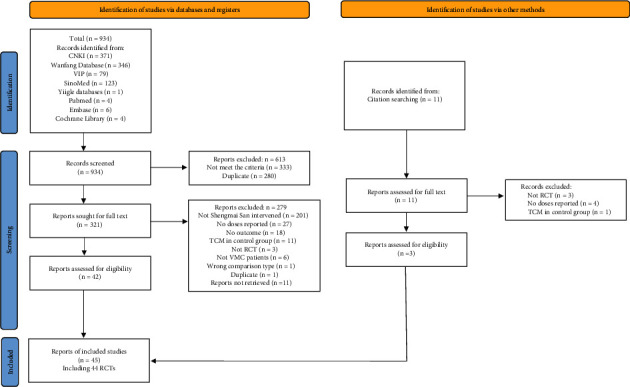
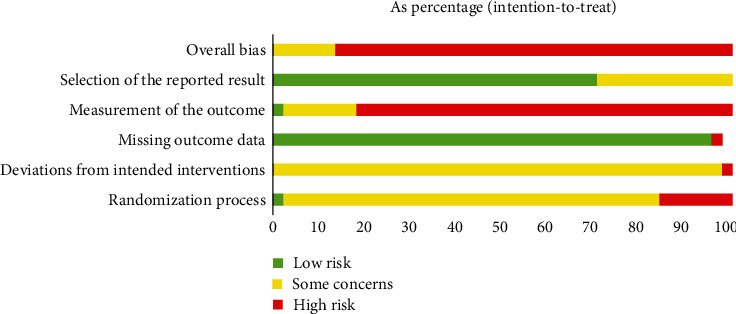
Shengmai San (SMS) is a traditional Chinese medicine formula used for supplementing and and can mitigate symptoms related to malignant arrhythmia and heart failure. This systematic review aimed at exploring the effectiveness and safety of SMS for viral myocarditis (VMC). Eight databases from their inception to June 2023 were searched to identified randomized controlled trials (RCTs) focusing on SMS for VMC. The Cochrane Risk of Bias Tool was used to assess methodological quality. Mean difference (MD), standardized mean difference (SMD), and risk ratio (RR) with 95% confidence interval (CI) were calculated and input into the meta-analysis using RevMan 5.4. Forty-four RCTs were included involving 4298 participants. The interventions included 29 types of modified SMS decoctions and 15 patent medicines. Overall study quality was low. Compared with western medicine (WM), SMS was associated with higher recovery rate from palpitations (RR 2.3, 95% CI 1.59, 3.33, 2 RCTs, = 89), chest pain (RR 1.57, 95% CI [1.17, 2.09], 2 RCTs, = 89), and lower cTnI (MD -0.82 ng/ml, 95% CI -0.98, -0.66, 1 RCT, = 60). SMS plus WM was more effective than WM in palpitation recovery rate (RR 1.52, 95% CI 1.21, 1.92, 3 RCTs, = 136), dyspnea recovery rate (RR 1.47, 95% CI 1.12, 1.94, 3 RCT, = 267), ECG (RR 1.43, 95% CI 1.32, 1.55, 20 RCT, = 2035), CK-MB (MD -6.36, 95% CI -8.43, -4.28, 8 RCT, = 946), and cTnI (MD -0.06, 95% CI -0.06, -0.05, 3 RCT, = 307). No serious adverse events were reported using SMS alone or in combination with WM. SMS used alone or combined with WM may have potential effectiveness on symptom alleviation, ECG recovery rate, myocardial injury markers, and cardiac function, but the effectiveness is uncertain due to the low quality and absence of placebo-controlled trials. The exact efficacy of SMS for VMC needs to be confirmed by high-quality double-blind RCTs in the future.
生脉散(SMS)是一种用于滋补的中药配方,可减轻与恶性心律失常和心力衰竭相关的症状。本系统评价旨在探讨生脉散治疗病毒性心肌炎(VMC)的有效性和安全性。检索了8个从建库至2023年6月的数据库,以识别聚焦于生脉散治疗VMC的随机对照试验(RCT)。使用Cochrane偏倚风险工具评估方法学质量。计算了95%置信区间(CI)的平均差(MD)、标准化平均差(SMD)和风险比(RR),并使用RevMan 5.4输入到荟萃分析中。纳入了44项RCT,涉及4298名参与者。干预措施包括29种改良生脉散汤剂和15种专利药物。总体研究质量较低。与西药(WM)相比,生脉散在心悸恢复率(RR 2.3,95%CI 1.59,3.33,2项RCT,n = 89)、胸痛(RR 1.57,95%CI [1.17,2.09],2项RCT,n = 89)方面恢复率更高,肌钙蛋白I更低(MD -0.82 ng/ml,95%CI -0.98,-0.66,1项RCT,n = 60)。生脉散联合西药在心悸恢复率(RR 1.52,95%CI 1.21,1.92,3项RCT,n = 136)、呼吸困难恢复率(RR 1.47,95%CI 1.12,1.94,3项RCT,n = 267)、心电图(RR 1.43,95%CI 1.32,1.55,20项RCT,n = 2035)、肌酸激酶同工酶(MD -6.36,95%CI -8.43,-4.28,8项RCT,n = 946)和肌钙蛋白I(MD -0.06,95%CI -0.06,-0.05,3项RCT,n = 307)方面比西药更有效。单独使用或与西药联合使用生脉散均未报告严重不良事件。单独使用或与西药联合使用生脉散可能对症状缓解、心电图恢复率、心肌损伤标志物和心功能有潜在疗效,但由于质量较低且缺乏安慰剂对照试验,其有效性尚不确定。生脉散治疗VMC的确切疗效未来需要通过高质量的双盲RCT来证实。