Cowan Shelby, Ghayyad Kassem, Conlon Matthew J, Naik Maya, Zeini Ibrahim, Hawks Michael, Ahmed Atif, Kachooei Amir R
Orthopaedic Surgery, Rothman Orthopaedics Florida at AdventHealth, Orlando, USA.
Orthopaedics, University of Central Florida, Orlando, USA.
Cureus. 2024 Dec 1;16(12):e74925. doi: 10.7759/cureus.74925. eCollection 2024 Dec.
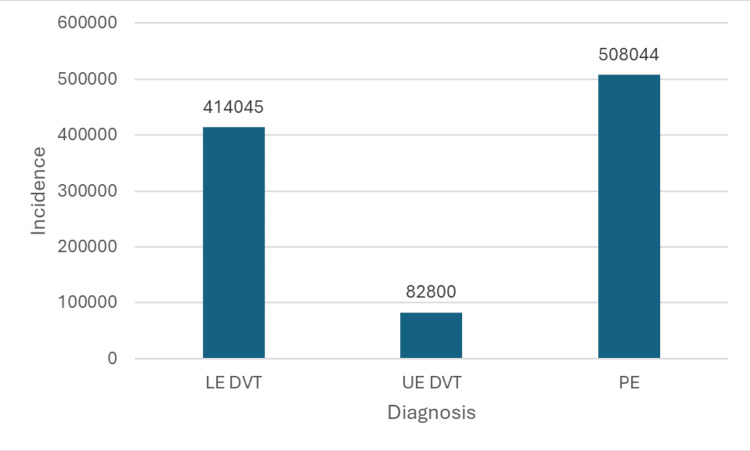
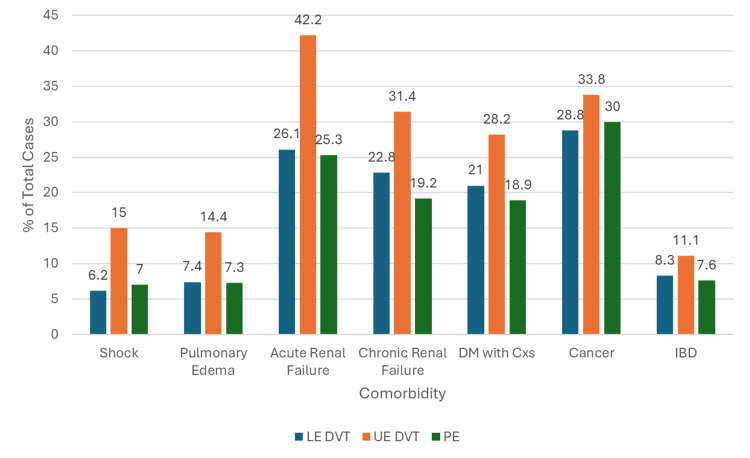
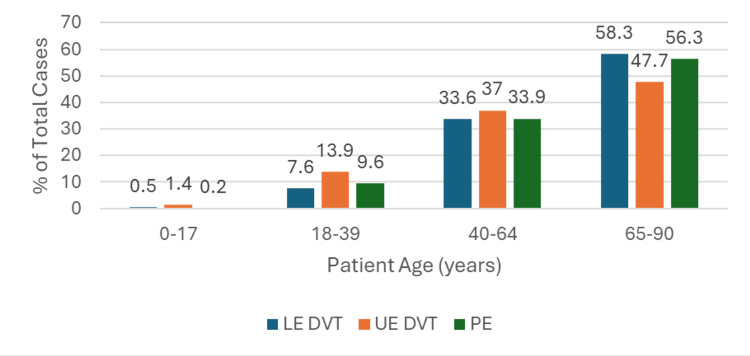
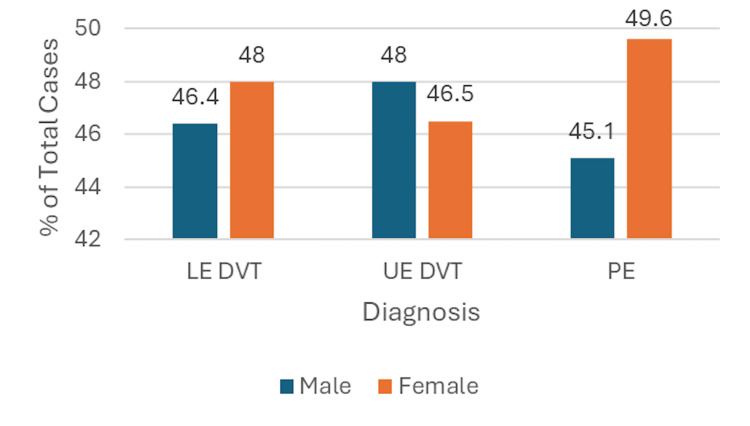
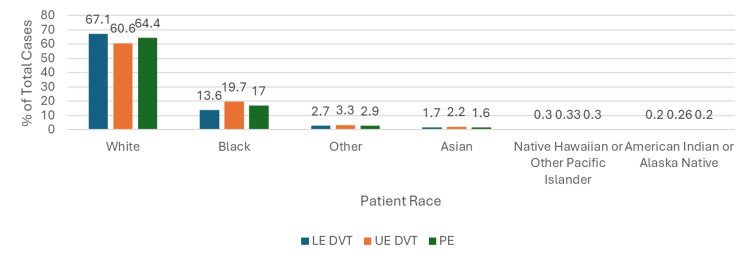
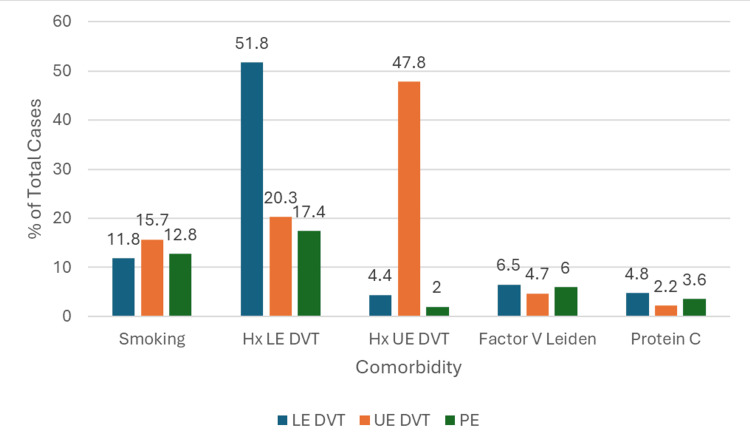
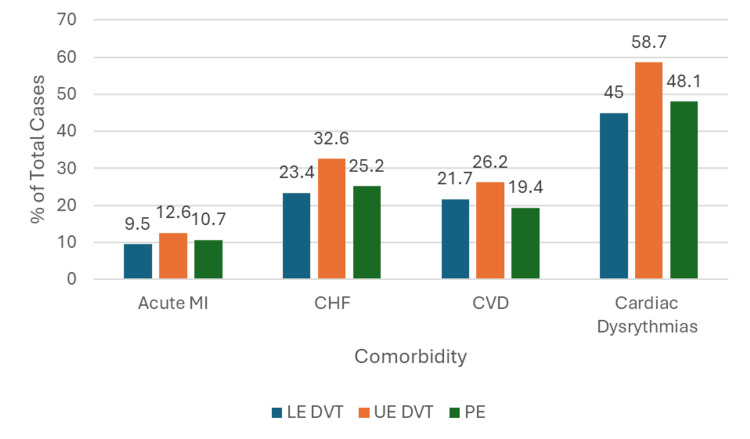
Objective This study aims to utilize the TriNetX database, a comprehensive global network, to improve our understanding of the frequency, demographic factors, and related comorbidities of surgical patients who develop venous thromboembolism (VTEs) events. Methods The global collaborative network in TriNetX was queried for all cases from January 1, 2017, through December 31, 2023. International Classification for Disease (ICD) diagnosis codes were used to define patient cohorts with deep vein thrombosis (DVT) of the upper or lower extremity or pulmonary embolism (PE). Patient information was extracted including age, sex, ethnicity, race status, and comorbidities. We assumed that PE occurred following a DVT which is only reported once as a PE, and not a DVT. Results The study included 414,045 patients with lower extremity DVT, 82,800 with upper extremity DVT, and 508,044 with reported PE following a DVT. DVT and PE account for approximately 51% and 49% of VTE cases, respectively, with differences noted based on age, sex, ethnicity, race, and comorbidities. The data showed that advanced age, higher BMI, and Black race are associated with a higher risk of thromboembolism. Common comorbidities, such as cardiac dysrhythmias, a history of thromboembolism, cancer, and renal failure are prevalent across all three diagnostic groups. Conclusion The study results suggest that the incidence and prevalence of VTE are changing due to the aging population and changes in demographic patterns. Healthcare services should consider planning for the changes in morbidity, mortality, and related healthcare costs. Surgical patients with multiple related comorbidities should be managed to prevent VTEs more aggressively with close monitoring for any evolving VTE.
目的 本研究旨在利用TriNetX数据库这一综合性全球网络,增进我们对发生静脉血栓栓塞(VTE)事件的外科手术患者的发生率、人口统计学因素及相关合并症的了解。方法 在TriNetX的全球协作网络中查询2017年1月1日至2023年12月31日期间的所有病例。使用国际疾病分类(ICD)诊断代码来定义患有上肢或下肢深静脉血栓形成(DVT)或肺栓塞(PE)的患者队列。提取患者信息,包括年龄、性别、种族、种族状态和合并症。我们假设PE发生在DVT之后,且仅作为PE报告一次,而非DVT。结果 该研究纳入了414,045例下肢DVT患者、82,800例上肢DVT患者以及508,044例DVT后报告有PE的患者。DVT和PE分别约占VTE病例的51%和49%,基于年龄、性别、种族、种族和合并症存在差异。数据显示,高龄、较高的体重指数(BMI)和黑人种族与血栓栓塞风险较高相关。常见合并症,如心律失常、血栓栓塞病史、癌症和肾衰竭在所有三个诊断组中都很普遍。结论 研究结果表明,由于人口老龄化和人口模式变化,VTE的发病率和患病率正在发生变化。医疗服务应考虑针对发病率、死亡率和相关医疗成本的变化进行规划。对于患有多种相关合并症的外科手术患者,应更积极地进行管理以预防VTE,并密切监测任何进展中的VTE。