Jensen Garrett, Wang Xinjie, Kuempel Jacob, Chen Zhishi, Yu Wei, Palaskas Nicolas, Sobieski Mary, Nguyen Nghi, Powell Reid T, Stephan Clifford, Luo Weijia, Chang Jiang
Texas A&M College of Medicine Institute for Biosciences and Technology, Houston, TX, United States of America.
The MD Anderson Cancer Center Department of Cardiology, United States of America.
J Mol Cell Cardiol Plus. 2024 Dec;10. doi: 10.1016/j.jmccpl.2024.100122. Epub 2024 Nov 20.
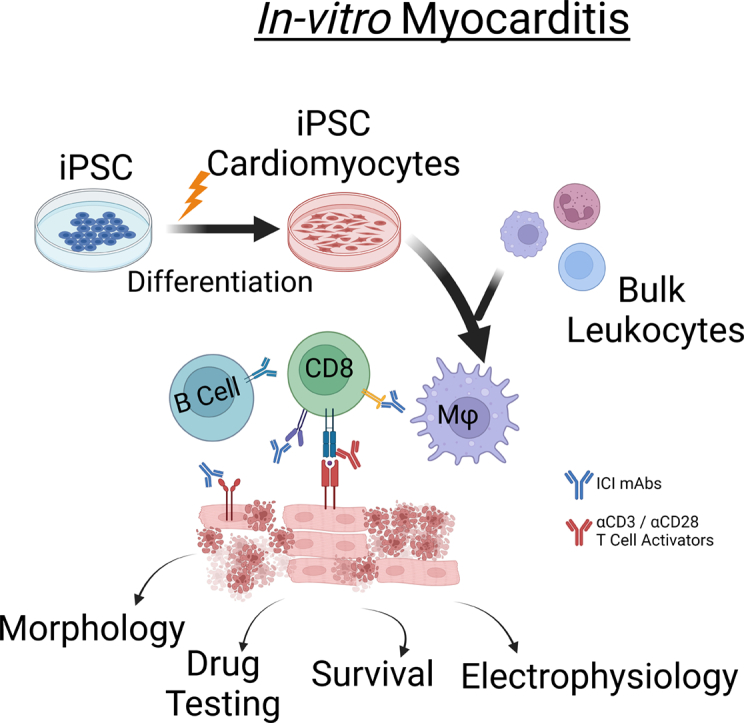
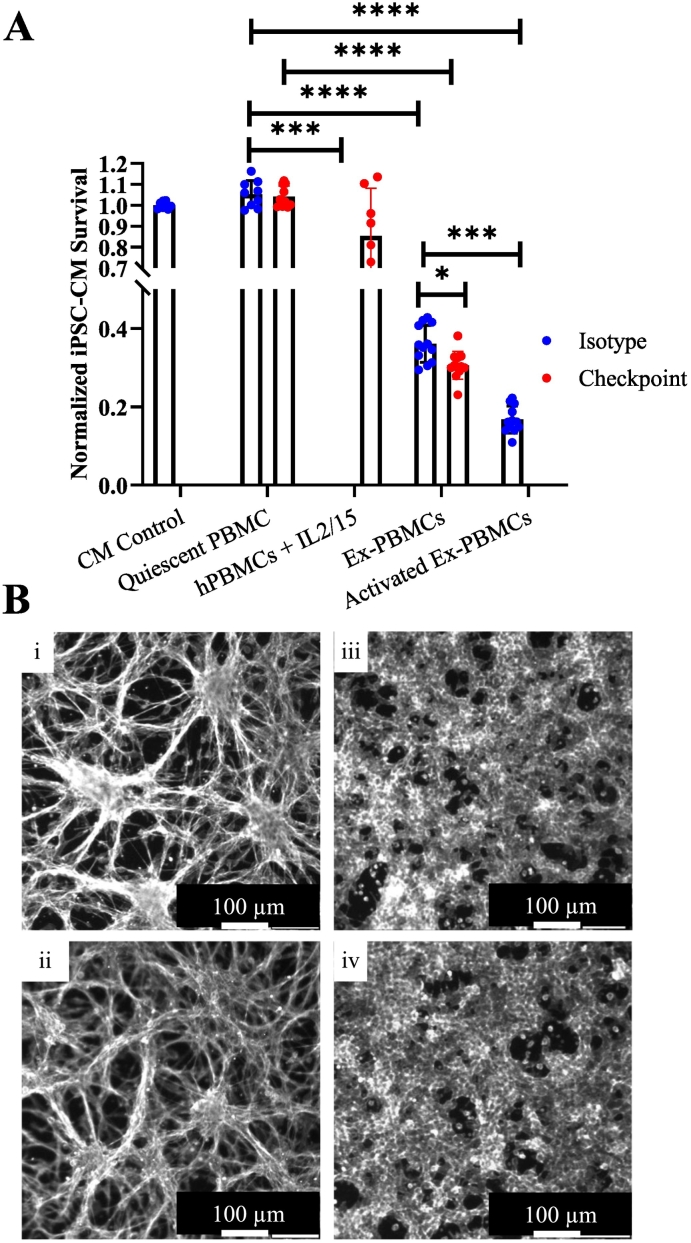
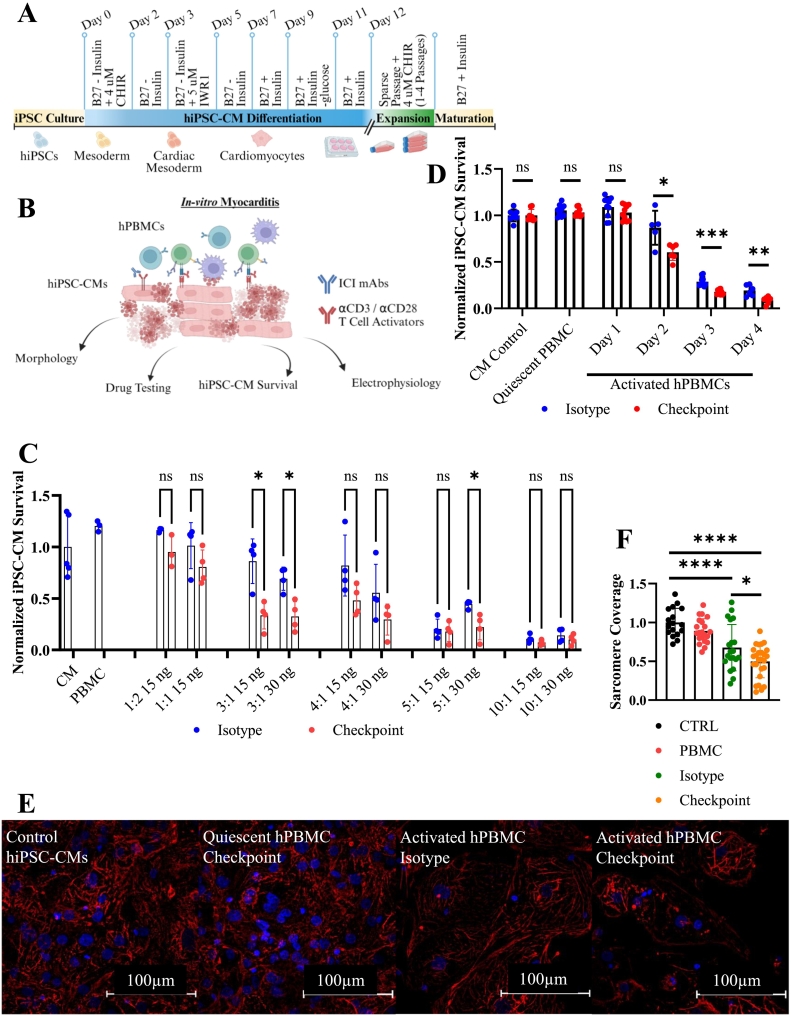
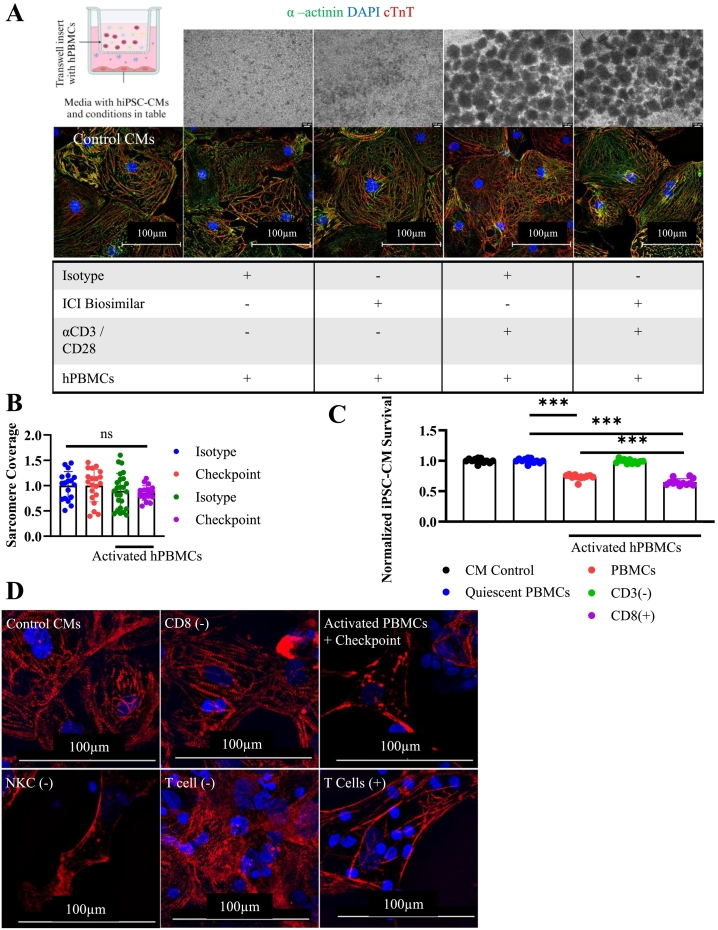
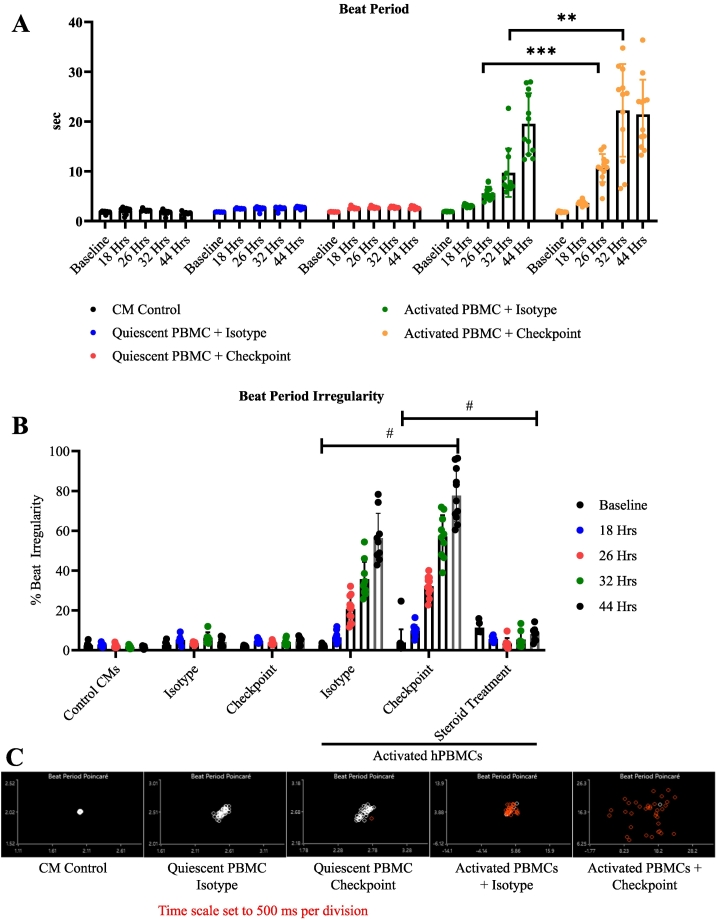
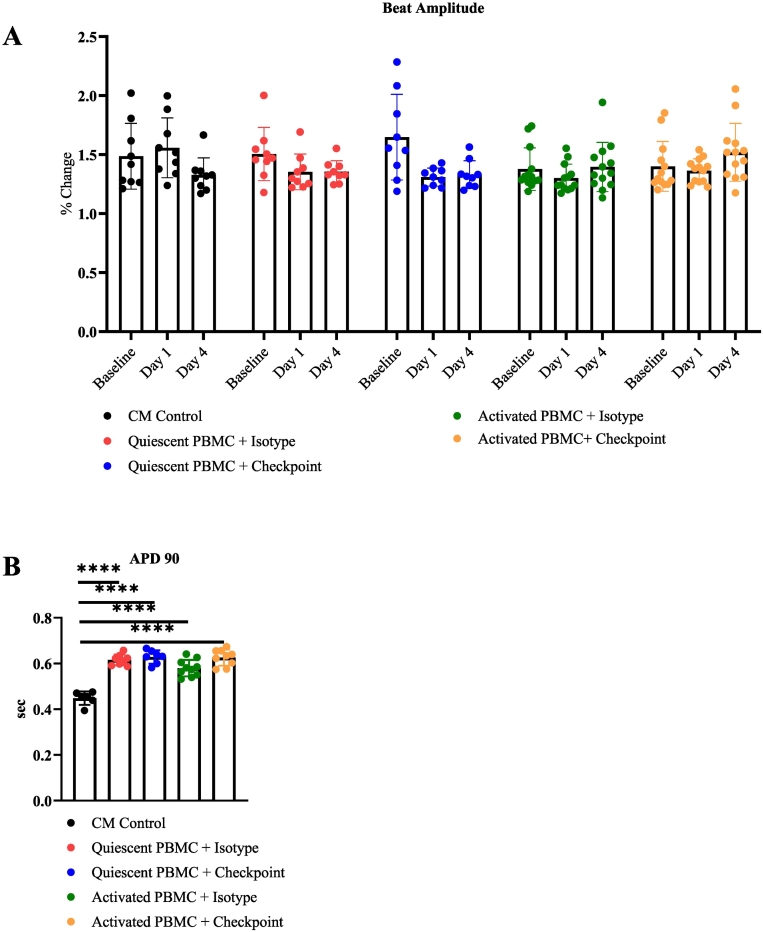
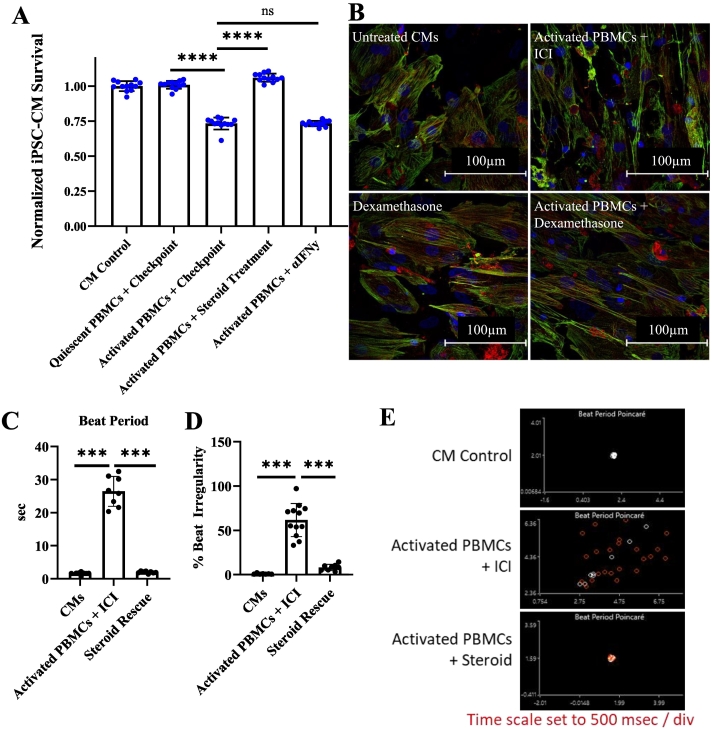
Immune checkpoint inhibitor-associated myocarditis is the most lethal side effect of immune checkpoint blockade. Myocarditis leads to persistently increased mortality and lacks effective treatments. The development of patient-relevant disease models may enable disease prediction, increased understanding of disease pathophysiology, and the development of effective treatment strategies. Here, we report a new method to model immune checkpoint inhibitor-associated myocarditis via a co-culture of activated primary human immune cells, human induced pluripotent stem cell-derived cardiomyocytes, and FDA-approved immune checkpoint inhibitors to recapitulate myocarditis Significant cardiomyocyte necrosis, arrhythmia development, and sarcomere destruction occur, replicating clinical findings from myocarditis. This tissue culture myocarditis phenotype may rely on an induced pluripotent stem cell-derived cardiomyocyte antigen-specific CD8 T cell response. The administration of dexamethasone rescued cardiomyocyte viability, morphology, and electrophysiology and suppressed inflammatory cytokine production. In conclusion, we detail how this platform can effectively model and provide critical information about the morphological and electrophysiological changes induced by immune checkpoint inhibitor-associated myocarditis. We have also validated the ability of this platform to screen potential medications to treat immune checkpoint inhibitor-associated myocarditis. This work establishes a robust, scalable model for identifying new therapies and risk factors, which is valuable in delineating the nature of interactions between the immune system and the heart during myocarditis.
免疫检查点抑制剂相关的心肌炎是免疫检查点阻断最致命的副作用。心肌炎导致死亡率持续上升且缺乏有效治疗方法。建立与患者相关的疾病模型可能有助于疾病预测、增进对疾病病理生理学的理解以及开发有效的治疗策略。在此,我们报告一种通过将活化的原代人免疫细胞、人诱导多能干细胞衍生的心肌细胞与美国食品药品监督管理局批准的免疫检查点抑制剂进行共培养来模拟免疫检查点抑制剂相关心肌炎的新方法,以重现心肌炎。出现了显著的心肌细胞坏死、心律失常以及肌小节破坏,复制了心肌炎的临床发现。这种组织培养的心肌炎表型可能依赖于诱导多能干细胞衍生的心肌细胞抗原特异性CD8 T细胞反应。地塞米松的给药挽救了心肌细胞的活力、形态和电生理,并抑制了炎性细胞因子的产生。总之,我们详细阐述了该平台如何有效地模拟免疫检查点抑制剂相关心肌炎所诱导的形态和电生理变化并提供关键信息。我们还验证了该平台筛选治疗免疫检查点抑制剂相关心肌炎潜在药物的能力。这项工作建立了一个强大的、可扩展的模型来识别新的治疗方法和风险因素,这对于阐明心肌炎期间免疫系统与心脏之间相互作用的本质具有重要价值。