Zhang Chuyi, Zheng Zhinan, Wang Huaiming, Qi Ziwei, Wang Ying, Gao Zhunyi, Huang Yuhui, Jin Sanqing
Department of Anaesthesia, The Sixth Affiliated Hospital, Sun Yat-sen University, Guangzhou, China.
Biomedical Innovation Center, The Sixth Affiliated Hospital, Sun Yat-sen University, Guangzhou, China.
Int J Med Sci. 2025 Jan 1;22(1):87-100. doi: 10.7150/ijms.102046. eCollection 2025.
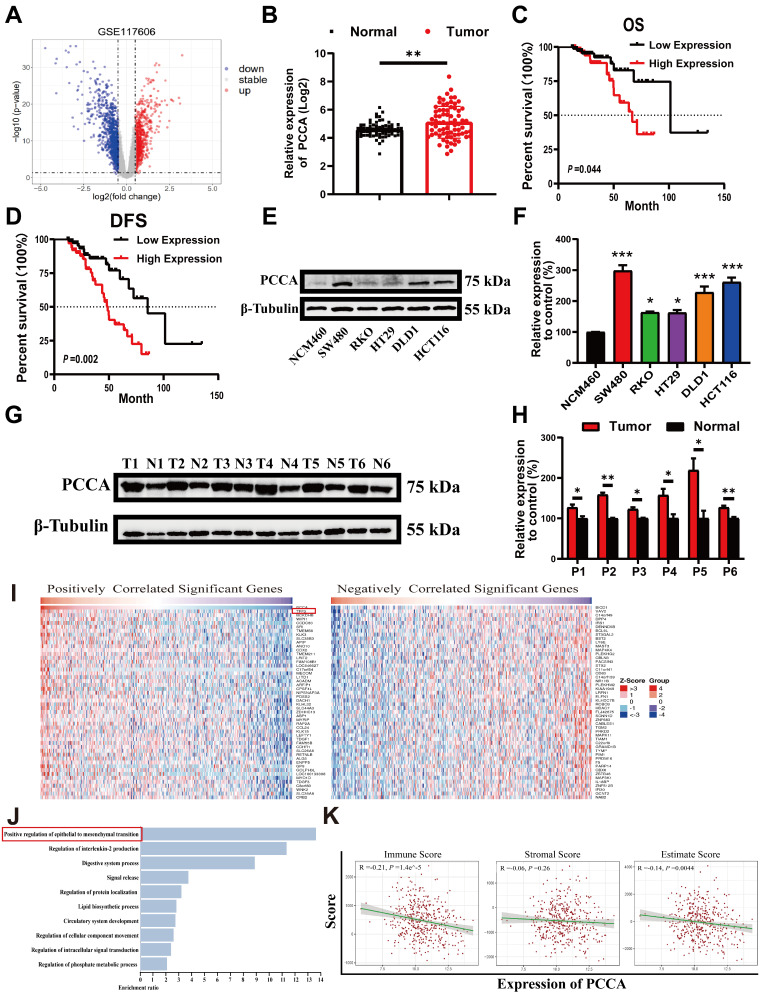
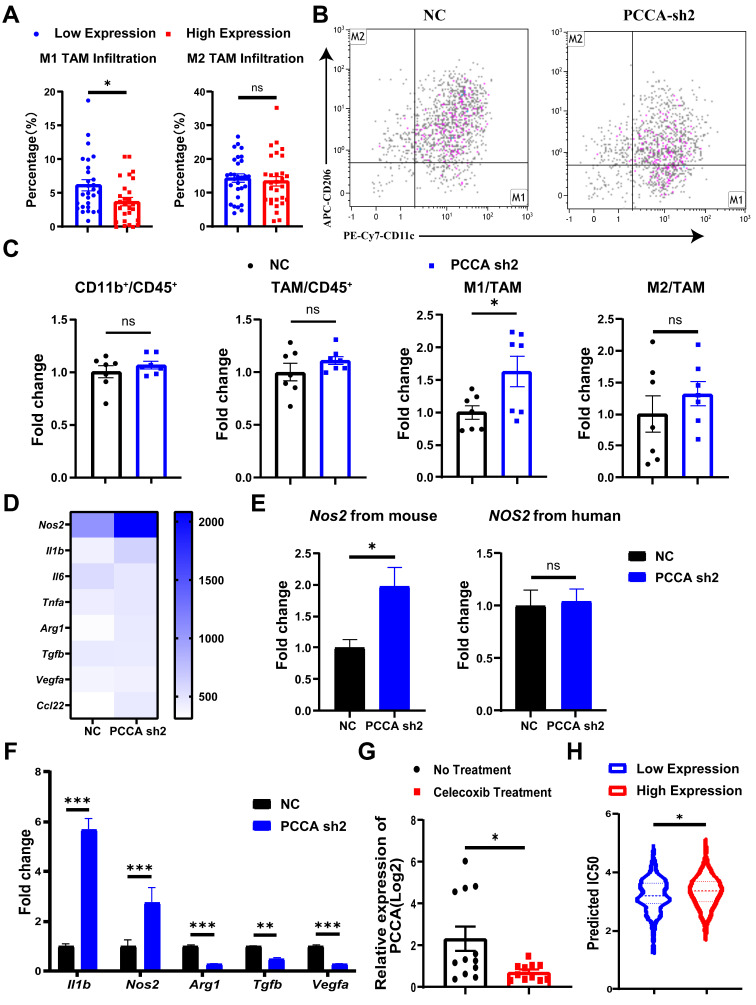
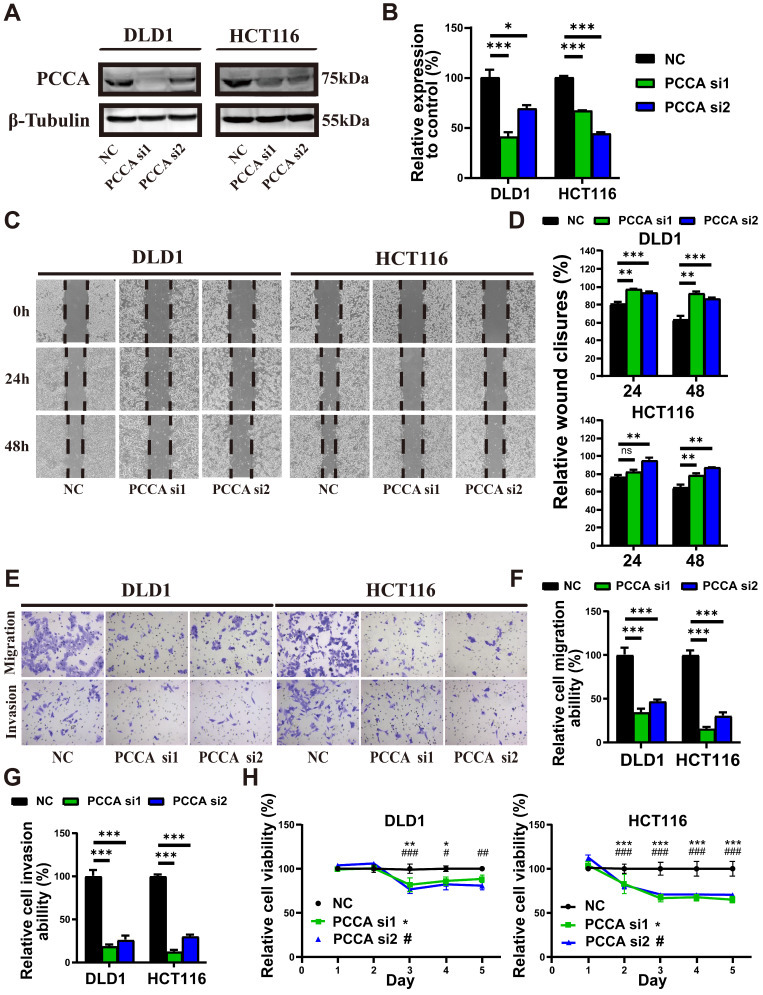
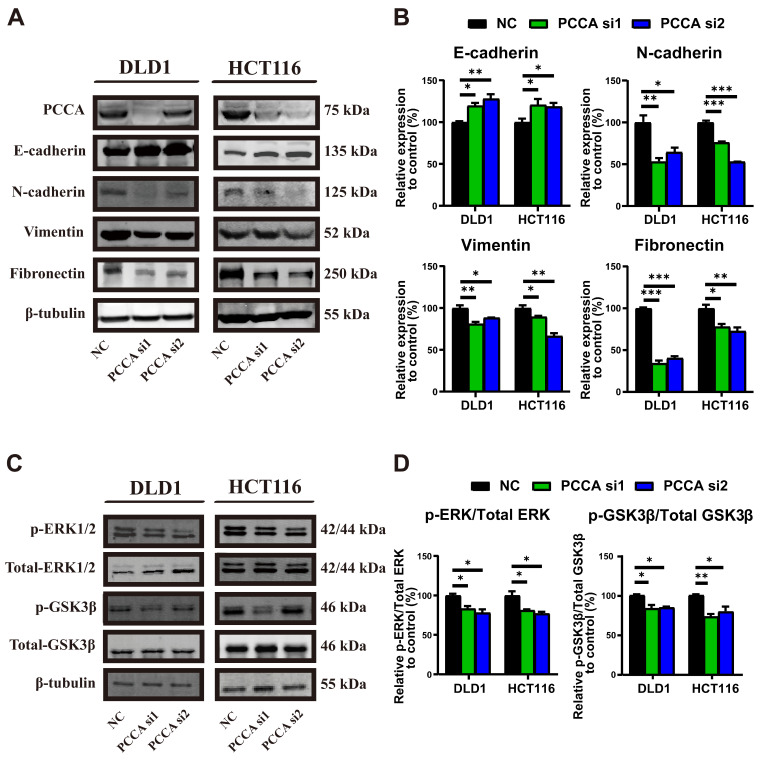
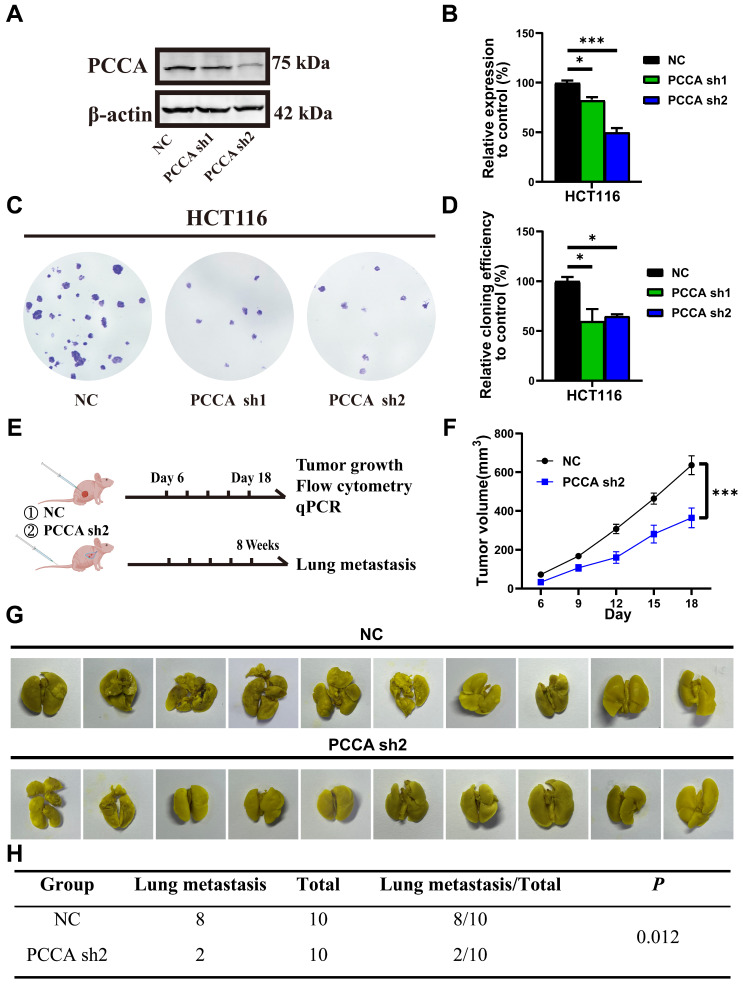
The progression and metastasis of colorectal cancer (CRC) remain major clinical challenges due to a lack of effective therapeutic targets. Our preliminary study identified the upregulation of the propionyl-CoA carboxylase alpha chain (PCCA) gene in CRC, prompting further investigation into its functional roles. Bioinformatics analysis, colorectal tumor tissues, and CRC cell lines were used to determine PCCA expression. Wound healing, Transwell, and cell counting kit-8 (CCK-8) assays were conducted to evaluate the impacts of PCCA expression on CRC cell migration, invasion, and proliferation. Western blotting was used to assess epithelial-mesenchymal transition (EMT) markers and associated signaling pathways. Mouse models, flow cytometry, and quantitative polymerase chain reaction (PCR) were performed to investigate the influences of PCCA on CRC tumor growth, lung metastasis, and macrophage polarization. PCCA is highly expressed in CRC tumor tissues compared to normal tissues and is associated with a poor prognosis. Knocking down PCCA reduced CRC cell migration, invasion, and proliferation, which were associated with the upregulation of E-cadherin, the downregulation of N-cadherin, Vimentin, and Fibronectin, as well as the inactivation of the extracellular signal-regulated kinase (ERK)/glycogen synthase kinase 3 beta (GSK3β) signaling pathway. Moreover, PCCA knockdown suppressed CRC tumor growth and lung metastasis, accompanied by an increase in M1-macrophage polarization. Knockdown PCCA inhibits the progression and metastasis of CRC, which is associated with EMT reversion, ERK/GSK3β signaling inactivation, and M1-macrophage polarization. These findings suggest that PCCA is a potential target for controlling CRC.
由于缺乏有效的治疗靶点,结直肠癌(CRC)的进展和转移仍然是主要的临床挑战。我们的初步研究发现CRC中丙酰辅酶A羧化酶α链(PCCA)基因上调,促使我们进一步研究其功能作用。利用生物信息学分析、结直肠肿瘤组织和CRC细胞系来确定PCCA的表达。进行伤口愈合实验、Transwell实验和细胞计数试剂盒-8(CCK-8)实验,以评估PCCA表达对CRC细胞迁移、侵袭和增殖的影响。采用蛋白质免疫印迹法评估上皮-间质转化(EMT)标志物和相关信号通路。通过小鼠模型、流式细胞术和定量聚合酶链反应(PCR)研究PCCA对CRC肿瘤生长、肺转移和巨噬细胞极化的影响。与正常组织相比,PCCA在CRC肿瘤组织中高表达,且与预后不良相关。敲低PCCA可减少CRC细胞的迁移、侵袭和增殖,这与E-钙黏蛋白上调、N-钙黏蛋白、波形蛋白和纤连蛋白下调以及细胞外信号调节激酶(ERK)/糖原合酶激酶3β(GSK3β)信号通路失活有关。此外,敲低PCCA可抑制CRC肿瘤生长和肺转移,并伴有M1巨噬细胞极化增加。敲低PCCA可抑制CRC的进展和转移,这与EMT逆转、ERK/GSK3β信号失活和M1巨噬细胞极化有关。这些发现表明PCCA是控制CRC的一个潜在靶点。